The Lesson I Carry Today
Hello dear friends,
I hope this blog finds you in a cheerful and thoughtful mood.
Sometimes, life gives us lessons through books, teachers, or personal experiences. But occasionally, a lesson arrives unexpectedly—through a person from our childhood, a forgotten memory, or a strange coincidence.
Today, I want to share one such unforgettable episode from my life. It taught me something I still believe deeply:
“We may not control everything that happens to us, but we can always control how we respond.”
❤️ A Friend from My Childhood
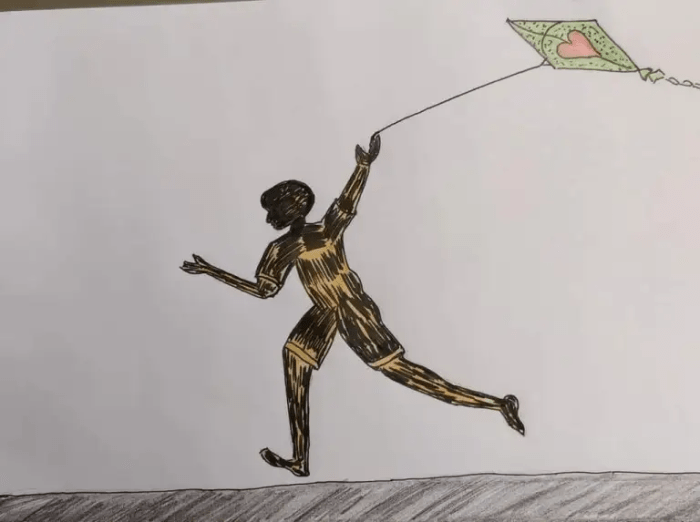
When I was a schoolboy, my routine was simple. After returning from school in the afternoon, I would have my lunch and sleep for a while. In the evening, I was allowed to go outside and play.
Those were innocent days.
I had a friend named Bhagwan Das, who was considerably older than me. He was a college student and helped his father run a small bookshop in the evening.
Gradually, I became a regular visitor to that shop.
He wasn’t merely a friend; for me, he was almost a walking encyclopedia. He would talk about everything under the sun. But what fascinated me most were his stories from the Ramayana and Mahabharata.
His description of Karna was especially captivating. I would sit quietly, completely absorbed in his storytelling.
To my young mind, Bhagwan Das was an exceptionally knowledgeable, gentle and good-hearted person.
I admired him.
❤️ The Day Everything Changed
One evening, while we were sitting in the bookshop and chatting, something shocking happened.
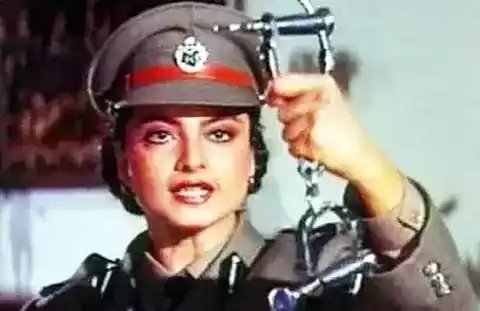
Three or four policemen suddenly arrived.
Before I could understand what was happening, they tied a thick rope around my friend’s waist and put handcuffs on him.
Within minutes, a crowd gathered around the shop.
I stood there completely stunned.
Why were they taking him away?
Then I heard people whisper:
“He has committed a murder.”
My childhood mind simply could not accept it.
How could someone who knew so much, spoke so gently and appeared so good-natured, possibly kill somebody?
But life had other plans.
Soon afterward, my family moved from Khagaul to Ranchi, and that chapter of my childhood disappeared into the pages of memory.
Or so I thought.

❤️ Twenty-Five Years Later
Time passed.
I grew up, completed my education and joined the banking profession. The old incident gradually disappeared from my conscious memory.
Then, during a difficult phase of my career, I found myself struggling with several personal problems. I had appeared for a promotion interview with great hope, but unfortunately, I could not perform as well as I had expected.
I wasn’t selected.
For me, it was a painful setback.
I had worked hard, yet success had eluded me. Slowly, I began to believe that perhaps my destiny was against me.
During a period of leave, I went to Patna. I was mentally disturbed and often remained gloomy. One day, hoping to lift my spirits, I went to a cinema hall.
After watching the movie, I was standing near Gandhi Maidan waiting for a bus home.
Then something extraordinary happened.
A gentleman approached me and began looking at me carefully.
There was something strangely familiar about him.
Suddenly he asked,
“You are Bhola, aren’t you?”
Bhola was my childhood nickname.
I had almost forgotten that name.
I looked at him carefully.
Then came the words that transported me nearly twenty-five years into the past:
“I am Bhagwan Das.”
For a moment, the world seemed to stop.
My childhood came rushing back—the bookshop, the stories, the Mahabharata, Karna, the police, the handcuffs and the accusation of murder.
He smiled and said,
“Where have you disappeared, yaar?”
That one word—yaar—was enough to bring back an entire childhood.

❤️ The Truth Behind the Murder
I invited him for tea at a restaurant near India Hotel.
As we sat together, old memories came alive.
But one question had remained buried in my mind for twenty-five years.
Finally, I asked him directly:
“I always considered you an ideal person. You were calm, kind and knowledgeable. How could you commit murder?”
He took a deep breath.
Then he told me the story.
There had been a long-running dispute over agricultural land between members of their family. One night, he and his father were guarding their wheat field while irrigation work was underway.
It was around ten o’clock.
Suddenly, some relatives arrived with armed men. According to his account, they opened fire from a distance and threatened his father.
He became furious.
His father was being threatened, and he could not tolerate it.
There was a double-barrel gun on the watchtower. In anger, he fired into the darkness, intending, as he described it, to frighten the attackers away.
But fate intervened.
One of the bullets struck his cousin.
He died.
There were FIRs from both sides. Bhagwan Das was arrested, prosecuted and eventually sentenced to life imprisonment.
As I listened, my eyes filled with tears.
The man I had once thought of as simply a knowledgeable bookseller had lived through a tragedy far beyond anything I could have imagined.
And suddenly, my own problems seemed much smaller.
❤️ Karma or Destiny?
Our conversation naturally turned toward a question that has puzzled humanity for centuries:
What determines our life—our karma or our destiny?
I told him about my own disappointment.
I had worked hard, yet I had failed to achieve the promotion I wanted.
Perhaps, I thought, my luck was bad.
Bhagwan Das listened quietly.
Then he asked me:
“What do you do?”
I replied,
“I work in a bank.”
He smiled.
“Then you must know about bank lockers.”
“Of course,” I said.
Then he gave me an answer that has stayed with me ever since.
❤️ The Two Keys
He said:
“Every locker needs two keys to open.”
“One key is with the customer, and the other is with the bank manager.”
Then he looked at me and said:
“Your key is hard work.
The manager’s key is destiny.”
I was listening carefully.
He continued:
“You can keep putting your key into the lock. But unless the other key turns as well, the locker will not open.”
What a beautiful way to explain life!
We possess the key of effort.
We do not possess the key of destiny.
But that does not mean we should throw our key away.
Perhaps one day, at an unexpected moment, destiny will turn its key.
And the lock will open.
❤️ Don’t Stop Turning Your Key
That conversation changed my thinking.
Sometimes we work extremely hard and still fail.
- We apply for a job and don’t get selected.
- We attempt a business venture and face losses.
- We write, create, practice and improve—but success remains distant.
At such moments, it is easy to say:
“Perhaps it is not in my destiny.”
But that is precisely when we must be careful.
Failure may not mean that our journey is over.
It may simply mean that the second key has not turned yet.
As Thomas Edison famously demonstrated through his persistence, repeated failure can be part of the road toward success. And as the ancient wisdom of the Bhagavad Gita reminds us:
“You have a right to perform your prescribed duties, but you are not entitled to the fruits of your actions.”
The message is simple: Do your work. Keep moving. Don’t surrender your effort to uncertainty.

❤️ The Lesson I Carry Today
Looking back, I sometimes wonder whether that meeting at Gandhi Maidan was merely a coincidence.
Perhaps it was.
Perhaps it was destiny.
Or perhaps life simply has a mysterious way of bringing forgotten lessons back to us when we need them most.
That day, my childhood friend did not merely tell me his story.
He gave me a philosophy for life.
Karma is the key in our hand. Destiny is the key in God’s hand.
We cannot control the second key.
But we must never stop using the first.
“Do not wait for destiny to change your life.
Keep changing yourself through your actions,
and let destiny meet you somewhere along the way.”
Today, whenever I face disappointment, I remember that old bookshop, that unexpected meeting and those two keys.
And I remind myself:
Keep working.
Keep trying.
Keep believing.
Because we never know when the other key will turn.
And perhaps that is the most beautiful mystery of life.
Categories: infotainment


Lovely thoughts and reflections Vijay.😘
LikeLiked by 1 person
Thank you so much! ❤️ I truly believe karma and destiny are two threads woven into the fabric of life—one shaped by our actions, the other by what life brings our way. Perhaps our journey is learning to accept both with faith, wisdom, and a grateful heart. 🙏🌷
LikeLiked by 1 person
So true 👍👍
LikeLike
Absolutely! 😊 Karma is our effort, and destiny is the mysterious path that unfolds along the way. We may not control the outcome, but we can always keep turning our key with faith, patience, and sincere action. When karma meets destiny at the right moment, beautiful things can happen. 🙏
LikeLiked by 1 person
very nice .
LikeLiked by 1 person
Thank you so much.
LikeLike
Verma ji,
What a beautifully woven story this is—so personal, so profound, and so full of wisdom. 🙏
I was completely transported to that little bookshop in Khagaul, sitting quietly as you listened to Bhagwan Das narrate tales from the Ramayana and Mahabharata. And then, the shock of those handcuffs and the accusation of murder—I felt the bewilderment of that young boy. Yet life has a way of bringing people back when we need them most.
The reunion at Gandhi Maidan after twenty-five years gave me goosebumps. And then, the Two Keys metaphor—what a simple yet powerful way to understand the relationship between karma and destiny! Your key is your effort; God’s key is destiny. The locker only opens when both turn. This is a lesson I will carry with me.
Your honesty in sharing both the childhood admiration and the adult struggle, the court case and the promotion failure, makes this piece so relatable. We’ve all had moments when we felt like we kept turning our key, but the lock wouldn’t open. Your message—”Don’t stop turning your key”—is exactly what every struggling heart needs to hear.
And that line: “Do not wait for destiny to change your life. Keep changing yourself through your actions, and let destiny meet you somewhere along the way.”—pure gold. 💛
Thank you for sharing this gem, Verma ji. This is the kind of writing that stays with a reader long after the last line. Please keep writing and keep inspiring.
With deep respect and warm wishes,
🌟
LikeLiked by 2 people
Thank you so much for your deeply thoughtful and heartfelt words. 🙏
Your response has touched me more than I can express. Knowing that you could almost see yourself sitting in that little bookshop in Khagaul, walking with me through those memories, and feeling the bewilderment, reunion, and emotions of that journey means a great deal to me.
LikeLike
Mm that other key will never bend if you sacrifice that where the effort came from in my view; a healthy, atleast, balanced bodybrainmind. Who really cares? When an artist or performer dies for their art, makes the art sickening. Nice story thank you
LikeLiked by 1 person
Thank you for sharing such a profound perspective.
I completely agree that the key of effort becomes meaningful only when we protect the body, brain, and mind that make that effort possible.
There is no real victory in achieving something at the cost of our well-being.
LikeLike
The story about the bookshop and the meeting at Gandhi Maidan really ties this together. It’s comforting to remember that our effort is always in our control, no matter what destiny holds.
This concept of the two keys is so beautifully put. Focusing on our own actions (Karma) while surrendering what we can’t control brings so much peace. Thank you for sharing such a grounding reflection.💐
LikeLiked by 1 person
Thank you so much for your thoughtful words. 💐 I am glad the story of the bookshop and Gandhi Maidan resonated with you. Perhaps that is the real beauty of life—we may not hold the key to destiny, but we always hold the key to our own effort, attitude, and actions. Keep doing our Karma sincerely, and leave the rest to the Divine. That acceptance brings a quiet kind of peace. 🙏
LikeLiked by 1 person
I am holding on to “Keep working”. I need that the most right now
LikeLiked by 1 person
I understand. Sometimes we don’t need all the answers; we simply need to keep moving, one day and one step at a time.
Keep working, keep believing, and let the journey unfold. Better days often begin quietly, with the decision not to give up. ❤️
LikeLiked by 1 person
Thank you. I think I should be more organized to experience a more stable life.
LikeLiked by 1 person
Absolutely. A little organization can bring a surprising amount of peace and stability to life. It doesn’t mean planning every minute—it simply means creating enough structure to make room for what truly matters. Small, consistent changes can gradually make life feel lighter and more balanced. Wishing you a calmer, more organized, and happier journey ahead.
LikeLiked by 1 person
Thank you. I think I lived a chaotic life! It was terrible for my nervous system, my health and life fell apart drastically. That is why I have existential dread. I really need to take my life into my own hands.
LikeLiked by 1 person
Thank you for sharing something so deeply personal. I’m sorry you had to go through such a difficult chapter. Sometimes, when life has been chaotic for too long, the mind and body simply long for safety, stability, and peace.
Taking your life back into your own hands can begin with small, gentle steps—not by fixing everything at once, but by creating a life that feels more grounded and truly yours.
LikeLiked by 1 person
Thank you. I am considering having a morning and evening routine in the coming weeks.
LikeLiked by 1 person
That sounds like a wonderful idea! 🌅🌙
A good morning routine can set the tone for the entire day, while an evening routine can help us slow down, reflect, and prepare the mind for restful sleep.
LikeLike
Life keeps changing on the surface, yet the inner Witness remains still and untouched. To recognize that Witness is the beginning of true self-awareness.
LikeLiked by 1 person
Beautifully expressed. 🙏 Life is constantly changing—our circumstances, relationships, emotions, successes, and struggles—but there is something within us that quietly observes it all without being changed by every passing storm.
LikeLiked by 1 person