
यह हमारे दिल की आवाज़ है।”
Hello dear friends,
Today, September 14, is celebrated as Hindi Diwas across India. It is a day when we pause for a moment and think about a language that has been a part of our childhood, our memories, our emotions and, for millions of Indians, our everyday lives.
For me, Hindi Diwas is not merely an occasion marked on the calendar. It is an opportunity to look back at my own journey with the language—a journey that has been full of hesitation, learning, mistakes, and eventually, love.
❤️Why Do We Celebrate Hindi Diwas?
On September 14, 1949, the Constituent Assembly adopted Hindi in the Devanagari script as the official language of the Union under Article 343 of the Constitution.
Hindi Diwas reminds us of that historic decision and encourages us to promote Hindi in our public life, education, literature and communication.
But I believe a language cannot survive merely because it has an official status.
A language survives when people speak it, write it, read it, sing it—and most importantly, feel it.
And Hindi has certainly been felt by generations of Indians.
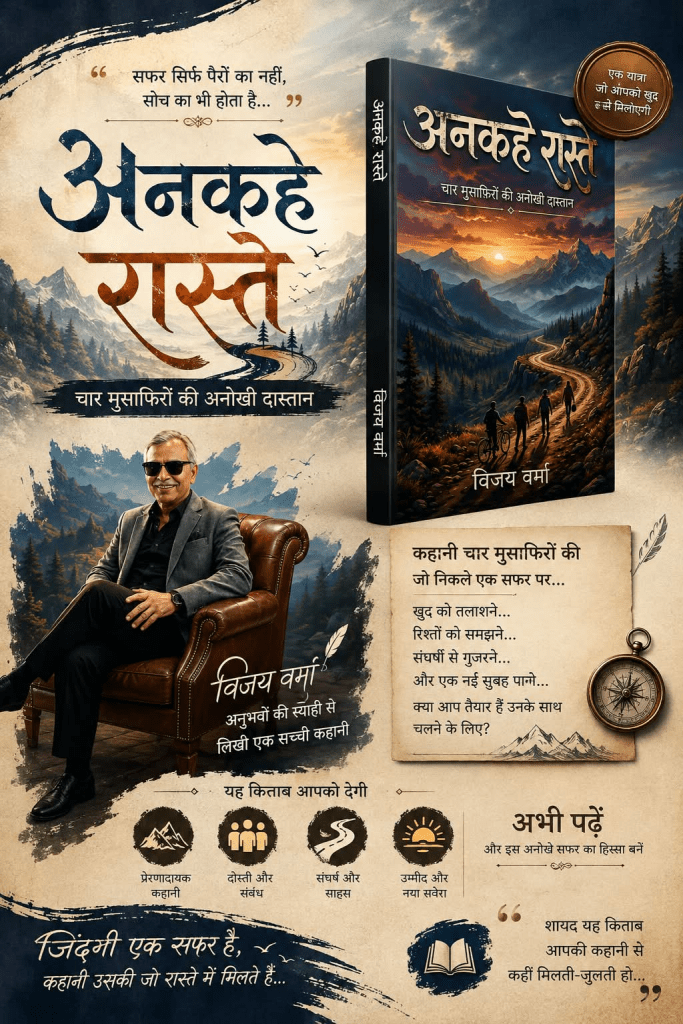
❤️Hindi Begins With Our Childhood
Think about your childhood.
Perhaps your mother called you lovingly in Hindi. Your grandparents told you stories in Hindi. You heard poems, songs, jokes and lullabies in Hindi.
For many of us, some of our most precious memories are connected with words that cannot be translated without losing their emotional flavour.
There is something special about words such as माँ, ममता, अपनापन, सुकून, प्यार, दोस्ती और परिवार.
We may know their English equivalents, but somehow the Hindi words touch a different corner of the heart.
“Some words communicate meaning;
some words carry memories.”
Hindi does both.
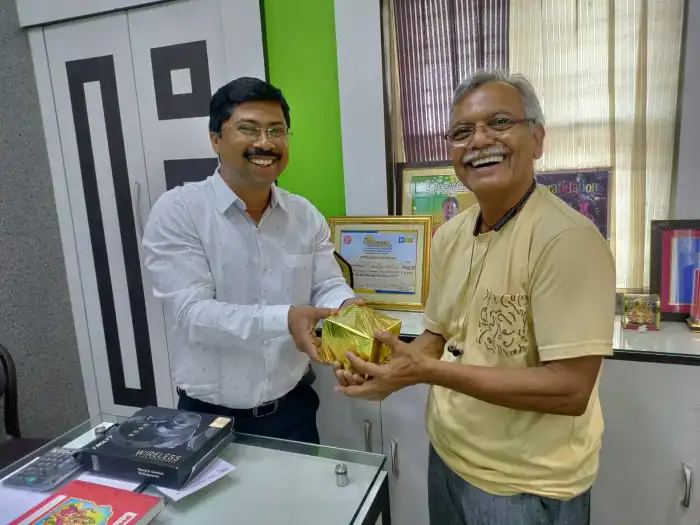
❤️Hindi and the Digital Generation
Today, the world has changed dramatically.
Our children and grandchildren communicate through smartphones, social media, YouTube and artificial intelligence. English dominates much of the digital world, and that is perfectly natural.
But perhaps the real challenge is not English versus Hindi.
The challenge is whether we can embrace modernity without abandoning our linguistic roots.
Hindi is already adapting to the digital age. People write Hindi in Devanagari, Roman script, emojis and even a fascinating mixture of Hindi and English.
Language has always evolved.
We should not be afraid of change. Instead, we should make sure that while Hindi changes, its soul remains alive.
❤️Hindi Gave Me a New Beginning
My own relationship with Hindi has an interesting story.
There was a time when I was not particularly comfortable writing in Hindi. During my banking career, I even found myself handling Hindi-related responsibilities somewhat reluctantly.
But life has a strange way of introducing us to things we once avoided.
After retirement, I began writing more seriously. Slowly, my pen became comfortable with Hindi. Poetry, memories, emotions and personal experiences began finding their way onto paper.
I discovered something beautiful:
“Sometimes retirement does not end a journey;
it gives us the freedom to begin a new one.”
Hindi became one such new beginning for me.
Today, when I write in Hindi, I don’t feel that I am merely using a language. I feel that I am reconnecting with a part of myself.
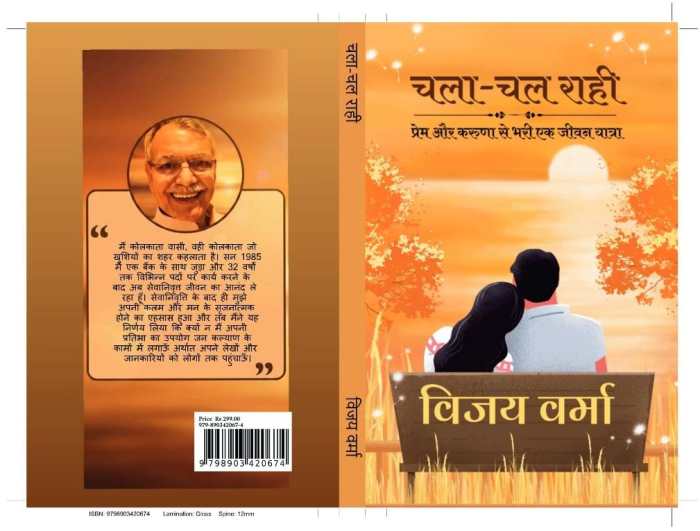
❤️Let Us Give Hindi a Place in Our Lives
Celebrating Hindi Diwas should not mean criticizing other languages.
India is beautiful precisely because of its linguistic diversity. Bengali, Tamil, Telugu, Marathi, Gujarati, Punjabi, Malayalam, Kannada, Assamese, Odia and many other languages enrich our cultural landscape.
Respect for Hindi should never require disrespect for another language.
Instead, let every Indian language flourish.
Let us speak Hindi with confidence, read Hindi literature, encourage children to learn it, support Hindi writers and poets, and use Hindi wherever it naturally connects us.
❤️A Language Is Alive When We Use It
A language does not live inside dictionaries.
It lives in conversations between grandparents and grandchildren.
It lives in poems.
It lives in songs.
It lives in laughter.
It lives in letters written from the heart.
And it lives whenever someone says:
“माँ, मैं घर आ गया।”
That is why Hindi Diwas is ultimately not just about Hindi.
It is about our memories, our roots and our ability to express what the heart feels.
As I continue my own writing journey, I feel grateful that Hindi gave me another voice—a voice through which I can share my experiences, emotions and dreams.

“भाषा वही सुंदर है,
जिसमें दिल अपनी बात कह सके।”
So, on this Hindi Diwas, let us celebrate Hindi—not merely with speeches and slogans, but by using it, nurturing it and passing its beauty to the next generation.
Happy Hindi Diwas!
May Hindi continue to grow, evolve and remain forever connected with the heartbeat of India.
हिंदी बोलें, हिंदी पढ़ें, हिंदी लिखें—
और सबसे बढ़कर, हिंदी को दिल से महसूस करें।
हिंदी दिवस की हार्दिक शुभकामनायें
जय हिंदी!
Categories: infotainment
 Retiredकलम
very nice .
LikeLiked by 1 person
Thank you so much.
LikeLike
हिंदी सिर्फ़ शब्दों की भाषा नहीं, हमारी स्मृतियों, संस्कारों और संवेदनाओं की धड़कन है। भाषा तब जीवित रहती है, जब वह किताबों से निकलकर दिल और जीवन में उतरती है।
हिंदी को केवल मनाएँ नहीं, उसे जिएँ, लिखें और अगली पीढ़ी तक पहुँचाएँ। इसे बोलना, लिखना और महसूस करना ही इसका सच्चा सम्मान है। 🌹🙏
हिंदी दिवस की हार्दिक शुभकामनाएँ! जय हिंदी! 🇮🇳
LikeLiked by 1 person
बिल्कुल सुंदर और हृदयस्पर्शी विचार। ❤️
हिंदी केवल हमारी भाषा नहीं, बल्कि हमारी स्मृतियों, संस्कारों, भावनाओं और अपनी जड़ों से जुड़ने का माध्यम है। आपने बिल्कुल सही कहा—हिंदी को केवल एक दिन मनाने के बजाय उसे अपने दैनिक जीवन में बोलना, लिखना और अगली पीढ़ी तक पहुँचाना ही उसका सच्चा सम्मान है।
भाषा तभी जीवित रहती है, जब वह शब्दों से आगे बढ़कर दिल की आवाज़ बन जाती है।
हिंदी दिवस की हार्दिक शुभकामनाएँ।
LikeLiked by 1 person
A language survives when people speak it, write it, read it, sing it—and most importantly, feel it.
A funny thing happened on the way to this thesaurus. Our granddaughter Yafa is more comfortable with English than she is with German, and she lives in Germany.
I think she’ll get there and my German isn’t great, but I try to speak it with her. Maybe that’s why she’s uncomfortable.
But that’s missing the point a little bit, but it’s an interesting observation.
LikeLiked by 2 people
Absolutely! I love the way you put it—a language survives when people speak it, write it, read it, sing it, and most importantly, feel it.
Your story about Yafa is such an interesting example. Language is not only about grammar or vocabulary; it is connected to comfort, emotions, family, and everyday experiences. Sometimes children simply gravitate toward the language that feels easiest to them at a particular stage of life.
LikeLike
Hindi is your mother tongue like Bengali for us. Well shared 💐
LikeLiked by 1 person
Absolutely! ❤️ Hindi is very close to my heart, just as Bengali is deeply connected to your identity and emotions.
Every mother tongue carries the fragrance of our childhood, family, traditions, and memories. Different languages may have different words, but the emotions they express are beautifully universal.
LikeLiked by 1 person
🙏🏼
LikeLiked by 1 person
Thank you so much.
Stay happy and blessed.
LikeLike
Very nice.
LikeLiked by 1 person
Thank you so much for your appreciation.
Stay happy and keep sharing.
LikeLiked by 1 person
Thanks
For liking my post ‘Rebel’🌹 🙏
LikeLiked by 1 person
You are welcome, Sir.
LikeLiked by 1 person