Honouring the Wisdom of Indigenous Peoples
Hello dear friends,
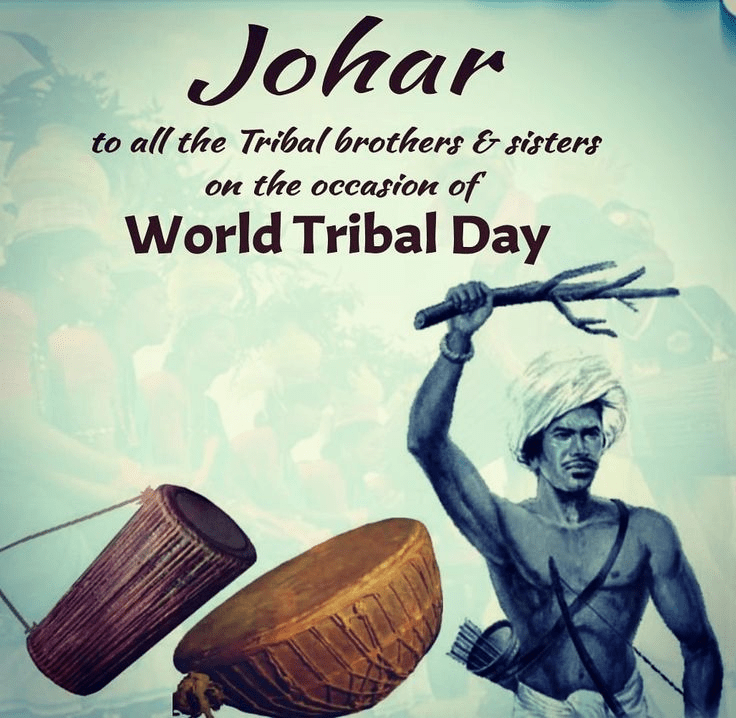
Today, 9 August, the world observes the International Day of the World’s Indigenous Peoples, often popularly called World Tribal Day.
It is much more than a day to admire colourful costumes, traditional dances, fascinating rituals or beautiful handicrafts.
It is a day to pause and ask ourselves a deeper question:
What can a modern world, racing towards artificial intelligence and technological advancement, learn from people whose knowledge has been passed from generation to generation?
The answer may surprise us.
A Day Born from a Historic Meeting
The United Nations chose 9 August because, on this day in 1982, the UN Working Group on Indigenous Populations held its first meeting. In 1994, the UN General Assembly formally established the International Day of the World’s Indigenous Peoples.
Today, an estimated 476 million Indigenous people live across more than 90 countries, belonging to more than 5,000 distinct groups.
They represent roughly 6% of humanity, yet they account for a disproportionately large share of people living in extreme poverty.
Behind these numbers are human beings with stories, memories, languages, beliefs, songs and knowledge systems that have survived for centuries.
The World’s Great Library May Not Be in a Building
Here is a remarkable fact that deserves greater attention.
Indigenous Peoples speak more than 4,000 of the world’s roughly 6,700 languages. Yet many Indigenous languages are endangered because they are not taught in schools or used in public life.
Think about that.
When a language disappears, we do not merely lose words. We may lose a unique way of describing the seasons, plants, animals, landscapes, relationships and the mysteries of existence.
A language can be a library without walls.
And sometimes, the oldest libraries are the human beings who carry knowledge in their memories.
As a Tuareg pastoralist woman, Dr. Mariam Wallet Aboubakrine, beautifully put it:
“The elders are our libraries.”
What a powerful thought!

Guardians of Land, Forest and Life
Indigenous territories cover approximately 28% of the world’s land surface, and Indigenous Peoples contribute to the management of about 11% of the world’s forests. Their territories contain a significant share of the planet’s remaining biodiversity.
There is, however, an important correction worth making.
You may often see the statement that “Indigenous Peoples protect 80% of the world’s biodiversity.” It is widely repeated, but the FAO says there is no solid basis for presenting that exact figure as fact. The broader truth is still extraordinary: research consistently shows that Indigenous stewardship is crucial to biodiversity conservation.
In fact, the World Bank notes that Indigenous-held lands often show lower deforestation, stronger biodiversity integrity and greater carbon storage than comparable landscapes.
Perhaps the lesson is simple:
The people who have lived closest to nature may have something important to teach those of us who have become increasingly distant from it.
A Kitchen Can Also Be a Knowledge Centre
Another lesser-known fact is that many Indigenous food and knowledge systems have remarkably high levels of self-sufficiency—estimated by the UN at around 50% to 80% in food and resource generation.
Long before the words organic, sustainable, local food and zero waste became fashionable, Indigenous communities had developed practices based on seasonal availability, careful use of natural resources and respect for ecological limits.
They did not necessarily call it sustainability.
They simply called it life.

The Price of Being Forgotten
Yet Indigenous Peoples continue to face discrimination, poverty, inadequate access to healthcare and education, insecure land rights and cultural marginalization.
Perhaps one of the greatest threats is quieter: cultural erosion.
When an elder dies without passing on a language, song, medicinal practice, story or craft, a small part of humanity’s collective memory may disappear with them.
That is why preserving Indigenous culture should never mean putting people inside a museum of the past.
Indigenous Peoples are not relics of history. They are participants in the future.
Their young people are artists, entrepreneurs, scientists, environmental activists, educators and community leaders.
The 2026 Message: Honour Those Who Safeguard Life
The UN’s 2026 observance focuses on Indigenous midwives and the safeguarding of life and well-being. Indigenous midwifery represents far more than childbirth. It embodies generations of knowledge about care, community, women’s well-being and the transmission of cultural knowledge.
It reminds us that knowledge does not always arrive wearing a white coat or carrying a university degree.
Sometimes it arrives through an elder, a grandmother, a healer, a farmer, a storyteller—or a midwife who has learned from generations before her.
Celebration Must Become Respect
So, how should we celebrate this day?
We can learn about Indigenous cultures without stereotyping them. We can support Indigenous artists and artisans fairly. We can listen to Indigenous voices when decisions affect their ancestral lands. We can encourage the preservation of endangered languages and traditional knowledge.
Most importantly, we can move beyond admiration towards respect and partnership.
Because the real question is not:
“What can we take from Indigenous knowledge?”
It is:
“How can we ensure that Indigenous communities have the rights, resources and freedom to decide what happens to their knowledge, culture, lands and future?”
A Lesson for the Modern World
Our modern civilization is extraordinarily clever. We can send spacecraft beyond Earth, communicate instantly across continents and develop artificial intelligence capable of processing enormous amounts of information.
Yet we are still struggling with climate change, biodiversity loss, loneliness, waste and our increasingly complicated relationship with nature.
Perhaps progress requires us to look both forward and backward.
Indigenous wisdom reminds us that humans are not owners of the Earth standing outside nature. We are part of an intricate web of life.
As we celebrate World Tribal Day today, let us therefore honour not only Indigenous peoples’ past, but also their present and future.
Let us listen to their voices.
Let us protect their rights.
Let us preserve their languages.
Let us respect their knowledge.
And above all, let us remember this beautiful truth:
“We do not inherit the Earth from our ancestors; we borrow it from our children.”
Whether or not we know who first expressed those exact words, their message captures the spirit of this day beautifully.
Perhaps Indigenous wisdom has been telling humanity something for generations:
The Earth is not merely where we live.
It is what makes our living possible.
Happy International Day of the World’s Indigenous Peoples.
May we learn to celebrate diversity not merely with our eyes and ears, but with our actions, respect and hearts.

BE HAPPY… BE ACTIVE… BE FOCUSED… BE ALIVE
If this post inspired you, show some love! 💙
✅ Like | ✅ Follow | ✅ Share | ✅ Comment
www.retiredkalam.com
Categories: infotainment


Very nice .
LikeLiked by 2 people
Thank you so much.
LikeLiked by 1 person
You are a great writer 👏👏👏👏
LikeLiked by 2 people
Thank you so much for your kind words! They truly mean a lot to me. 😊
Writing becomes even more meaningful when it creates a connection and inspires thoughtful conversations like this one.
I’m grateful to have you along for the journey.
Wishing you a wonderful day ahead!
LikeLiked by 2 people
A deeply thoughtful reminder that true progress is not merely about advancing technology, but about remembering our relationship with the Earth. Indigenous wisdom teaches us that knowledge is not always written in books it is often lived, preserved, and passed from one generation to another. 🙏
LikeLiked by 2 people
Thank you so much for your thoughtful words. I completely agree—true progress should not be measured only by how far technology takes us, but also by how wisely we live with the Earth.
Indigenous wisdom reminds us that some of the most valuable knowledge is not found in books or laboratories, but in lived experience, observation, and stories passed lovingly from one generation to the next. Perhaps in our rush towards the future, we sometimes forget to listen to those who have been quietly learning from nature for centuries.
LikeLiked by 2 people
A very timely and worthwhile post Verma-ji. The indigenous groups have got a lot figured out, based on the teachings of their elders over eons. They live in poverty because they and their land are easily exploited by the outsiders who do not respect nature or in many cases humanity. We call that progress, but progress to what? Progress to extinction? Creating wealth off the backs of others who are discarded along the way is the Capitalist mantra we have all bought into. What would happen if we all progressed together, instead of creating winners and losers? Have a wonderful day. Allan
LikeLiked by 2 people
Thank you, Allan, for such a thoughtful and thought-provoking response. You have beautifully captured the paradox of what we call “progress.” We have become remarkably advanced in technology and wealth creation, yet we often seem to forget the simple wisdom of living in harmony with nature and with one another.
Your question, “Progress to what?” is perhaps the question we most need to ask ourselves. Progress should not be measured only by GDP, skyscrapers, technology, or accumulated wealth, but by whether people can live with dignity, whether nature is protected, and whether prosperity reaches the many rather than the few.
LikeLiked by 2 people
Such a thoughtful and beautifully written reflection Verma ji🤍 I especially loved the reminder that “the elders are our libraries.” There is so much wisdom in cultures that have lived in harmony with nature for generations. May we learn not just to admire Indigenous traditions, but to listen, respect, protect and learn from them. 🌎✨ Truly, progress means very little if we forget how to care for the world we inherited. 🦋✨🙏
LikeLiked by 2 people
Thank you so much for this thoughtful reflection. 🙏 I completely agree—“the elders are our libraries” is a beautiful way of expressing how much wisdom can live within generations of lived experience.
Indigenous traditions remind us that caring for nature is not merely an environmental responsibility; it is a way of respecting life itself. We have much to learn when we pause, listen, and approach that wisdom with humility rather than simply admiring it from a distance.
LikeLiked by 2 people
This is absolutely beautiful, Verma ji. Thank you for sharing this profound and timely reminder. You’ve captured the essence of the day perfectly—moving us beyond mere admiration to genuine respect and partnership. Your words about the elders being our libraries and the kitchen being a knowledge centre really struck a chord. It’s a message we all need to carry forward, not just today, but every day.
LikeLiked by 2 people
Thank you so much for your thoughtful and generous words. 🙏 I’m delighted that the reflections on “elders as our libraries” and the kitchen as a centre of knowledge resonated with you.
So much wisdom lives in ordinary places and everyday practices, passed quietly from one generation to another. Perhaps the real challenge is not simply to admire that wisdom, but to listen to it, respect it, and carry its valuable lessons forward.
LikeLiked by 1 person
This is very thought-provoking! Food for thought, as always!
LikeLiked by 2 people
Thank you so much! 😊 I’m glad it gave you something to think about. Sometimes the best reflections are the ones that stay with us a little longer and make us look at familiar things from a different perspective.
Always happy to share a little “food for thought” with you! 🙏
LikeLiked by 2 people
This is good and so interesting, Vijay. People who live close to the earth understand its heartbeat.
LikeLiked by 1 person
Thank you so much for your beautiful observation. I love the way you put it—“understand its heartbeat.” ❤️ Perhaps those who live close to the earth learn to listen to what the rest of us often overlook: the rhythm of the seasons, the language of the forests, and the quiet wisdom of nature.
Maybe the Earth has always been speaking to us; we have simply become too busy to listen.
Thank you for adding such a meaningful thought to the conversation.
LikeLiked by 2 people
Vermavkvさん、こんばんは。いつも有難うございます🙇♂️
トゥアレグの牧畜民女性、マリアム・ウォレット・アブバクリネ博士の表現「長老たちは私たちの図書館だ」素晴らしい言葉です😉
8月9日は、国連が定めた世界先住民族の国際デーだったのですね。先住民族とされる人たちの集団生活域があることは早くから知っていましたが、推定4億7600万人の先住民が90か国以上にまたがり、5,000以上の異なるグループがあるなどとは知る由もありませんでした。
先住民族は全世界の約6,700言語のうち4,000以上を話すというのも凄いことです。多くの先住民言語は学校で教えられず、公共の場で使われないため、絶滅危惧の危機に瀕しているってことには一抹の寂しさを感じます。
言語は壁のない図書館になり得ます。確かにそうでしょうね。彼らは開かれた地の私たちと比べても環境破壊をおこなっていません。環境をしっかりと守って生活していることを私たちは学ばなければなりません。私たちの心ない環境破壊によって、環境をことのほか大切に守ってきた彼らの生活圏さえ奪ってしまうことになります。この世界先住民族の国際デーを機に、考えを改めなければならないときであることを痛感しました。とても勉強になりました。この問題を共有してくれたことに感謝です🙇♂️
LikeLiked by 2 people
Thank you so much for your thoughtful and insightful comment. I am truly glad that the post gave you an opportunity to reflect more deeply on the lives, wisdom, languages, and traditions of Indigenous peoples.
I was also deeply moved by the expression, “Elders are our libraries.” It reminds us that knowledge does not live only in books. It can live in people’s memories, stories, languages, traditions, and intimate understanding of nature.
LikeLike