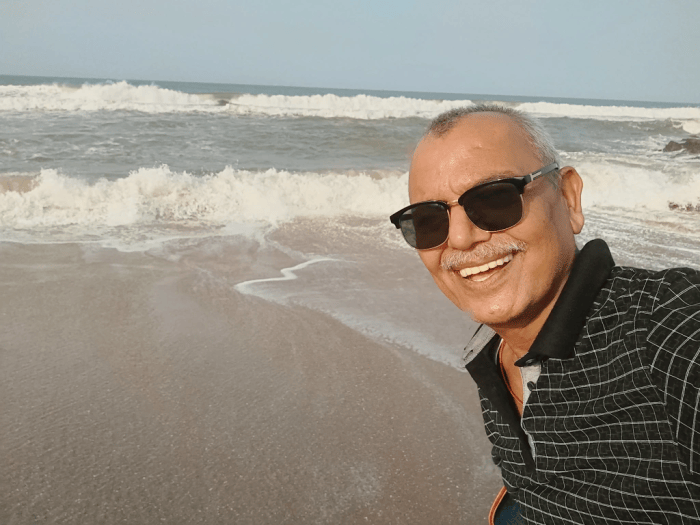
Hello, dear friends!
I hope this blog finds you in a cheerful mood.
Have you ever looked into the mirror and wondered when those fine lines appeared, why your skin looks less radiant, or where that youthful glow has gone? Perhaps your skin is trying to tell you something!
Our skin is more than a covering for our body. It reflects our age, lifestyle, environment, and sometimes even our state of mind. While ageing is a natural part of life, the good news is that healthy habits can help our skin remain nourished, resilient, and radiant.
The secret is not to fight ageing but to age gracefully.
1. What Keeps Our Skin Young?
Our skin contains an extracellular matrix made up of structural proteins, including collagen and elastin, along with substances such as hyaluronic acid. Together, these help maintain skin strength, elasticity, and moisture.
As we grow older, collagen production gradually declines, and the skin becomes thinner and less elastic. Fine lines, wrinkles, and sagging may appear.
Sun exposure, smoking, poor nutrition, and chronic stress can accelerate these changes. Genetics also plays an important role.
Remember, healthy skin is not necessarily wrinkle-free skin; it is skin that is cared for and protected.

2. Lifestyle Habits That Age Our Skin
Certain everyday habits can make our skin appear older than we would like.
- Excessive sun exposure: Ultraviolet radiation damages collagen and contributes to wrinkles and pigmentation.
- Smoking: It reduces healthy blood flow and damages the structures that support the skin.
- Too much sugar and highly processed food: An unbalanced diet can contribute to poor overall health and may affect skin ageing.
- Chronic stress: Persistent stress can disrupt sleep and negatively affect skin health.
- Sedentary living: Regular movement supports circulation and overall wellbeing.
- Poor sleep: Inadequate rest can leave the skin looking tired and dull.
A little sunshine can help the body produce vitamin D, but prolonged exposure is harmful. Use sunscreen, protective clothing, and shade rather than relying on a fixed duration of sun exposure.

3. Feed Your Skin from Within
Beautiful skin begins with good nourishment. No single food can reverse ageing, but a balanced diet provides the building blocks needed to maintain healthy tissues.
Include protein-rich foods such as pulses, beans, tofu, dairy products, eggs, or fish, according to your preferences. Vitamin C-rich foods, including oranges, guavas, amla, and bell peppers, support the body’s natural collagen production.
Nuts, seeds, and oily fish provide beneficial fats. Colourful vegetables and fruits supply antioxidants that help protect cells from damage.
Fermented foods such as yoghurt can support gut health, while adequate water intake helps maintain normal hydration.
Let your plate be colourful, your meals balanced, and your eating habits sensible.
Extreme fasting is not necessary for healthy skin, and prolonged fasting may be unsuitable for some people.

4. Sleep, Exercise, and a Peaceful Mind
Regular exercise, adequate sleep, and stress management are powerful allies in healthy ageing.
Aim for around 30 minutes of moderate physical activity most days, adjusting it to your fitness and medical needs. Walking, yoga, swimming, and gentle stretching are excellent options.
Try to maintain a consistent sleep schedule and practise meditation or deep breathing to calm your mind.
As the saying goes, “A healthy outside starts from the inside.”
5. Give Your Skin Simple, Loving Care
You do not need an expensive collection of beauty products. A gentle cleanser, moisturiser, and broad-spectrum sunscreen of SPF 30 or higher can form the foundation of a sensible skincare routine.
Avoid harsh products that irritate your skin. Essential oils are not automatically safe simply because they are natural; some can cause allergic reactions.
If you notice persistent irritation, unusual skin changes, or a rapidly changing mole, consult a healthcare professional.

Yes, Let Your Skin Smile!
Dear friends, ageing is a privilege, not a failure. Every wrinkle carries a story, every grey hair marks another chapter, and every passing year offers opportunities to grow wiser.
Instead of spending excessively on the promise of eternal youth, invest in nourishing food, restful sleep, regular exercise, sun protection, and a peaceful mind.
“Beauty is not about looking younger; it is about feeling healthier and living better.”
So, look into the mirror today and ask yourself: Is my skin smiling?
Let us nurture our bodies with care, treat ourselves with kindness, and embrace every stage of life with gratitude.

BE HAPPY… BE ACTIVE… BE FOCUSED… BE ALIVE
If this post inspired you, show some love! 💙
✅ Like | ✅ Follow | ✅ Share | ✅ Comment
www.retiredkalam.com
Categories: infotainment


I Documented ISIS’s Crimes. Then I Visited Auschwitz.A historian from Mosul, Iraq, visits Treblinka, Auschwitz, and Bełżec—and returns with a demand for the Arab world.
By Omar Mohammed
“Go back to Poland” will be a familiar phrase to some. Since the October 7, 2023, attacks, it has been screamed at Jews across the West, intended to warn them that they do not belong—that their true homeland is the place where their ancestors were exterminated 80 years ago. Last week, Michigan Senate candidate Abdul El-Sayed held a roundtable with an activist who has echoed that very phrase, calling for Israeli Jews to be sent “back to Poland.”
_____________________________________________________________________
An Introduction: “Go back to Poland” will be a familiar phrase to some. Since the October 7, 2023, attacks, it has been screamed at Jews across the West, intended to warn them that they do not belong—that their true homeland is the place where their ancestors were exterminated 80 years ago. Last week, Michigan Senate candidate Abdul El-Sayed held a roundtable with an activist who has echoed that very phrase, calling for Israeli Jews to be sent “back to Poland.”
Omar Mohammed first heard of this phrase when it was chanted at Columbia University’s campus after October 7. And it struck him deeply. An Iraqi historian, Omar was living in Mosul when ISIS seized control of the city. In the aftermath, he did not flee. Instead, he sat in a room one thin wall away from a senior ISIS leader, and he wrote—using his anonymous blog, Mosul Eye, to bring the terrorist group’s atrocities to millions. (To hear him tell his full story, watch our interview with him here.)
But Omar’s work as a historian did not end when he escaped Iraq in 2017. A few weeks ago, he reached out to tell us that after years of hearing calls for Jews to go back to Poland, he had decided to visit the concentration camps himself. He wanted to write, he said, about being “a historian from Mosul who documented one genocide, standing for the first time at the site of another.” The piece that resulted is something remarkable. We’re proud to bring it to you today. —Jillian Lederman
This is from Omar Mohammed’s essay, “I Documented ISIS’s Crimes. Then I Visited Auschwitz.” He describes arriving in Warsaw and taking the 175 bus before visiting Auschwitz, Treblinka, and Bełżec. The Free Press
_________________________________________________________________________
On August 24, I landed in Warsaw at night. I have long held that a city reveals its identity after dark, so I took the 175 bus from the airport into the center to get a better sense of it.
Something in that ride unsettled me. I have sat in my hometown of Mosul, Iraq, a city under ISIS occupation, and known exactly what I feared. On that bus, there was nothing I could point to, and yet my body reacted as if there were. I said afterward that I had smelled the ash of the dead—literally, still in the ground 80 years on.
I had never been to Poland. I first learned of the Holocaust in Mosul, in 2004 or 2005, when satellite dishes became easy to get after the fall of Saddam Hussein. I watched documentaries on the Second World War, one after another, recording each of them—because in those years we still lived with the expectation that anything could disappear at any moment.Around the same time, I found out that the school I had attended stood on the ruins of the Jewish school of Mosul, which Saddam had demolished in 2000. From then on, I carried the hope that I would one day stand in the camps and see them for myself. What made me go, finally, was hearing about an incident in the wake of the October 7 attacks on Israel, when a particular chant was screamed at Jews on Columbia University’s campus: “Go back to Poland.”Walter Reich, my friend and mentor, was appalled when he heard about the incident. Walter is the Yitzhak Rabin Memorial Professor of International Affairs, Ethics, and Human Behavior and a professor of psychiatry at The George Washington University, where I also work, and was the director of the United States Holocaust Memorial Museum from 1995 to 1998. Most of what I know about how societies erase their Jews I’ve learned from him. He told me that after he heard the call for Jews to go back to Poland, he decided to do just that: take his children and grandchildren to the death camp at Bełżec, where much of his family was murdered. He wanted to recite the kaddish there, the Jewish prayer for mourning.What remains of Walter’s family amounts to a field. His uncles, aunts, and cousins were gassed, their bodies dumped into pits, later exhumed and burned, the ash dumped back in. He has been going to that field to say kaddish since the 1980s.In August, I wrote to tell him that I was going to Auschwitz later that month, and within two hours he wrote back, “Have courage, Omar.” I asked him to teach me the kaddish so that I could say it there too.
As a historian, I have spent my life on one question: What does a city do with its dead? For three years, from June 2014 to 2017, I kept a record of ISIS’s rule of Mosul from inside it, at night, anonymously, in a place where discovery meant death. I published it all on my public blog, Mosul Eye—and when the city was freed, I turned the same approach on an earlier erasure, more than 60 years before: In 1950, Mosul’s Jews were stripped of their nationality. By 1951, they were gone.
The rule I made for myself under ISIS I carried to Poland: Trust no one, document everything. Every conversation in this essay comes from a tape recorder that, on the bus from the airport, I turned on and did not switch off.
My first stop was Treblinka, some 60 miles northeast of Warsaw. My driver was a man from Tajikistan. I will call him Daler.
When I told him where we were going, he asked what it was.
He was a Muslim and had lived five years in Poland and two in Germany without anyone telling him what had happened here. I sat in the back with the recorder on the seat and understood that my plan had a flaw. I had come to Poland intending to make a demand once I returned home: I wanted the Arab world to learn the history of this place and teach it in their schools. But the first person I met—a Muslim from Tajikistan who had lived in Germany and Poland for seven years—knew nothing about the extermination camp he was driving me to see on a Tuesday morning, or what it represented.
So, I taught him. It took two hours, most of it through his phone, English into Tajik on the screen, read at the red lights, answered in Tajik, turned back into English. Six million Jews murdered for being Jews and for nothing else. He told me Tajikistan has about 10 million people. I asked him to imagine six million of them killed, and watched him in the mirror. After a while, he said it was impossible to comprehend. “From this day on,” he said in Tajik. “I will tell people about this. I did not know much about it before. Now I understand.”
Imagine spending seven years in Poland and Germany and not learning anything about the Holocaust.
The structures the Germans built at Treblinka are not there anymore. They took the killing center apart in the autumn of 1943 after the prisoners revolted, plowed the ground, and installed a guard unit in a farmhouse. What remains is a pine forest and a field of 17,000 jagged stones set upright in concrete, some carved with the names of towns and countries. Some 925,000 Jews were murdered in this clearing in about 15 months.
It is quiet in a way I have never heard, but it is not the quiet of a cemetery. In a cemetery, at least the dead have graves.
Around Treblinka, pines grow so close together that no light reaches the ground between them. They have been growing on this ground for 80 or more years, and they are the only living things that saw all of it and are still here. Standing among them, I found it hard to breathe.
I had asked Daler to wait in the car park and take me back to Warsaw when I was done, but he said he wanted to come with me. We walked in together. On our right was a line of concrete railroad sleepers. That was where the train cars stopped, the doors opened, and people who had been two days without water stepped down and were told they had come to a transit camp. At the platform I stood still. It was there that what I had feared most about coming to Poland caught up with me. Standing there, I could not stop asking what was in their minds, what they saw, whether at the door of the gas chamber some of them still hoped to live.
We went on to the memorial sculpture, a granite tower at the center of the field, cracked at the top, which stands where the gas chambers stood. In front of the sculpture lies the stone that says “Never again” in seven languages. There, at the memorial sculpture, I recited the Mourner’s Kaddish.
I had the words from Walter and the melody from a rabbi who is my friend, who had taught me to sing it the way the Jews of my country had sung it, in the Iraqi Maqam Saba. I know it is a prayer meant to be said among a congregation of 10 Jews, and I was only one person, and not a Jew. But I also know it was a genuine kaddish.
Daler stood a step behind me, filming the prayer with his phone. When I finished, he said it sounded like the Quran. I said it is older; it is Semitic, the Aramaic the Jews spoke in Jerusalem and Babylon before the Jews of Iraq spoke Arabic, and the language the Christians of Nineveh still speak. He called his brother, right there among the memorial stones, and asked whether his brother had known about this. He had not. So he told his brother, right there, what I had told him in the car. When he hung up, he typed into his translation app, and the phone said to me: “I make a promise. Not to you. To myself, so that I do not break it. I will tell every person I meet.”
Watching him type, I thought this might be how the prayer finds its minyan of 10 mourners: by one person telling another.
MOHAMMED READS THE MOURNER’S KADDISH AT TREBLINKA ON AUGUST 25, 2026. (PHOTO COURTESY OF OMAR MOHAMMED)
This article is part of Israel and the Jewish World. Sign up to get everything we publish on Israel, antisemitism, and Jewish life and identity across the globe.
____________________________________________________________________________
We were back in Warsaw by the middle of the afternoon, and I went to a bar I had been warned against entering. “Only for Polish people,” a bartender at another place had told me. I wanted to understand what that meant, so I went anyway and began speaking with the bartender there. I asked him what “only for Polish people” meant. He did not answer immediately, so instead I asked him what he knew about what had happened to the Jews of his city. He said they had learned it at school—that they had to learn it, because the Poles were killed too. He said they’d learned that the Poles had saved the Jews, and the Jews were not nice in return—and that the Jews then came back as communists and began attacking the Poles. I argued with him. He listened, nodded, and did not argue back.I did not yet know that I would hear variations of the young bartender’s sentence every day I was in Poland.On my three-hour train from Warsaw to Kraków, I put on the piece John Williams wrote for Schindler’s List called “Jewish Town,” referring to the ghetto of Kraków. Itzhak Perlman plays the violin. It was not the first time I heard this tune. It was a song that, back in Mosul in 2015, had saved my life.
I ran Mosul Eye at night from a room I called the operations room, and I worked to music, because it covered the sound of the keys and kept me from losing my mind. One night, I was listening to the Schindler’s List score, which ended with that piece. I stood up to change the disc, and through the window, I saw the Islamic State forces searching the houses on our street, coming toward ours. I took my laptop off the desk, hid it and everything that went with it, and put a second, clean laptop where it had been. Had the disc run one track longer, I would have been sitting at the desk with the blog open when they came to search.
It was only onboard the train in Warsaw that I understood how much I owed to this recording, and the murdered people to whom it was dedicated.
When I reached Kraków, a driver was waiting for me, sent by the Auschwitz Research Center on Hate, Extremism, and Radicalization, known as ARCHER. ARCHER’s headquarters are in a house at 88 Legionów Street, directly outside of the concentration camp. It was originally built by a Polish officer in 1937, after which the Germans gave it to Rudolf Höss, the commandant of the whole Auschwitz complex: Auschwitz I, the work camp, and Auschwitz II, or Birkenau, where huge gas chambers killed Jews by the thousands every day.
Höss lived in this house with his wife and their five children while he ran both camps. And for 80 years after the war concluded, ordinary families lived in it. On the 80th anniversary of the liberation of Auschwitz, ARCHER bought the house and opened it as a research institution—that was where I’d been invited to visit.
In Mosul, one thin wall separated my house from the house of a senior fighter of the Islamic State. On my side of the wall, life stayed ordinary, but I never saw the ordinary life on the other side of the wall. Now, at Auschwitz, I would.
I was upstairs with the director of ARCHER for four and a half hours. “What does one do with a house like this?” I asked him. He said it is both a burden and a responsibility; Höss does not deserve a shrine, but he does deserve to be remembered. Then he handed me a photograph: the Höss children in the garden in summer clothes, squinting, and behind them the wall, and behind the wall the camp. I asked how many Höss killed on a given day. At full capacity, the director said, 10,000 people.
At around 11 a.m. they brought lunch up on a tray. I washed my hands for a long time. Though I was hungry, I could not eat in that house. I had come as a guest, and where I come from, a guest who eats has accepted the house. I could not accept it. The director said his own staff could not eat there at first either, and then one day they could. He ate. I watched them eat, and I did not hold it against them, because someone must be able to work in this building or else the record closes and the house goes back to being only a house.
People reach for one word when they talk about men like Höss, or about the men of the Islamic State: monster. I have argued for years against that word. A monster has no choice. These men did. If Höss was a monster, the house is a curiosity and the lunch is only lunch. If he was a man, then the house is a record of how little has to change in a man for killing to become a profession, and a profession to become a household.
There is a mezuzah on the doorpost now, and every guest is photographed touching it. I touched it. Then I left, because the museum tour starts by the car park at half past two and does not wait.
The Auschwitz Birkenau Memorial and Museum lists its guide-educators in some 20 languages: Croatian, Ukrainian, Hebrew, Japanese, Korean. Arabic is not among them. The absence has a history. Across the Arab world, the Holocaust enters the school curriculum, when it enters at all, as a European crime that Europeans used to justify the taking of Palestine. The book that reached Arabic readers in my youth was not Primo Levi but Roger Garaudy, a French convert to Islam whose 1996 tract calling the gas chambers a myth sold in Cairo and Beirut by the tens of thousands. In 2014, Mohammed Dajani, a professor at Al-Quds University, took 27 Palestinian students to Auschwitz; he was called a collaborator, his car was set on fire, and by the summer he had resigned.
There are exceptions. Mohamed Helmy, an Egyptian doctor in Berlin, hid a Jewish girl for the length of the war, and in 2013 he became the first Arab named Righteous Among the Nations. Tunisian families sheltered Jews during the German occupation of 1942 and 1943. The Emirates, after the Abraham Accords, put the Holocaust into their school curriculum. But the tour schedule at Auschwitz, with its 20 languages, still has no Arabic, because no one who comes needs it.
We walked to the ramp at Birkenau, where the selections were made: who would work on starvation rations, and who would be sent directly to the gas chambers. There, a boy of 14 or 15 in the group ahead of ours was arguing with his mother, loudly, in English, that it was all a lie and why had she brought him here. When the group moved on, I stayed on the ramp and said kaddish.
My driver back to Kraków was a Pole from Oświęcim, Vladislav, who lives 200 yards from the camp and has driven Israeli television crews to it for 36 years. His grandmother had been a prisoner in Birkenau. I asked whether a Jew is safe in Poland today. He said yes, still—and then, unasked, that no one knows for how long. I asked whether the families of the people murdered here should come back to live. No, he said. To visit is safe. To live, no.
The people who say “go back to Poland” seemingly imply that Poland is a country a Jew could go to. I’m not so sure that’s true.
_________________________________________________________________________
“THE GUIDE SAID THAT THESE KINDS OF WORDS APPEAR IN THE BOOK PERHAPS ONCE A YEAR, AND THAT THE STAFF TEARS OUT SUCH PAGES,” WRITES OMAR MOHAMMED. “I ASKED HER NOT TO. KEEP IT AS EVIDENCE.” (PHOTO COURTESY OF OMAR MOHAMMED)
The next day I went to Bełżec, near the Ukrainian border, with two friends. Our guide had worked at the memorial for 10 years. Before we went into the camp, she took me to the visitors’ book in the entrance hall and turned to this year. In pencil, in small uneven capitals, someone had written two words in Polish: Hwała Hitler. Glory to Hitler.The first word was written with an H, not the Polish Ch, and the guide said that was how a Ukrainian would spell it and that the writer might have been one. I noticed how quickly the possibility was offered. Every Pole I spoke to that week, a bartender, two drivers, a guide, two friends, and their colleagues, told me, unasked and more than once, that the Poles had done nothing to the Jews.The guide said that these kinds of words appear in the book perhaps once a year, and that the staff tears out such pages. I asked her not to. Keep it as evidence, I said; it is part of the record of this place now, the way the pits are. Before we left the book, I saw on another page two words in English: Free Palestine.What stayed with me was not words; it was the effort. In 2026, someone found the time, and the will, to travel to Bełżec, to stand at the book where visitors sign their names, and to write these things. Until that afternoon I had heard “go back to Poland” as a statement about geography, an ugly way of telling Jews in New York that they belonged somewhere else. The visitors’ book corrected me. The person who wrote in it had traveled to a field that is itself a grave to wish that the work be resumed.
Then we walked. It is all outside. The first transport came on March 17, 1942, from Lublin. In 10 months, roughly 434,500 people were murdered, burned to death in gas chambers. Their bodies went into pits, 33 of them, and by December the ground had begun to move; the gases of hundreds of thousands of decomposing bodies forced their way up, and the earth heaved and split. So the Germans dug the bodies out, laid them on grates made from railway track, poured petrol, and burned them, day and night, from December to the end of March. The ash was shoveled back into the pits. Then they plowed it and planted a farm, so that when the Polish commission came in 1945, there was a field. Two prisoners lived to testify. The record of Bełżec rests on two men and the Germans’ own telegrams.
The memorial, opened in 2004, is a field of black foundry slag made to look like freshly turned earth in which nothing grows; it crunches under your shoes and it is warm. This is a new version of the memorial that opened in 1963—at that one, Walter told me later, you could pick up the soil and find pieces of ash and bone in your hand.
At the new one, a path cuts between the graves and sinks as it goes, until the walls are above your head and the sky is a strip. My breathing shortened as the walls rose. I did not know, when I walked down it, that Walter had written against it in The New York Times in 2004. The trench, he said, was an invasion of the graves; ash and bone had been disturbed in the digging, and one visits a grave site, one does not walk into it. When he goes to Bełżec, he continued, he doesn’t go in; he remains outside and says kaddish. I read that piece after I came home. The next time I go, I will stand where he stands.
The path ends in a niche of gray granite, cut with first names only, because for most of the dead of Bełżec the first name is all that survives. I recited the kaddish there, for the third time in three days: for the dead of Bełżec. For the dead of Rzeszów and of Kolbuszowa. For Walter’s uncles and aunts and cousins, and for the grandmother he believes is there.
Then we walked back along the side walls, where the towns are cut into the granite. Lublin, Lwów, Rzeszów—Walter’s father’s town—and then Kolbuszowa, his mother’s.
We returned to the office, where, on the desk, was the page from the visitor’s book; someone had torn it in two while we were in the field so that the first word was on one strip and the second on the other. I asked whether I could have it; a record torn in half is still a record. They gave me the two pieces.
I asked the guide whether Arabs or Muslims ever come to Bełżec. From Germany, she said, Turkish children with German passports sometimes come. From Arab countries, almost never—and when they do, she thinks they are Jews. I told her I hoped one day for a Holocaust museum in Iraq, but that I didn’t think it would happen for a hundred years. I also told her that in autumn 1942, the same months that the trains of Jews were unloading here, a northern division of the Polish Army was posted at Mosul, which was then under British command. Among its soldiers were Polish Jews. Maurice Nabi, a Jew of Mosul whose testimony I recorded years ago, told me that the Polish Jewish soldiers came and prayed with the community, and that when crowds from the city came for the Jews of Mosul, the soldiers stood between them. At the same time as Poland’s Jews were being burned in this field, Poland’s Jews were standing guard over the Jews of my city.
I went to Poland to see what “go back to Poland” means in the places it points to. The people who shout it have never had to find out the answer to that question. At Bełżec, it means ash.
So, to the protesters who said it, and the ones who will say it again: You are invited. Not to Auschwitz, where the world goes, but to Bełżec. I will meet you there.
In 2024, the Anti-Defamation League counted 1,694 antisemitic incidents on American campuses, 84 percent more than the year before. At my own university, a sign at a protest read “The Final Solution.” I am not asking any university to police a sentence; but the students should know what that sentence means.
What I heard in Poland was one sentence, worn many ways. The bartender in Warsaw, who said the ungrateful Jews still accuse Poles of killing them when the Poles were the ones who saved them. Grzegorz Braun, a member of the European Parliament, who said last year that the gas chambers at Auschwitz were fake, and finished fourth in Poland’s presidential elections. Glory to Hitler and Free Palestine a few pages apart in the visitors’ book just outside a death camp.
In each of these instances, the Jew is moved from victim to accused. The Jew who suffered yesterday is given a new identity for today: communist in 1968, Zionist after that, oppressor now. Once the new identity is in place, you no longer need to deny the camps to feel hostility. You can concede that they existed and continue anyway, because your hostility is directed at the person the Jew is said to have become, not at the person he was.
I have spent my life on one question: What does a city do with its dead?
The Jewish exile from Mosul began with a pattern Europe already knew: lists, a letter painted on the doors, a tax, confiscation, trucks. The destination was different, but the grammar of exclusion was the same. A city that has never been taught what the sequence looks like does not recognize it when it begins. I recognized it because I had read the European record. My neighbors could not, because no one had let them.
When it comes to the Holocaust, my ask for Arab states is very simple: Fund the work; put the history in the curriculum; pay for the museum and the archive in Arabic; translate the testimony. Then leave the writing to historians and use the power of the state for one purpose only, which is to make sure that the teacher, the curator, and the archivist who take on this subject are not left unprotected when faced with accusations of treason.
I know it can be done because it has already begun. Morocco has spent years building partnerships around Holocaust education, and this March educators from several Arab countries met there to discuss how the history might be taught across the region. The Emirates announced Holocaust education in its schools in 2023.
The inevitable objection is that a state that teaches the Holocaust does so as a favor to Israel. But there is a way into this history that no one in the Arab world can call normalization, because it is our own history. The Farhud, the pogrom of June 1941 in which Iraqi nationalists killed hundreds of Baghdad’s Jews, is Iraqi history before it is anything else. So is the 1950 law that stripped Jews of their citizenship if they chose to emigrate from Iraq, effectively ending their 2,500-year history in the region. So are the Jews of Mosul who prayed with Polish soldiers in the autumn of 1942. Their children and grandchildren are mostly in Israel now, but that does not move the history out of our hands. The Jews of Iraq are our own dead.
There will be a Holocaust museum in an Arab country. I do not know the year, but I do know who it will be for. It will be for the next Daler, so that a Muslim can no longer live seven years beside one of these fields and learn what is under it only by accident. It will be for the first Arab schoolchild who will walk out of the museum knowing enough to stand at the wall at Bełżec and find Kolbuszowa, as I did.
And it will be for every person to be able to recognize the kind of horror humans are capable of before it knocks on their door.
LikeLiked by 1 person
Verma ji, a wonderful and thoughtful article! You’ve explained skin ageing so simply and positively—focusing on healthy habits, balanced food, sleep, exercise, sun protection and a peaceful mind rather than expensive anti-ageing promises. I especially loved the line: “Beauty is not about looking younger; it is about feeling healthier and living better.” Very inspiring and practical. Thank you for this gentle reminder to age gracefully and take care of ourselves from within. Let our skin smile! 😊
LikeLiked by 1 person