Hello dear friends,
I hope this Blog finds you in a cheerful mood.
Today, I want to talk about a subject that sounds very simple, yet becomes more meaningful as we grow older—Happiness.
When we are young, we usually think happiness is something we have to achieve. We chase good marks, a successful career, promotions, money, a beautiful home, social status and many other milestones. We keep telling ourselves:
“Once I achieve this, I will be happy.”
Then life moves on, one achievement follows another, and suddenly we discover that happiness was never waiting at the next milestone.
Perhaps it was quietly present in the journey itself.
“Happiness is not a destination. It is a way of life.”
❤️ The Happiness We Chased
For many years, our lives are governed by responsibilities.
We wake up with an alarm, rush to work, attend meetings, meet deadlines, manage finances, raise children and fulfil countless obligations. There is always somewhere to go and something to accomplish.
During those years, happiness often becomes a weekend luxury.
- We say, “Let me finish this work first.”
- Then we say, “Let the children grow up.”
- Later, “Let me retire.”
- And finally, retirement arrives.
Suddenly, the clock that once controlled our lives becomes almost irrelevant.
That is when we face an interesting question:
Now that I have time, what will I do with it?
❤️ Retirement Is Not the End
I believe retirement is not the end of active life. It is the beginning of a different kind of life.
During our working years, we earn money.
After retirement, we have an opportunity to earn moments.
- A morning walk becomes an appointment with ourselves.
- A cup of tea becomes a small ceremony.
- A conversation with an old friend becomes precious.
- A game of table tennis brings back the child within us.
- A few strokes of a paintbrush can transport us into another world.
And writing a few hundred words can turn our thoughts into something that may touch another person’s heart.
These things may not appear important on a balance sheet, but they enrich the most important account of all—the account of life.
“The greatest wealth is to live content with little.” — Plato
❤️ The Magic of Ordinary Moments
One of the beautiful things about growing older is that we begin to understand the value of ordinary moments.
Earlier, we wanted celebrations.
Now, a peaceful morning can be a celebration.
Earlier, we wanted expensive vacations.
Now, sitting together with family over a cup of tea can feel like a holiday.
Earlier, we wanted hundreds of friends.
Now, we value two or three people with whom we can speak without pretending.
Life slowly teaches us that happiness does not always make noise.
Sometimes it arrives quietly.
- In a morning breeze.
- In birdsong.
- In an old photograph.
- In a familiar song.
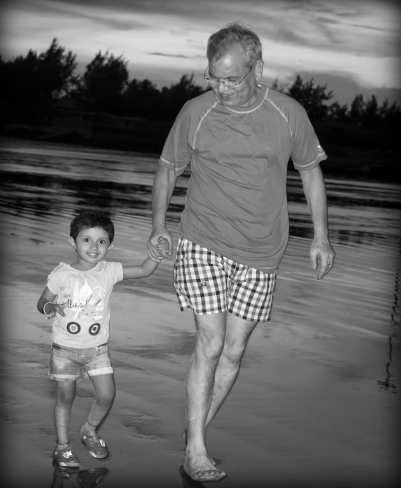
- In a grandchild’s laughter.
- In the smell of tea.
- In the satisfaction of finishing a painting.
- In the simple feeling of being alive.

❤️ The Garden of Hobbies
Retirement gives us something our working years often denied us—time for ourselves.
That is why hobbies are not merely ways of passing time. They can become sources of purpose.
- Walking keeps the body moving.
- Yoga brings balance.
- Swimming refreshes both body and mind.
- Table tennis adds excitement and companionship.
- Painting gives imagination a colour.
- Writing gives thoughts a voice.
- Reading opens windows into other worlds.
And blogging allows us to share our experiences with people we may never meet personally.
A retired person with meaningful hobbies is rarely truly retired.
He has simply changed his profession—from earning a living to enriching life.
❤️ Happiness Is Not About Having More
As we grow older, we also begin to understand something that advertisements never teach us:
More is not always better.
More money can bring more responsibility.
More possessions can create more maintenance.
More social recognition can create more expectations.
More comparison can create more dissatisfaction.
Contentment, therefore, becomes an important ingredient of happiness.
Contentment does not mean that we stop dreaming.
It simply means that while pursuing tomorrow, we don’t forget to appreciate today.
“Happiness is when what you think, what you say, and what you do are in harmony.” — Mahatma Gandhi
❤️ Relationships Become Our Real Wealth
Ask someone who has reached the later chapters of life what they value most.
The answer is rarely a bigger television, a newer car or an expensive watch.
It is usually people.
Family.
Friends.
Neighbours.
Old colleagues.
Someone who remembers your birthday.
Someone who calls just to ask, “How are you?”
Someone with whom you can sit silently without feeling uncomfortable.
As the years pass, we realise that memories are created with people, not possessions.
A family meal.
A festival together.
A spontaneous laugh.
A journey.
A photograph.
A simple conversation that continues long after the tea has become cold.
These are the treasures that remain when many other things disappear.
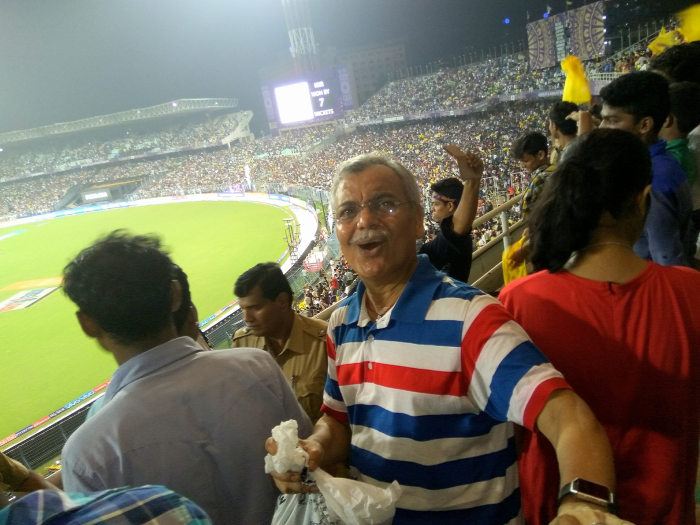
❤️ Don’t Postpone Happiness
Perhaps the biggest mistake we make is postponing happiness.
We spend our youth preparing for adulthood.
We spend adulthood preparing for retirement.
And sometimes we spend retirement worrying about tomorrow.
But life is happening today.
So let us not wait for perfect circumstances.
Let us enjoy what is available.
Take the morning walk.
Call an old friend.
Play a game.
Read a few pages.
Write something.
Paint something.
Sit with family.
Watch the evening sky.
Have that extra conversation.
Laugh a little louder.
And occasionally do absolutely nothing without feeling guilty about it!

❤️ My Final Submission
The older I grow, the more convinced I become that happiness is not about possessing a perfect life.
There is no perfect life.
There are difficult days, disappointments, health concerns, financial worries, misunderstandings and moments of loneliness.
But even within an imperfect life, there can be perfect moments.
And perhaps our job is to recognise them.
Happiness is not the absence of problems.
Happiness is the ability to notice the blessings that still exist despite the problems.
So, my dear friends, let us stop searching for happiness as though it were hidden somewhere far away.
It may be sitting beside us.
Perhaps it is in the person sharing our morning tea.
Perhaps it is in the hobby waiting for our attention.
Perhaps it is in an old memory.
Perhaps it is in the laughter of a child.
Or perhaps it is simply in this beautiful privilege we sometimes take for granted—
another morning, another breath, another chance to live.
“Be happy in the moment, that’s enough. Each moment is all we need—not more.” — Mother Teresa
After all, life does not become beautiful because everything goes our way. Life becomes beautiful when we learn to find happiness in the way it is.
And maybe that is the greatest wisdom retirement can teach us:
**We spent the first half of life trying to build a life.
The second half gives us the opportunity to actually live it.**
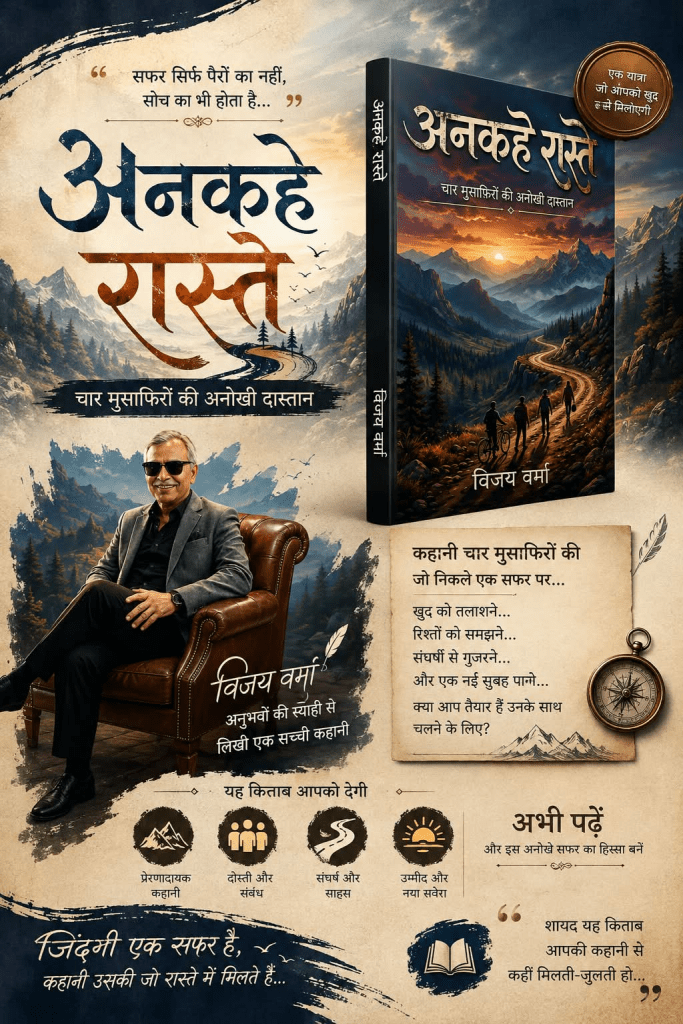
My book is now available on Amazon.
You can find it here: https://amzn.in/d/0gBYPlvz
I truly appreciate your interest and support—it means a lot!
Categories: infotainment


Very well said Vermaji. True happiness lies in small things and not the big achievements. You have found the real meaning of happiness. Stay happy and stay blessed. Thanks for sharing
LikeLiked by 1 person
Thank you so much for your kind and thoughtful words! 😊 Indeed, true happiness often hides in life’s simplest moments, waiting for us to appreciate them. May we always find joy in little things and remain grateful for life’s beautiful blessings. Stay happy and blessed! 🙏
LikeLiked by 1 person
👍
LikeLiked by 1 person
Enjoy each and every chapter of life – it is a blessing to be given so many – fabulous post! Linda 🙂
LikeLike