
Hello dear friends,
I hope this Blog finds you in a cheerful mood.
Today’s writing prompt asks a fascinating question: “If you could go back and witness any historical event, which one would you pick?”
For me, there is no hesitation. I would choose August 15, 1947—the dawn of India’s Independence, while also witnessing the momentous and painful Partition that accompanied it.
A Midnight That Changed History
Imagine standing in Delhi on that historic night. After nearly two centuries of British rule, India was finally becoming free. At midnight between August 14 and 15, Jawaharlal Nehru delivered his famous “Tryst with Destiny” speech before the Constituent Assembly.
Nehru declared that India would “awake to life and freedom”—words that captured the dreams of millions.
Interestingly, the midnight ceremony was not accidental. The transition of power was deliberately scheduled around midnight, partly influenced by Indian astrologers who considered the earlier time inauspicious. Thus, August 15, 1947, became the first Independence Day of free India.
I often wonder what it must have felt like to stand among the crowds that night—to hear the celebrations, see the national flag rise, and realise that an entire nation had finally broken the chains of colonial rule.
Freedom Came With a Heavy Price
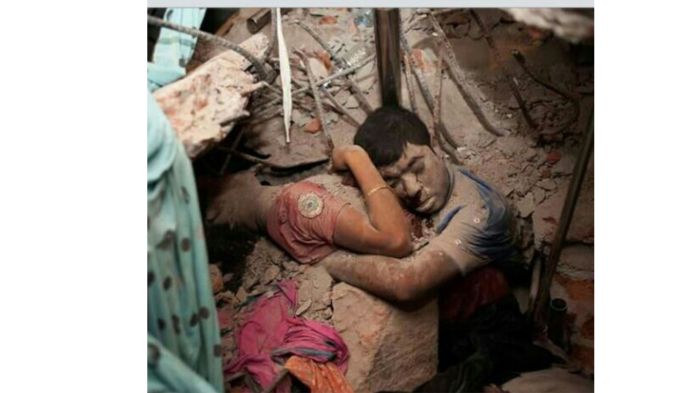
Yet Independence was accompanied by an immense human tragedy: the Partition of India.
The British Indian Empire was divided into two independent dominions—India and Pakistan. Punjab and Bengal were divided, families were separated, and millions suddenly found themselves on the “wrong” side of a newly drawn border.
Historians estimate that around 14–15 million people were displaced, making Partition one of the largest mass migrations in modern history. Estimates of deaths vary considerably, but historians commonly place the toll at hundreds of thousands to perhaps one million or more.
Trains arrived at railway stations carrying refugees—and sometimes only silence and grief. Homes were abandoned, possessions left behind, and generations-old memories were suddenly separated by an imaginary line on a map.
This is why I would want to witness Partition as well as Independence. History should not be remembered only through celebrations; it must also acknowledge the suffering behind them.
The Joy of a New Beginning
For Indians who were alive in 1947, Independence was more than a political event. It was an emotional awakening.
Temple bells rang. Crowds filled the streets. People shouted “Jai Hind!” The tricolour became a symbol of hope, dignity and a new national identity.
India inherited enormous challenges—poverty, illiteracy, communal tensions and the task of integrating hundreds of princely states. Yet the country chose democracy.
On January 26, 1950, India became a republic with the adoption of its Constitution.
That journey—from colonial rule to a sovereign democratic republic—is perhaps one of the most remarkable chapters of modern history.
Why I Would Go Back
If I could travel through time, I would not go merely to watch history being made. I would go to feel it.
I would want to see the faces of ordinary Indians—those who had sacrificed, struggled and waited for freedom. I would want to hear their hopes and fears. And I would want to remember the millions whose lives were shattered by Partition.
Historical events are not simply dates printed in textbooks. They are made of human dreams, courage, tears and choices.

Memory Is Our Bridge to History
Remembering 1947 reminds us that freedom should never be taken for granted.
Every Independence Day, when we watch the tricolour rise, perhaps we should remember both sides of that historic morning—the joy of freedom and the sorrow of Partition.
Time does not erase history. It changes the way we understand it.
And perhaps that is the greatest lesson of all:
“A nation remembers its past not to live in it, but to learn how to build a better future.”
If I could witness one historical event, I would choose the Dawn of Independence—because in that single moment, India experienced both the birth of a nation and the wounds of its rebirth.
Jai Hind! Jai Bharat.

BE HAPPY… BE ACTIVE… BE FOCUSED… BE ALIVE
If this post inspired you, show some love! 💙
✅ Like | ✅ Follow | ✅ Share | ✅ Comment
www.retiredkalam.com
Categories: infotainment


very nice .
LikeLiked by 3 people
Thank you so much.
LikeLiked by 1 person
I think your independence story isn’t far from the Philippines coz we were colonised by Spaniards and Japanese before too. However, I’m not good at history.😁🙈
LikeLiked by 2 people
Thank you, my friend! 😊
You’re absolutely right—there are many similarities in the histories of India and the Philippines. Both our countries experienced colonial rule and had to struggle for freedom and self-determination.
LikeLiked by 2 people
Exactly. My pleasure, Verma
LikeLiked by 2 people
Thank you, my dear friend🙏
It’s always a pleasure sharing thoughts and little pieces of life with you.
LikeLiked by 2 people
It was a traumatic event for so many people, death and displacement. I’m so glad that your country held on to the principles laid down by your founding father. We have strayed away, by a mile from those of Quiad e Azam. Now we are being ruled by an army chief- defacto! 🥲
LikeLiked by 2 people
Yes, my friend, history often carries memories of immense pain—death, displacement, separation, and wounds that can take generations to heal. 🥲
I believe the real strength of a nation lies not only in its independence, but in how faithfully it protects the ideals of freedom, democracy, justice, and dignity for its people.❤️
LikeLiked by 2 people
Oh yes, absolutely right on both counts. We have had the misfortune of army interfering in the government affairs and that’s why our democracy has fallen.
LikeLiked by 2 people
Very true, I understand what you mean. When institutions move beyond their constitutional roles and interfere in governance, democracy can become very fragile.
LikeLiked by 2 people
Exactly. 👍🏼
LikeLiked by 2 people
Thanks for sharing your emotions.
Stay happy and keep sharing.
LikeLiked by 2 people
Thanks 🙏🏼
LikeLiked by 2 people
You are welcome.
Wishing you a beautiful day filled with peace, positivity, and a few unexpected reasons to smile. 🌷✨
Take care and keep shining! ❤️
LikeLiked by 3 people
Thanks 🙏🏼
LikeLiked by 2 people
Good evening,
Have a restful night.
LikeLiked by 2 people
🙏🏼🙏🏼🙏🏼
LikeLiked by 2 people
Good morning.
Have a nice day.
LikeLiked by 2 people
You too 🙏🏼
LikeLiked by 2 people
Stay happy and keep shining.
LikeLiked by 2 people
🙏🏼👍🏼🙏🏼
LikeLiked by 2 people
Good evening.
I hope you enjoyed the day.
Stay happy and blessed.
LikeLiked by 2 people
🙏🏼
LikeLiked by 2 people
Good morning.
Have a nice day.
LikeLiked by 2 people
🙏🏼
LikeLiked by 2 people
Thank you so much.
Wishing you a beautiful day filled with peace, positivity, and a few unexpected smiles. 🌷✨
LikeLiked by 1 person
Thank you 🙏🏼
LikeLiked by 1 person
History becomes meaningful when memory is joined with awareness.
The dawn of Independence reminds us that freedom is not merely the breaking of external chains; it also carries the responsibility to preserve dignity, justice, compassion, and unity. Partition, meanwhile, reminds us of the suffering that can arise when human beings allow fear, hatred, and division to overpower their shared humanity.
From a spiritual perspective, 1947 asks a deeper question: Have we become inwardly free, or have we merely exchanged one form of bondage for another?
Political freedom can be achieved on a particular date, but freedom from hatred, prejudice, ego, and fear is a lifelong journey.
To remember history without hatred, to acknowledge suffering without perpetuating it, and to transform memory into wisdom that is perhaps the highest form of remembrance.
May the freedom of the nation always remind us to seek freedom within, where no border can divide the human spirit.
Jai Hind. Jai Bharat. 🙏
LikeLiked by 3 people
Beautifully and thoughtfully expressed. 🙏🇮🇳 Independence is indeed more than a historical milestone; it is a continuing responsibility to protect dignity, justice, compassion, and unity.
Your question—“Have we become inwardly free?”—is particularly profound. Political freedom may have been achieved in 1947, but freeing ourselves from hatred, fear, prejudice, and ego remains a journey for every generation.
LikeLiked by 2 people
A moving reflection on the complex legacy of India’s freedom. The joy of independence and the immense pain that accompanied it are inseparable parts of that history. A thoughtful piece that reminds us to remember both the celebration and the human cost.
LikeLiked by 3 people
Thank you so much for your thoughtful words. 🙏
You’ve expressed the essence of that history beautifully. Independence was a moment of immense pride and celebration, but it also carried the deep wounds of Partition and unimaginable human suffering.
Remembering both sides helps us honour not only the freedom we inherited, but also the countless people who paid a heavy price for it. History is most meaningful when we remember the triumph without forgetting the tears. 🇮🇳❤️
LikeLiked by 2 people
This is a good and important post, Vijay. A country’s fight for freedom takes courage and sacrifice across its people.
LikeLiked by 2 people
Thank you so much for your thoughtful words. 🙏🏼
Indeed, freedom is never achieved without courage, sacrifice, and the collective determination of ordinary people who dare to dream of a better future.
Remembering their sacrifices reminds us that freedom is not only a gift from the past but also a responsibility for the present.
LikeLiked by 2 people
Dear Verma Ji
What a beautiful post
Thank you for liking my post Anthology. 🙏
LikeLiked by 2 people
Thank you so much for your warm and generous words! 🙏
It was truly my pleasure to read and appreciate your beautiful post.
Your writing carries such depth, emotion, and sincerity, and I’m always happy to support and celebrate your creative journey. ❤️
LikeLiked by 2 people