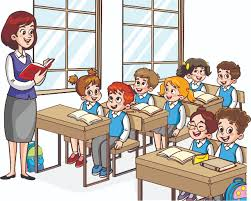


The Art of Living: The Most Important Subject Schools Should Teach
Hello dear friends, I hope this Blog finds you in a cheerful mood.
Today’s prompt question is very thoughtful:
“What’s a thing you wish schools actually taught?”
My immediate answer would be: How to stay physically and mentally fit.
We spend years in school learning how to solve equations, remember historical dates, understand scientific theories, and write examinations. All of these are important. But there is another examination for which no textbook provides a syllabus—the examination called Life.
And perhaps schools should prepare us for that too.
❤️Education Beyond the Classroom
Education shouldn’t only teach us how to earn a living. It should also teach us how to live well.
Think about it. A child may spend twelve or fifteen years studying, but how much time is devoted to learning about sleep, nutrition, exercise, emotional balance, stress, resilience and healthy relationships?
These are not optional extras.
They are the foundations upon which a meaningful life is built.
A student may eventually forget a mathematical formula, but the habit of taking care of the body and mind can remain useful at twenty, forty, sixty or eighty.
❤️The Body Is Our First Home
We often start thinking seriously about our physical health only after something goes wrong.
Wouldn’t it be better to teach children from an early age that prevention is better than cure?
Schools could make movement a joyful part of everyday life rather than treating physical education merely as a period for competitive sports.
Children could learn walking, swimming, cycling, yoga, stretching, strength exercises, posture and basic mobility.
They could also learn why nutritious food matters, why hydration is important, why sleep isn’t wasted time and why excessive screen time can interfere with healthy living.
The message should be simple:
You don’t exercise because you dislike your body. You exercise because you value it.
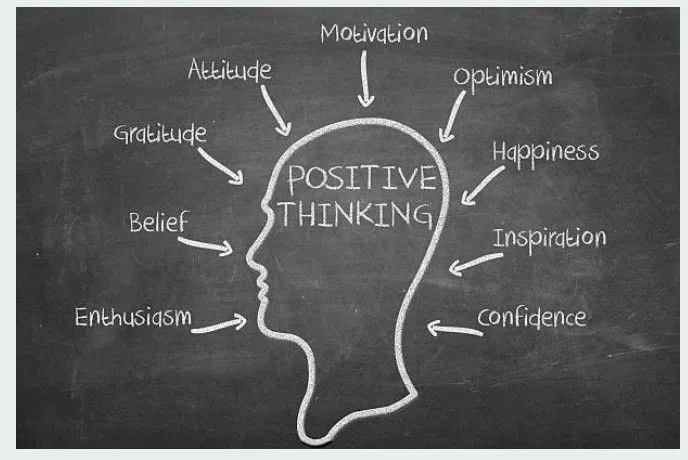
❤️A Strong Mind Needs Training Too
Physical fitness is only half of the story.
Our minds also need exercise.
Children today face academic competition, social pressure, online comparison and an enormous amount of information. They need to know that feeling disappointed, anxious, angry or confused doesn’t make them weak.
Schools could teach practical mental-fitness skills:
- How to handle failure
- How to manage stress
- How to recognise and express emotions
- How to build self-confidence
- How to deal with criticism
- How to cope with disappointment
- How to ask for help
- How to practise mindfulness
- How to develop resilience
Imagine a classroom where students occasionally put their books aside, breathe quietly for a few minutes and learn to observe their thoughts without immediately reacting to them.
That could be as valuable as another lesson from a textbook.
❤️Teach the Power of Small Habits
Perhaps the most important lesson would be that health isn’t created overnight.
It grows from small habits repeated consistently.
A ten-minute walk today may seem insignificant. Drinking enough water may seem ordinary. Going to bed on time may feel unimportant. Taking a few minutes to breathe deeply may appear too simple.
But life is made of such small choices.
One healthy decision doesn’t transform us. Thousands of ordinary decisions can.
Schools could therefore teach children to focus less on quick results and more on sustainable habits.
Because when healthy behaviour becomes automatic, we don’t have to fight ourselves every day to maintain it.
❤️Teach Them How to Deal With Failure
Here’s another subject I wish every school taught: the art of failing gracefully.
Examinations often create the impression that marks define ability. But life doesn’t work that way.
We fail at interviews. We lose competitions. Friendships change. Plans collapse. Businesses fail. Dreams sometimes take unexpected turns.
Children should learn that failure isn’t a permanent identity.
It is information.
It tells us something didn’t work—and gives us another opportunity to learn.
As the famous saying goes, “Fall seven times, stand up eight.”
That is mental fitness.

❤️Teach Them to Enjoy Life, Too
There is another dimension to fitness that we sometimes overlook: joy.
A healthy life shouldn’t become a never-ending checklist of calories, steps, workouts and productivity.
We should also learn to laugh, create, sing, paint, read, play, spend time with friends, appreciate nature and simply be present.
Mental well-being isn’t merely the absence of stress. It is also the presence of meaning, connection and joy.
A child who learns to appreciate life’s simple pleasures may carry that ability into old age.

❤️The Art of Living
If I could introduce one new subject into every school, I wouldn’t call it merely Physical Education or Mental Health.
I would call it “The Art of Living.”
It would teach children how to care for their bodies, understand their minds, manage emotions, build relationships, handle failure, develop healthy habits and appreciate the preciousness of everyday life.
Because education should create more than knowledgeable people.
It should create healthy, resilient, compassionate and balanced human beings.
We teach children how to calculate the circumference of a circle.
Perhaps we should also teach them how to keep their own lives from going around in circles.
We teach them about the human body in science.
Perhaps we should also teach them how to take care of that body.
We teach them about the mind.
Perhaps we should teach them how to live peacefully inside it.
After all, we get only one body, one mind and one life.
Shouldn’t learning how to take care of all three be the most important lesson of all?
Maybe the greatest education isn’t simply learning how to make a living.
Maybe it is learning The Art of Living.
(All pics courtesy: Google.com)
BE HAPPY… BE ACTIVE… BE FOCUSED… BE ALIVE
If this post inspired you, show some love! 💙
✅ Like | ✅ Follow | ✅ Share | ✅ Comment
www.retiredkalam.com
Categories: infotainment


very nice .
LikeLiked by 3 people
Thank you so much.
LikeLiked by 2 people
But we learn these in life, not in school coz if they teach them there, their teaching loads are too much.😁 Beautiful answer, Verma
LikeLiked by 2 people
Thank you so much! 😊 You make a very valid point. Life itself is perhaps the greatest classroom, and many of the lessons that truly shape us—integrity, patience, resilience, empathy, and responsibility—are learned through experience rather than textbooks.
LikeLiked by 2 people
Indeed. My pleasure, Verma
LikeLiked by 2 people
Thank you so much.
Stay happy and keep sharing.
LikeLiked by 2 people
Thank you for this good post, Vijay. One thing I think teachers should stress between all of the other subjects they teach is integrity. Integrity is something that is taught mostly by example but it doesn’t hurt to mention the subject when possible.
LikeLiked by 3 people
Thank you for sharing such an important thought. I completely agree—integrity is one of the most valuable lessons a teacher can impart, yet it cannot be learned from a textbook alone. It is built through example, everyday choices, and the courage to do what is right even when nobody is watching.
LikeLiked by 2 people
Doing what is right even when nobody is watching sums it up well, Vijay. Teachers are in a position to teach this as much as anyone. To teach integrity one must have integrity. It is my prayer that, as another school year starts, many teachers are thinking about this subject as much as the others.
You’re welcome for my comment, Vijay, and thank you for your response.
LikeLiked by 2 people
Thank you, my friend, for such a profound observation. I completely agree—integrity cannot be taught merely from a textbook; it has to be demonstrated through our own actions. Children often learn more from what adults do than from what they say.
Teachers, therefore, have a wonderful opportunity to shape not only knowledgeable minds but also honest, responsible, and compassionate human beings. If a child learns to do the right thing even when nobody is watching, that may be one of the finest lessons education can offer.
LikeLiked by 2 people
You’re welcome, my friend, and thank you for this reply. Teachers do, indeed, have a wonderful opportunity. As students spend so much time at school, observing a teacher who values integrity might just rub off of some of our young people. Kids are very perceptive and if an adult isn’t consistent in their integrity it is usually something that makes them wonder or even get uncomfortable. I agree that if a child learns to do the right thing even when nobody is watching because they are around a teacher they respect it is one of the finest lessons they can receive. So many adults could surely be better examples at times for the people around them.
LikeLiked by 2 people
Absolutely, my dear friend. You have expressed this so thoughtfully. A teacher’s greatest lesson may not always come from the textbook or the classroom—it can come simply from the way they live and conduct themselves.
Children are remarkably perceptive. They may forget a lesson from a chapter, but they often remember how an adult made them feel and what that adult demonstrated through their actions. Integrity is not something we can merely teach; it has to be lived consistently.
LikeLiked by 2 people
I have the same opinion, Vijay, that a teacher’s greatest lesson may not always come from the textbook or the classroom—it can come simply from the way they live and conduct themselves.
It is very true that Integrity has to be lived consistently. I know that I do not have the power to live in such a way so I ask the Holy Spirit to give me the power to move in the right direction. I am thankful for God’s help in every situation.
Thank you for your reply, my friend.
LikeLiked by 1 person
Thank you, my dear friend, for sharing such a sincere and faith-filled thought. 🙏 I completely agree that integrity is not something we achieve perfectly on our own; it is something we strive to live each day, often with humility and God’s guidance.
Your words about asking the Holy Spirit for strength are especially meaningful. Perhaps true integrity begins with recognizing our own limitations and having the humility to ask for help to choose the right path.
LikeLike
Dear Verma ji,
What a profoundly beautiful and necessary piece of writing. You have articulated something that so many of us feel but struggle to put into words.
Your phrase “The Art of Living” is absolutely perfect. It captures everything education should be but often isn’t. You’re right—we spend years preparing for exams, but rarely for the quiet, ordinary moments that actually make up a life.
I was especially moved by these lines:
“We teach children how to calculate the circumference of a circle. Perhaps we should also teach them how to keep their own lives from going around in circles.”
That is poetry and wisdom wrapped into one sentence.
Your message about small habits, about failure being information rather than identity, and about joy being a form of fitness—these are lessons that could change lives if taught early.
Thank you for reminding us that the greatest education isn’t about making a living, but about living well.
With gratitude,
Srikanth
LikeLiked by 2 people
Thank you for such a generous and beautifully expressed response. Your words have added another layer of meaning to what I was trying to convey.
I am especially touched that the “circumference of a circle” line stayed with you. Sometimes a simple image can say what a long explanation cannot. And perhaps that is exactly what good education should do—give us not merely information, but insights that stay with us and quietly guide our lives.
LikeLiked by 1 person
I think that is a wonderful idea, Vermavkv jii!
We don’t learn about that in school; instead, we learn through repeated failure after becoming adults. But it is something I wish I had learned while I was still a child.🥰💝🌹🌹🌹
LikeLiked by 2 people
Thank you so much, my friend! I completely agree with you. So many of life’s most valuable lessons are learned through trial, error, and sometimes painful experiences after we become adults. 😊
Perhaps that is why I feel “The Art of Living” deserves a place in education. If children could learn early about resilience, emotional balance, healthy habits, relationships, and handling failure, they might enter adulthood with a little more wisdom and a lot less unnecessary struggle.
LikeLiked by 2 people
I agree with you, Vermavkv jii.🥰💖🌺🌺🌺
LikeLiked by 2 people
Thank you so much.
Stay happy and keep sharing.
LikeLiked by 2 people
🥰🙏💝💕💕💕
LikeLiked by 1 person
Good evening.
Have a restful night.
LikeLiked by 1 person
Very nice and a great point of view 🙏
LikeLiked by 2 people
Thank you so much for your kind words! I’m glad the perspective resonated with you. I truly feel that education becomes more meaningful when it teaches us not only how to succeed in the world, but also how to live happily, healthily, and wisely in it. 🌷🙏
LikeLiked by 2 people
Indeed my dear friend 👏👏👏👏
LikeLiked by 2 people
Thank you so much.
Stay happy and blessed,
LikeLiked by 2 people
You too 🙏
LikeLiked by 2 people
Thank you, my friend!
May your evening sparkle with warmth, your heart be light, and life surprise you with a few beautiful moments that leave you smiling long after the day is gone. 🌷
LikeLiked by 2 people
Absolutely loved this Verma ji! 🤍 “The Art of Living” is indeed a subject every child deserves to learn. We prepare children so much for exams and careers, but so little for the beautiful, messy, unpredictable exam called life. This was such a thoughtful and meaningful read. 🌸🦋✨
LikeLiked by 2 people
Thank you so much for your lovely words! ❤️ I’m delighted that the idea of “The Art of Living” resonated with you. You’ve summed it up beautifully—the most important examination is the one for which there is neither a textbook nor a fixed syllabus: life itself.
Perhaps our schools can teach children not only how to succeed in a career, but also how to handle failure, care for their body and mind, build meaningful relationships, and find contentment along the way.
LikeLiked by 2 people
A deeply thoughtful and timely reflection. Education is often measured by what we can remember, but perhaps its real purpose is to prepare us for what we cannot predict life itself.
“The Art of Living” is indeed a subject every child deserves to learn: caring for the body, training the mind, handling failure, building resilience, nurturing relationships, and finding joy in ordinary moments.
We teach children how to make a living; perhaps we should give equal importance to teaching them how to live well. A wonderful reminder that true education should not merely create knowledgeable minds, but healthy, balanced, resilient and compassionate human beings. 👏
LikeLiked by 2 people
Thank you so much for this beautifully expressed thought. I couldn’t agree more—life rarely follows the syllabus we prepare for, and many of its most important lessons arrive without warning.
Perhaps education becomes truly meaningful when it teaches us not only what to know, but how to think, how to cope, how to care, and how to remain grounded when life takes an unexpected turn. Knowledge helps us make a living, but wisdom helps us live well.
LikeLiked by 2 people
The art of living is an excellent idea of things that could be taught in school alongside other subjects, Mr. Verma. Great article!
LikeLiked by 2 people
Thank you so much for your kind words! I truly believe that “The Art of Living” could be one of the most valuable subjects in any school. We teach children how to solve mathematical problems, but not always how to solve the problems life places before them. 😊
Learning to care for the body, understand the mind, manage emotions, build healthy relationships, and face life’s ups and downs with resilience would make education much more complete.
LikeLiked by 1 person
‘The examination for which no textbook provides a syllabus’ — what a lovely way to put it. The Art of Living, and staying physically and mentally fit especially, is exactly the kind of thing we find ourselves teaching our kids in the in-between moments rather than in any classroom. You’re right that it deserves a place on the timetable. A really thoughtful take on the prompt.
LikeLiked by 2 people
Thank you so much for your thoughtful words. I love the way you have described it—the “in-between moments” are often where some of life’s most important lessons are taught. Yet, how much better it would be if schools also gave these lessons a proper place on the timetable.
We prepare children for examinations that have textbooks and syllabi, but life itself comes without either. Learning how to care for our body, manage our mind, handle emotions, build relationships, face failure, and find balance may be among the most valuable lessons of all.
LikeLiked by 2 people
I do like your answer to this question. We teach students about the world they live in, but not how to live in it. This is most likely because the government sets the curriculum and does not wish to step on what would normally be considered as a parental duty. Many parents do not even have this information until they have lived a longer life and only because they have experienced the side effects of some inaction. A do think that simple “life skills” courses could be offered as part of the health, gym and science courses that would augment the overall teachings. Happy Monday. Allan
LikeLiked by 2 people
Thank you, Allan. I completely agree with your thoughtful perspective. Schools may not be able to replace the role of parents, but they can certainly complement it by giving young people practical life skills that many of us learn only through experience—sometimes the hard way. Integrating simple lessons on physical and mental well-being, relationships, finances, decision-making, resilience, and emotional intelligence into existing subjects could make education far more complete. After all, education should prepare us not only to earn a living, but also to live a meaningful and balanced life.
LikeLiked by 2 people
You offer many great lessons we should learn, Vijay. I particularly like that our body is our first home. There are many ways to respect our bodies which can be life changing.
LikeLiked by 2 people
Thank you so much for your thoughtful words! ❤️ I completely agree—the body is our first and most important home, and yet we often remember to care for everything around us before caring for ourselves.
Respecting our bodies through nourishing food, movement, rest, good sleep, and listening to their signals can make a profound difference
LikeLiked by 1 person
LikeLike
Thank you so much.
Stay connected and keep sharing.
LikeLiked by 2 people
Thank you sir! Your posts are super insightful. Staying connected and looking forward to more 🙌
LikeLiked by 1 person
Thank you so much for your kind words! 😊🙏
I truly appreciate your encouragement and support. It means a lot to know that my posts resonate with you. Looking forward to staying connected and sharing many more thoughts, stories, and insights along the way. 🌷
LikeLiked by 1 person
Thank you for sharing such meaningful insights!
Your words really resonate with me. Looking forward to more 🌷
LikeLiked by 1 person
Thank you so much for your kind and encouraging words! 😊
I’m truly glad that my thoughts resonate with you. Your support gives me even more inspiration to keep writing and sharing.
Looking forward to staying connected and sharing many more meaningful thoughts together. 🌷
LikeLike
Good points! I know if one or more of my school teachers would have prepared me for life in this way, it would have definitely helped me a lot! Although I do think it’s very important for parents and family to teach these things, too. 😊
LikeLiked by 2 people
Thank you! I completely agree. 😊 Schools can give us academic knowledge, but preparing us for the realities of life—physical and mental wellbeing, emotional resilience, relationships, money, and handling challenges—can be just as valuable.
And you’re absolutely right about the role of parents and family. Ideally, school and home should work together to prepare young people not just to earn a living, but to live a healthy, balanced, and meaningful life. 🌱❤️
LikeLiked by 1 person