
Hello dear friends,
I hope this Blog finds you in a cheerful mood.
We often hear the phrase “Time is money”, but in reality, time is far more valuable than money. Money lost can be earned again, but time once gone never returns.
Every sunrise gifts us the same 24 hours, yet the difference between an average life and a successful one lies in how those hours are used.
Success is not about having more time—it is about using time more wisely. Whether you are a student, a professional, or an entrepreneur, mastering time management can transform your productivity, focus, and long-term achievements.
Below are seven practical time management tools that can truly reshape the way we live and work.

1. No Mobile Time (N.M.T.): Reclaim Your Focus
In today’s digital world, the mobile phone is both a blessing and a distraction. While it connects us to information, it often disconnects us from real productivity.
The idea of No Mobile Time is simple: when you are working, studying, or focusing on important tasks—keep your phone away. Avoid unnecessary scrolling during meals or family time as well.
This small habit creates deep focus, reduces distractions, and improves the quality of your work and relationships.
Your attention is your most powerful asset—protect it.
2. Focus on What Truly Matters
Not all tasks are equally important. Every day, identify the three most crucial tasks that move you closer to your goals.
These are your Primary Daily Actions. Complete them before anything else.
This habit ensures that even if your day becomes busy or unpredictable, your most important work is already done. It brings clarity, direction, and a strong sense of achievement.

3. Social Media Slot (S.M.S.): Control the Scroll
Social media is designed to keep you engaged—but not necessarily productive. Constant checking of notifications breaks concentration and wastes valuable time.
Instead of random usage, assign a fixed time slot for social media—maybe 20–30 minutes a day.
This disciplined approach helps you enjoy social media without letting it control your attention. You stay informed, but not distracted.
4. Time Blocks: Work with Deep Concentration
Time blocking means dividing your day into focused sessions of 45–60 minutes dedicated to a single task.
During these blocks, avoid switching tasks or multitasking. Just focus on one activity with complete attention.
A well-structured day with 3–4 time blocks can dramatically increase productivity. It allows you to enter a “flow state,” where work becomes smoother and more effective.

5. Night Review (N.R.): Learn from Every Day
Before sleeping, take a few minutes to review your day.
Ask yourself:
- What did I achieve today?
- Where did I lose time?
- What can I improve tomorrow?
This simple reflection builds self-awareness and continuous improvement. It also helps you plan a better, more organized tomorrow.
6. Stress Management (S.R.): Protect Your Mental Energy
Productivity is impossible without peace of mind. Stress reduces clarity, focus, and decision-making ability.
To manage stress effectively, include practices like meditation, breathing exercises (pranayama), morning walks, physical activity, and balanced nutrition.
A calm mind works faster, thinks better, and performs consistently.
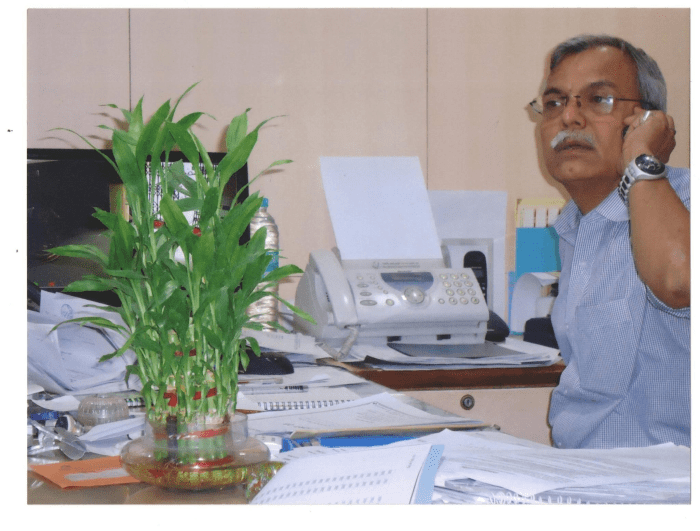
7. One Task at a Time (O.T.T.): The Power of Simplicity
Multitasking often feels productive, but in reality, it reduces efficiency and increases errors.
The principle of One Task at a Time encourages focusing on a single activity until it is completed.
By giving full attention to one task, you improve quality, speed, and satisfaction. It also reduces mental fatigue and confusion.

Final Submission: Your Time, Your Life
Time management is not just a productivity technique—it is a life philosophy. Everyone has the same 24 hours, but how we use them defines our success, happiness, and growth.
By adopting these seven simple tools—No Mobile Time, Primary Daily Action, Social Media Slot, Time Blocks, Night Review, Stress Management, and One Task at a Time—you can take control of your day and slowly transform your life.
Remember, time does not wait for anyone. But when used wisely, it rewards you with success, peace, and purpose.

BE HAPPY… BE ACTIVE… BE FOCUSED… BE ALIVE
If this post inspired you, show some love! 💙
✅ Like | ✅ Follow | ✅ Share | ✅ Comment
www.retiredkalam.com
Categories: infotainment


very nice .
LikeLiked by 1 person
Thankyou so much.
LikeLike
Verma ji, this is an absolutely brilliant piece of wisdom! 🙏
You’ve beautifully captured the essence of what separates a meaningful life from a chaotic one. The way you’ve broken down time management into these seven actionable tools—from No Mobile Time to One Task at a Time—makes it feel so achievable, not overwhelming.
What I admire most is how you’ve connected productivity with peace of mind. So many people chase efficiency but forget about mental well-being, and your emphasis on stress management and daily reflection truly sets this apart.
The acronyms (N.M.T., S.M.S., O.T.T.) are so clever and memorable—they’ll stick with readers long after they’ve finished reading. And that closing line about time rewarding us with ‘success, peace, and purpose’… that’s pure gold.
Thank you for sharing this gift of perspective. It’s not just a guide to managing time—it’s a guide to managing life. Will definitely be sharing this with my circle! 🌟”
LikeLiked by 1 person
Thank you so much for your incredibly generous and thoughtful words. 🙏
Your appreciation truly touched my heart. I am delighted that the message resonated with you and that you found the ideas practical and achievable. My intention was never simply to discuss productivity, but to highlight how thoughtful time management can lead to a calmer mind, reduced stress, and a more purposeful life.
LikeLike
Very nice tips.
LikeLiked by 1 person
Thank you so much for your kind words. I’m glad you found the tips helpful.
Time management is something many of us continue to work on every day. Even small changes in how we plan and prioritize our tasks can make a big difference in reducing stress and increasing productivity.
LikeLiked by 1 person
I like this Vijay. I like the idea that you’re not actually proposing time management techniques for the usual purposes, but recognising that in today’s world its as much about how we choose to lives our lives. Where we spend our time. Sometimes it can be poor management but far too often its just allowing ourselves to travel down rabbitholes that steal too much.
LikeLiked by 1 person
Thank you. You’ve captured the essence of it perfectly. I wasn’t really trying to advocate for squeezing more tasks into the day or becoming more efficient for efficiency’s sake. Increasingly, I feel that time management is actually a question of attention management and, ultimately, life management.
As you rightly point out, many of us don’t lose time because of poor planning; we lose it by drifting into distractions, obligations, and digital rabbit holes that quietly consume hours without adding much value. The challenge is not simply organizing our schedules but consciously deciding what deserves a place in our lives.
LikeLiked by 1 person
One Task at a Time (O.T.T.): The Power of Simplicity
Multitasking often feels productive, but in reality, it reduces efficiency and increases errors.
The principle of One Task at a Time encourages focusing on a single activity until it is completed.
By giving full attention to one task, you improve quality, speed, and satisfaction. It also reduces mental fatigue and confusion.
Enter a discussion with my wife.
Her – “ my dear you have the inability to multitask as you work on one task at a time all day long”
Me – “ yes that works for me”
Her – “did you see my phone?”
Me – “ your phone is on the counter, that way I talked to The window people In The insurance people and we should be good to go”
Her “Retirement must be nice”
I guess it’s different strokes for different folks as being a school principal requires multitasking or being a computer programmer is task by task.
And then retirement alters the equation.
LikeLiked by 1 person
I enjoyed both the wisdom and the humor in this post! 😊 The conversation with your wife perfectly illustrates the ongoing debate between multitasking and focused attention.
While some roles certainly demand juggling multiple responsibilities, there is a strong case to be made for your O.T.T. approach. Giving one task your full attention often leads to better results, fewer mistakes, and a calmer mind. In many ways, what we call multitasking is really rapid task-switching, which can be surprisingly exhausting.
I also liked your observation about retirement changing the equation. Without the constant pressure of competing demands, there is a certain freedom in slowing down, focusing on one thing at a time, and actually enjoying the process.
As for finding your wife’s phone while coordinating with the window and insurance people, it seems your method is working just fine! 😄
LikeLike
Brilliant post Verma! I love the tips that you have provided. They are simple, useful, and easy to follow. I particularly enjoyed your statement regarding phone usage. Our devices are so distracting! Even the ones that we use for hobbies, like laptops for writing. It can be so hard and frustrating to remain focus when so many things are trying to grab your attention. I have been practicing putting my phone away when I’m working and it has helped me to be productive!
LikeLiked by 1 person
Thank you so much for your kind words and thoughtful feedback! I’m delighted that you found the tips useful.
I completely agree with you about our devices. While they are wonderful tools for learning, writing, and staying connected, they can also become some of our biggest distractions. It often feels as though every app and notification is competing for our attention.
LikeLiked by 1 person