
Dear Friends,
Warm greetings on the occasion of International Yoga Day!
In today’s fast-paced world, where stress, anxiety, competition, and uncertainty dominate our lives, yoga emerges not merely as an exercise routine but as a way of living.
Rooted in Indian civilization for nearly 5,000 years, yoga is one of India’s greatest gifts to humanity.
The word Yoga is derived from the Sanskrit root Yuj, meaning “to unite” or “to join.” It signifies the union of body, mind, intellect, and consciousness.
Contrary to popular belief, yoga is much more than twisting the body into difficult postures.
It is a holistic science that nurtures physical vitality, emotional stability, mental clarity, and spiritual awareness.

The Global Celebration of Yoga
The modern journey of International Yoga Day began when India’s Prime Minister, Narendra Modi, addressed the United Nations General Assembly on 27 September 2014 and proposed a dedicated day for yoga.
He remarked:
“Yoga is an invaluable gift of India’s ancient tradition. It embodies unity of mind and body, thought and action, restraint and fulfilment.”
The proposal received unprecedented support from 177 countries, making it one of the most widely supported resolutions in UN history.
Consequently, the United Nations declared 21 June as the International Day of Yoga, and the first celebration took place on 21 June 2015.
That inaugural event at Delhi’s Rajpath entered the Guinness World Records, with approximately 35,985 participants from 84 countries performing yoga together.
Science Meets Ancient Wisdom
Modern research increasingly validates what yogic sages understood centuries ago.
Clinical studies conducted at NIMHANS (National Institute of Mental Health and Neurosciences) have demonstrated that regular yogic practices can positively influence brain chemistry.
Studies involving individuals with schizophrenia and postpartum women have shown improvements in emotional well-being and social connectedness.
Researchers have observed that yoga may increase levels of oxytocin, often called the “cuddle hormone.” Produced in the hypothalamus and released by the pituitary gland, oxytocin enhances trust, empathy, emotional bonding, and prosocial behaviour.
Equally fascinating is yoga’s effect on the vagus nerve, the longest cranial nerve in the human body.
Through breathing practices such as pranayama, this nerve is stimulated, helping the body transition from a stress-driven fight-or-flight state to a calm rest-and-digest mode.
The results include:
- Reduced stress and anxiety.
- Lower blood pressure.
- Improved digestion.
- Better emotional regulation.
- Enhanced sleep quality.

Yoga and Students: A Natural Stress Reliever
Today’s students face intense academic pressure, competitive examinations, and constant distractions.
A study published in the International Journal of Yoga (2009) followed adolescent students through a seven-week programme involving asanas, pranayama, meditation, and value-based practices.
The findings were remarkable: participants reported significantly lower stress levels and demonstrated improved academic performance, particularly in Mathematics and Science.
Simple practices such as:
- Anulom-Vilom (Alternate Nostril Breathing),
- Deep diaphragmatic breathing,
- Meditation, and
- Selected asanas performed mindfully,
can improve concentration, sharpen memory, and enhance emotional resilience.
As B.K.S. Iyengar beautifully said:
“Yoga does not just change the way we see things, it transforms the person who sees.”
Yoga: Building a More Compassionate World
Perhaps yoga’s greatest contribution lies beyond physical fitness.
Ancient Indian philosophy teaches “Vasudhaiva Kutumbakam”—“The world is one family.” Yoga dissolves the barriers of race, nationality, religion, and ideology by cultivating awareness, compassion, and mutual respect.
In a world increasingly divided by mistrust and conflict, yoga reminds us of our shared humanity. It encourages us to replace the mentality of “us versus them” with one of cooperation and coexistence.
As the great spiritual teacher Sri Sri Ravi Shankar observed:
“Yoga is not about touching your toes; it is what you learn on the way down.”
A Personal Reflection
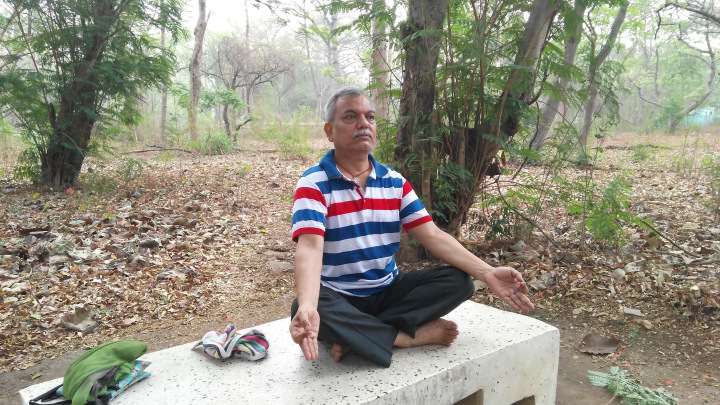
This Yoga Day, I too spent some quiet moments practising yoga and reconnecting with myself. Those few minutes of mindful breathing brought an extraordinary sense of gratitude and peace.
Yoga does not demand perfection. It asks only for sincerity and consistency.
Whether you are sixteen or sixty, a student, homemaker, professional, or retiree, yoga welcomes everyone.
Let us begin with just ten minutes a day.
Inhale hope……Exhale fear.
Inhale the future. …Exhale the past.
May this International Yoga Day inspire us to embrace healthier habits, calmer minds, stronger bodies, and kinder hearts.
Because yoga is not merely about adding years to life—it is about adding life to those years.
Happy International Yoga Day!
Thank you very much for taking the time to read this blog.

BE HAPPY… BE ACTIVE… BE FOCUSED… BE ALIVE
If this post inspired you, show some love! 💙
✅ Like | ✅ Follow | ✅ Share | ✅ Comment
www.retiredkalam.com
Categories: infotainment


My best wishes for success
LikeLiked by 2 people
Thank you so much for your kind wishes and encouragement.
Your thoughtful support truly means a lot to me. I deeply appreciate your generosity and positivity.
LikeLiked by 1 person
Happy Yoga Day .
LikeLiked by 1 person
Thank you so much.
LikeLike
👍
LikeLiked by 1 person
Thank you so much.
Stay happy and blessed.
LikeLiked by 1 person
Bindaas
LikeLiked by 1 person
Thank you so much dear,😊
“Bindaas” is such a wonderful word—it carries the spirit of being carefree, confident, and embracing life with an open heart. Sometimes, that’s exactly how we should live: less burdened by overthinking and more trusting of the journey.
LikeLiked by 1 person
Yes… You Are👍
LikeLiked by 1 person
Haha… thank you so much! 😄🥰👍
I’ll gladly accept the title of being a little “Bindaas.” Life becomes much lighter when we learn to laugh at ourselves, embrace imperfections, and move forward with a cheerful heart. After all, not everything has to be perfectly planned to be wonderfully lived.
LikeLiked by 1 person
I love doing yoga! It is very relaxing, and it helps me sleep. I didn’t know that there was an international yoga day. I love how your blog always teaches me new things about India. So cool 😀
LikeLiked by 2 people
Thank you so much for your kind words! 😊🙏
I’m delighted to know that you enjoy yoga and have experienced its calming benefits. I completely agree—yoga has a wonderful way of relaxing both the body and the mind, and a good yoga session often leads to a peaceful night’s sleep.
LikeLiked by 1 person
Un análisis muy constructivo y claro sobre Retiredकलम. Destaca aspectos clave esenciales para entender el tema.
LikeLike
Thank you so much for your thoughtful and encouraging words!
I’m delighted that you found the analysis of Retiredकलम constructive and clear.
For me, Retiredकलम is more than just a blog—it is a journey of experiences, reflections, creativity, and lifelong learning.
Your kind appreciation inspires me to keep writing, sharing, and connecting with readers around the world. Warm regards and best wishes! 🙏🌷
LikeLike