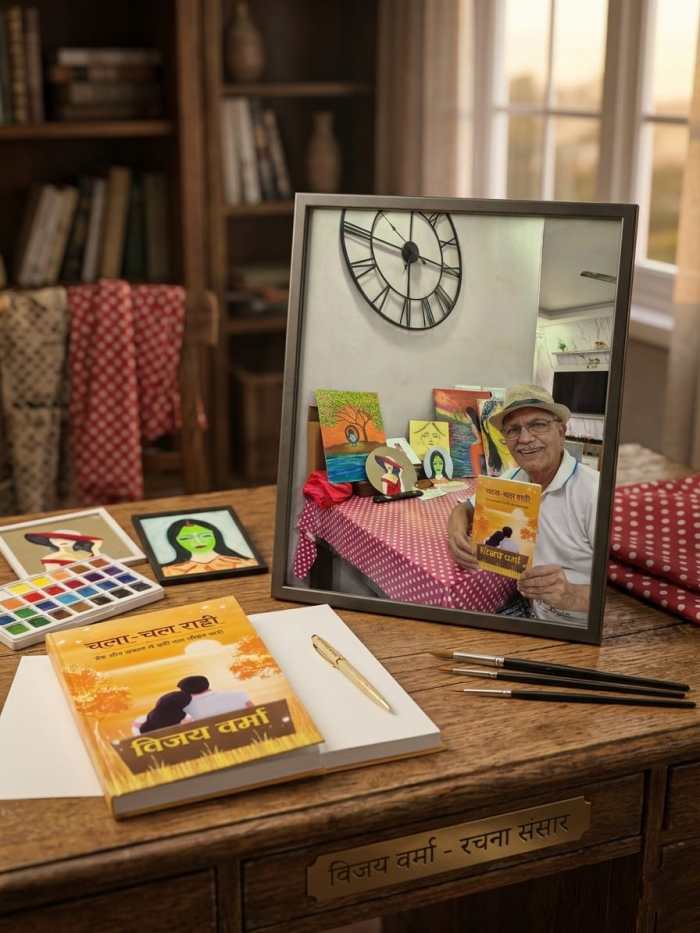
This poem reflects a quiet conversation between me and the simple objects that have silently accompanied me through the years—an old table, a chair, a few books, and countless thoughts.
Through these ordinary things, the poem touches on time, absence, memory, and the fear of one day leaving everything behind. Yet beneath the sadness, it gently reminds us to live fully in the present, because tomorrow is never promised.
My Old Table
My old table waits again tonight,
holding books, loose pages,
and the tired weight of my thoughts.
This chair has known me for years—
my silences, my unfinished dreams,
the nights when words were
my only companions.
Then suddenly, I wondered…
One day this table will remain,
but I will not.
The books will disappear,
the chair will sit empty,
and silence will slowly
cover this little corner of life.
For a moment,
the future frightened me.
But the old table seemed to whisper,
“Why fear tomorrow
when today is still yours?”
So I touched the worn wood gently
and smiled.
Life is brief,
like ink fading from paper.
Still, while the lamp is glowing,
while the heart is breathing,
let us live fully.
“Kal kisne dekha hai…”
So live today
like it is the last golden page
of a beautiful unfinished book.
(Vijay Verma)
www.retiredkalam.com

Categories: kavita


very nice .
LikeLiked by 4 people
Thank you so much.
LikeLiked by 2 people
Such deep thoughts, featuring our overlooked belongings– Table, chair, books and so many other things, we use everyday. They are important part of our lives and it’s true that they will remain, while we leave this World.
Agree with your thoughts that, why worry now.
The present is still ours—.
Beautiful and thoughtful poem.
Thank you for sharing.
LikeLiked by 4 people
Thank you so much for your thoughtful and insightful words.
You have beautifully captured the essence of the poem. We often overlook the simple things that quietly accompany us throughout our lives—our table, chair, books, and countless everyday belongings. They become silent witnesses to our joys, struggles, dreams, and memories.
LikeLiked by 2 people
A beautifully reflective poem, Vijay ji.
Through the simple imagery of an old table and chair, you have captured life’s deepest truths impermanence, memory, and the wisdom of living in the present. The closing thought, “Kal kisne dekha hai…”, leaves a lasting impact. 🌹🙏
LikeLiked by 3 people
Thank you so much for your kind and encouraging words.
I am delighted that the poem resonated with you. Sometimes the simplest objects around us—an old table, a familiar chair, a few cherished books—quietly remind us of life’s deeper truths. They witness our journey, our dreams, our struggles, and the passage of time without ever speaking a word.
LikeLiked by 3 people
What a tender and thoughtful poem Verma ji. 🌼
I loved how the old table becomes more than just furniture it feels like a silent friend, a witness to years of dreams, struggles, and quiet moments. The shift from fearing the future to embracing the present is beautifully done, and the line “Why fear tomorrow when today is still yours?” carries such gentle wisdom. The ending leaves a warm reminder to cherish the pages we are writing now, rather than worrying about the last one. A simple poem, yet deeply moving. 💛📖✨
LikeLiked by 3 people
Thank you so much for your beautiful and heartfelt interpretation. 🌼
I am touched by the way you connected with the poem’s deeper meaning. You expressed exactly what I hoped to convey—that sometimes the most ordinary objects become silent companions, carrying the memories of our lives without asking for recognition.
LikeLiked by 3 people
Verma ji, this poem touched me deeply. The way you’ve woven quiet companionship, the ache of impermanence, and the gentle wisdom of a simple table into a meditation on life is truly beautiful. Lines like “Why fear tomorrow when today is still yours?” and “live today like it is the last golden page of a beautiful unfinished book” stay with the reader long after the poem ends. You’ve turned ordinary objects into mirrors of the soul. Thank you for this reminder to breathe fully into the present. 🙏
LikeLiked by 3 people
Thank you so much for your deeply thoughtful and generous words. 🙏
I am truly touched that the poem resonated with you in such a meaningful way. Sometimes the simplest objects around us—a table, a chair, a book—quietly become part of our life’s journey. They witness our hopes, disappointments, victories, and moments of reflection without ever speaking a word.
LikeLiked by 2 people
A tender poem, Verma. Bittersweet, and yet, it brought me a sense of comfort, like a warm hug in winter. Life seems to pass by so quickly, but those small stagnant habits like writing at your table seem to bring perspective to life. Something as simple as a wooden table can represent one’s journey, their trials, their triumphs—like a companion through life’s obstacles.
Today is ours, Verma. You are right :D. Thank you so much for sharing this sweet poem.
LikeLiked by 5 people
Thank you so much for this beautiful reflection.
I particularly loved your description of the poem as “a warm hug in winter.” That is perhaps one of the most meaningful compliments a writer can receive—that a few simple words can bring comfort and companionship to a reader.
You are absolutely right that life moves remarkably fast. Years seem to slip by unnoticed, yet certain quiet rituals—sitting at the same table, writing in the same corner, turning the pages of familiar books—become anchors that help us make sense of the passing seasons of life.
LikeLiked by 3 people
A nostalgic and introspective poem—framed as a quiet conversation with everyday objects that have shared the writer’s journey, exploring memory, companionship, time, and the emotional significance of familiar things. 🕰️✨📖💭
LikeLiked by 4 people
Thank you for this beautiful and perceptive interpretation. 🕰️✨📖
I am delighted that you saw the poem as a quiet conversation with everyday objects, because that was very much the feeling behind it. We often think of companionship as something we share only with people, yet the familiar things around us silently accompany us through years of living, dreaming, writing, and remembering.
LikeLiked by 2 people
This touched me deeply.
What I loved most was how you transformed an ordinary table and chair into witnesses of an entire life. We often think memories live only within us, but your poem beautifully suggests that the objects around us quietly carry fragments of our journeys too.
The line, “Why fear tomorrow when today is still yours?” felt especially powerful. The poem begins with a reflection on absence and impermanence, yet gently arrives at gratitude rather than sorrow. That shift felt very human and very comforting.
I also found myself thinking about how many meaningful moments happen in unnoticed corners like the one you describe. A table becomes a workspace, a refuge, a place of learning, reflection, and sometimes healing. Years later, it holds far more than books and papers.
Thank you for sharing such a thoughtful and heartfelt piece. Your writing has a wonderful ability to find profound meaning in simple everyday things, and I always come away from your posts feeling a little more reflective than before.
LikeLiked by 3 people
Thank you so much for this deeply thoughtful response.
I am truly touched that the poem resonated with you in this way. Your observation about the table and chair becoming witnesses to a life is exactly the feeling I was trying to capture. We often pass by ordinary objects without a second thought, yet they quietly accompany us through countless moments—our joys, struggles, dreams, and reflections.
LikeLiked by 1 person
Aptly said 💯☺️
LikeLike
Thank you so much! 😊
I’m glad the thought resonated with you. Sometimes the simplest truths are the ones that stay with us the longest.
Your kind affirmation is greatly appreciated.
LikeLiked by 1 person
This line “Why fear tomorrow when today is still yours says it all . Live in the present and embrace it with full vigour and try to be the best version of yourself by being kind, loyal and spreading your love and warmth as far as the person’s vision goes .I think that is a life truly lived .
LikeLiked by 1 person
Thank you for such a thoughtful reflection. 😊
You have beautifully expanded on the spirit of that line. I completely agree that a life well lived is not measured by how much we possess, but by how fully we embrace the present moment and how we treat those around us. Kindness, loyalty, compassion, and the ability to share warmth with others leave a far greater legacy than any material achievement.
LikeLiked by 1 person