Hello dear friends,
I hope this Blog finds you nin a cheerful mood.
Every year on June 5th, the world pauses—just briefly—to look in the mirror.
World Environment Day is not just a calendar event; it is a global checkpoint, coordinated by the United Nations Environment Programme under the leadership of the United Nations, reminding humanity of a simple but uncomfortable truth: the planet is running a fever, and we are the cause.
🌍 A Planet Under Pressure: Where We Stand Today
Recent global environmental assessments continue to paint a mixed picture. On one hand, renewable energy adoption is accelerating faster than many expected—especially solar and wind.
On the other, emissions, biodiversity loss, and pollution remain stubbornly high.
The latest global climate tracking (as summarized in recent UNEP assessment cycles) suggests that if current policies continue, the world is still on track for roughly 2.5°C to 2.9°C of warming by the end of the century.
That gap between “promised action” and “real action” is what scientists now call the implementation gap—and it is widening.
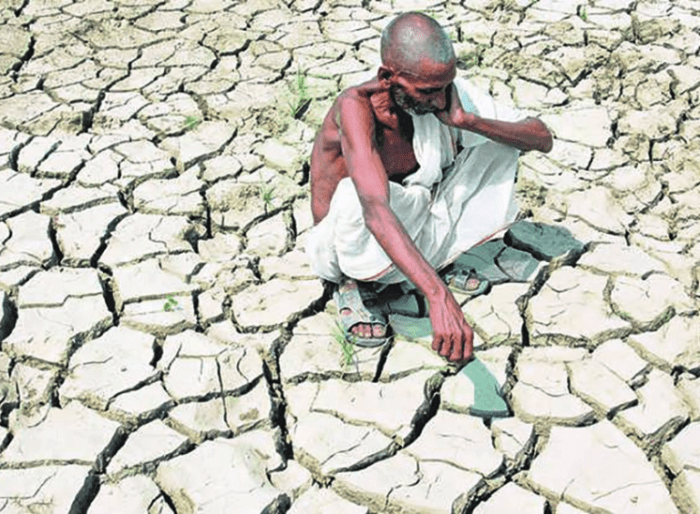
Meanwhile, extreme weather events—heatwaves in Asia, floods across South Asia and Europe, and prolonged droughts in parts of Africa—are no longer rare disruptions. They are becoming the new normal.
🌿 The 2026 Environmental Reality: Three Interlinked Crises
Today’s environmental challenge is often described as a “triple planetary crisis”:
- Climate change
- Biodiversity loss
- Pollution
These are not separate problems. They feed into each other like a vicious loop.
For example:
- Rising temperatures damage ecosystems.
- Damaged ecosystems reduce carbon absorption.
- Pollution weakens soil, water, and air systems that sustain life.
The result is a planet under continuous stress.
🌊 Plastic Pollution: The Crisis We Can See
One of the most visible threats remains plastic pollution. Globally, an estimated 11 million tonnes of plastic enter oceans each year, breaking down into microplastics that now appear in drinking water, seafood, and even human bloodstreams in trace amounts.
Negotiations are currently underway for a legally binding global plastics treaty, involving countries across the world under UN guidance.
The goal is ambitious: to reduce plastic production, improve recycling systems, and redesign packaging at scale.
But progress is slow because the world is still producing more plastic than it can responsibly manage.

🌱 Soil: The Silent Emergency Beneath Our Feet
While plastic pollution gets attention, soil degradation is the quieter crisis unfolding beneath us. Healthy soil is not just dirt—it is a living ecosystem that supports nearly all terrestrial life.
Studies widely referenced by global agricultural and environmental bodies suggest:
- Large portions of global topsoil have lost significant organic content over the past century
- Food nutrient density has declined due to soil depletion
- By mid-century, food production systems may struggle to meet rising demand if trends continue
The Save Soil Movement has helped bring this issue into mainstream awareness, advocating for policies that restore organic content in soil and support regenerative agriculture.
Healthy soil means:
- Better food security
- Improved water retention
- Reduced carbon emissions
- Stronger ecosystem resilience
It is, quite literally, the foundation of civilization.
🌳 Nature, Biodiversity, and the Vanishing Web of Life
We are also witnessing accelerating biodiversity loss. Wildlife populations have declined significantly over recent decades, driven by habitat destruction, pollution, and climate stress.
Forests, often called the “lungs of the Earth,” continue to shrink in critical regions despite global reforestation efforts. The loss is not just ecological—it is economic and cultural. Many communities still depend directly on forests, rivers, and oceans for survival.

⚡ Energy Transition: A Flicker of Hope
There is, however, meaningful progress.
Renewable energy is expanding rapidly. Solar power has become one of the cheapest electricity sources in history in many regions. Electric vehicles are scaling globally, and countries are investing heavily in grid modernization and storage systems.
Countries like the Republic of Korea have also demonstrated how environmental ambition can be integrated into national planning, with regions such as Jeju becoming symbols of low-carbon transition and circular economy experimentation.
Still, experts emphasize that technological progress alone is not enough without behavioral and policy change.

🧠 The Human Factor: Consumption, Awareness, Responsibility
Perhaps the most important shift needed is not technological—it is psychological.
Modern environmental crises are deeply tied to consumption patterns:
- Overproduction
- Single-use culture
- Wasteful energy use
- Disconnection from natural systems
Awareness campaigns like World Environment Day exist to close this gap between knowledge and action.
Because awareness without action is just information. And information without change is wasted potential.
🌍 What Can Still Be Done?
Despite the scale of the crisis, solutions are already known. The challenge is implementation.
Key priorities include:
- Rapid reduction of fossil fuel dependence
- Expansion of circular economy systems
- Strong global plastics regulation
- Regenerative agriculture practices
- Large-scale ecosystem restoration
And at an individual level:
- Reducing single-use plastics
- Supporting sustainable products
- Conserving energy and water
- Participating in local environmental initiatives
🌿My Final Submission
World Environment Day is not about celebrating perfection. It is about confronting reality with honesty and choosing responsibility over denial.
The Earth is resilient—but not limitless. Every ecosystem has a threshold. The question is not whether nature can recover. The question is whether humanity will allow it the time and space to do so.
We are living in a rare moment where knowledge, technology, and awareness exist simultaneously. What happens next depends on whether we align them with action.
The planet is not asking for admiration. It is asking for balance. And that balance begins with us.

BE HAPPY… BE ACTIVE… BE FOCUSED… BE ALIVE
If this post inspired you, show some love! 💙
✅ Like | ✅ Follow | ✅ Share | ✅ Comment
www.retiredkalam.com
Categories: infotainment


A thoughtful and timely message on World Environment Day. 🌍
You have beautifully highlighted that environmental challenges are interconnected and that meaningful change requires both policy action and individual responsibility. The reminder that awareness must translate into action is particularly powerful. Protecting soil, reducing plastic pollution, conserving biodiversity, and embracing sustainable living are not just environmental goals, they are investments in our collective future.
Thank you for sharing such an insightful and inspiring reflection.
LikeLiked by 1 person
Thank you for your thoughtful and encouraging words. 🌿🌍
I’m glad the message resonated with you. One of the most important realities of our time is that environmental challenges do not exist in isolation—soil degradation, plastic pollution, biodiversity loss, and climate change are all interconnected threads in the same fabric. Addressing one often helps address the others.
LikeLiked by 2 people
very nice .
LikeLiked by 1 person
Thank you so much.
LikeLiked by 1 person
This was such a thoughtful and informative read Verma ji. 🌍 You’ve presented a complex issue with both honesty and hope. I especially loved your reminder that awareness without action is wasted potential. Thank you for encouraging us to reflect on our responsibility toward the planet. 🌿✨
LikeLiked by 2 people
Thank you so much for your kind and encouraging words. 🌍💚
I’m delighted that the message resonated with you. Environmental challenges can often feel overwhelming, so I wanted to balance the realities we face with the hope that meaningful change is still possible. Your observation about awareness and action captures the heart of the article perfectly.
LikeLiked by 2 people
A well stated plea for more people to do more for the environment we all depend on for health and life. And yet, so many still believe that the climate emergency is just a hoax designed to stifle their freedom and income. This drive everywhere, buy everything, throw it all wherever you want lifestyle will lead to acceleration of Earth’s Climate swings until the situation is corrected either with us or without us. In this case, humans are the virus and climate change is the Earth’s immunity response to get rid of the virus. Have a wonderful Friday. Allan
LikeLiked by 2 people
Thank you, Allan, for your thoughtful and candid reflection.
You raise an important point: one of the greatest challenges is not the lack of evidence, but the persistence of disbelief and inaction despite overwhelming evidence. While people may differ on causes, policies, or solutions, the visible impacts around us—extreme weather, degraded ecosystems, pollution, and biodiversity loss—are becoming increasingly difficult to ignore.
LikeLiked by 2 people
Verma ji, this is a powerful and deeply necessary reflection. You’ve captured the urgency of our moment without losing hope—and that balance is rare. The way you connect soil, plastic, biodiversity, and psychology into one coherent call for responsibility is masterful. Thank you for reminding us that awareness must become action, and that balance begins with each of us. Truly a well-written piece that deserves to be read widely. 🙏🌱
LikeLiked by 2 people
Thank you so much for your generous and thoughtful words. 🙏🌿
I am truly humbled by your appreciation. One of my goals was to highlight that the environmental challenges we face are not isolated issues but interconnected parts of a larger story—one that ultimately comes down to how we choose to live, consume, and relate to the natural world.
LikeLiked by 1 person
Very well written. It amazes me that many people still don’t get that there is even a problem with the climate – hopefully enough essays like this will help to convince those who doubt …
LikeLiked by 2 people
Thank you for your thoughtful comment and encouragement.
I share your concern. Despite the growing evidence and the visible impacts around us, many people remain skeptical or unaware of the scale of the challenge. Meaningful change often begins with understanding, which is why open conversations and informed discussions are so important.
LikeLiked by 2 people
A reflective environmental awareness blog post—introducing World Environment Day as more than just a date on the calendar, but a moment for global reflection on humanity’s relationship with nature and the planet. 🌍🌿✨
LikeLiked by 2 people
An introduction to World Environment Day. 🌍🌿✨
I especially appreciate how it presents this occasion not merely as a date on the calendar, but as an opportunity to pause and consider our shared responsibility toward the natural world. In an age of rapid development and environmental challenges, such reflections are more important than ever.
LikeLiked by 1 person
Good topic and layout, Vijay. Is this done with AI?
LikeLiked by 1 person
Thank you for your kind words and for appreciating the topic and layout.
Yes, I do use AI as a research and drafting aid at times, especially when gathering information, organizing ideas, and checking facts
LikeLiked by 1 person
Un análisis muy constructivo y claro sobre Retiredकलम. Destaca aspectos clave esenciales para entender el tema.
LikeLike
Thank you very much for your thoughtful and encouraging words!
I’m glad you found the analysis of Retiredकलम constructive and clear.
Retiredकलम is not merely a blog for me; it is a journey of thoughts, experiences, creativity, and lifelong learning.
Your appreciation truly encourages me to continue writing and sharing. Warm regards and best wishes! 🙏
LikeLike