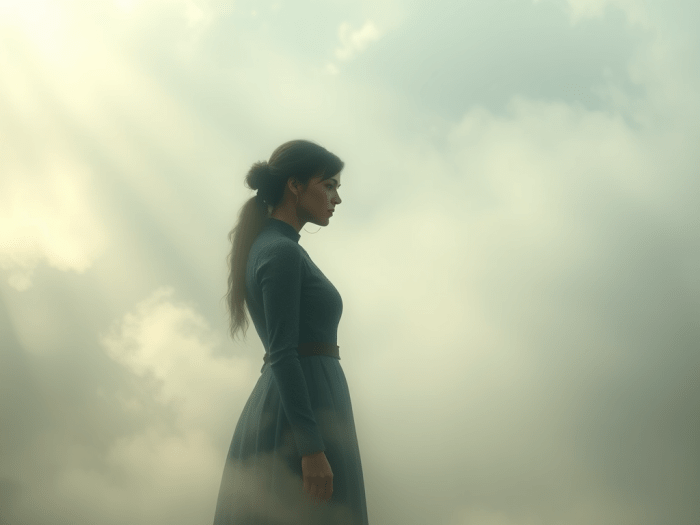
This poem stands at the intersection of memory, guilt, and witnessing. It refuses comfort and clarity, choosing instead to remain with difficult truths—about power, pain, and responsibility.
Moving through personal reckoning and collective reality, the poem treats suffering not as metaphor but as evidence, returning again and again to the place where silence once felt easier than honesty.
Truth Standing in the Fog
I didn’t arrive to explain myself.
I arrived because staying away
was another lie.
Inside this fog,
past and future share a pulse.
Guilt breathes with them,
changing names,
but refusing exile.
This poem is not an apology.
It is a question that won’t behave.
It digs.
It keeps digging—
until I am led
to a locked room in my chest,
where silence has been
practicing its breath.
Hatred is not loud here.
It is old.
Its hands shake.
Its voice forgets itself.
Still—
it clings to being right,
even while losing.
Look closer.
The woman is not an idea.
She carries history in her spine.
The child is not tomorrow—
he is the raw nerve of now.
The worker is not a metaphor;
the world stands
on his uncelebrated sweat.
And wealth—
it is not shine,
it is distance,
measured by who gets to look away.
That is why this pain
does not feel imagined.
It files reports.
It leaves fingerprints.
It becomes evidence.
The power of this poem
is not escape.
It does not run.
It returns—
again and again—
to the place
where fear is most articulate.
This poem does not soothe me.
It seats me
across from the truth—
no curtain,
no water,
no excuse.
And maybe this is literature:
not making us better,
not making us whole,
but making us
bold enough
to face the truth,
and fight
for a new beginning.
(Vijay Verma)
www.retiredkalam.com

Categories: kavita
 Retiredकलम
A stark, courageous poem that refuses metaphor as shelter.
It bears witness with moral clarity, turning silence into accountability and literature into an act of ethical presence.
-Vijay Srivastava
LikeLiked by 2 people
Thank you, Vijay.
That means a great deal to me. I’m deeply moved that the poem’s refusal to soften or look away came through so clearly. If it manages to turn silence into responsibility—even for a moment—then it’s doing the work I hoped it would. I truly appreciate your thoughtful and generous reading.
LikeLiked by 2 people
very nice .
LikeLiked by 2 people
Thank you so much.
LikeLiked by 1 person
This isn’t a poem you read and move on from.
It confronts, returns, and leaves you thinking exactly what real writing should do.
LikeLiked by 2 people
Thank you—that means a great deal to me.
I’m glad it stayed with you and invited reflection rather than a quick passing read.
That kind of engagement is exactly what I hope for when I put words on the page.
LikeLiked by 2 people
Such s poweful poem… it takes strength and courage to sit in front of our truth , bare and raw… and still we hope.
LikeLiked by 2 people
Thank you so much for your deeply felt words. You’re right—facing our truth, stripped of all armor, asks for immense courage. Hope, in that raw space, becomes an act of quiet strength.
I’m truly grateful the poem resonated with you and honored that it could reflect something so real and human.
LikeLiked by 1 person
This is a profoundly powerful and unsettling piece……exactly in the way you describe. The lines about “wealth… it is distance, measured by who gets to look away” and pain becoming “evidence” are truly brilliant. It’s a necessary refusal of comfort. I appreciate that you’ve seated the reader “across from the truth” without an excuse. I wholeheartedly agree with your final thought on literature: not making us better, but making us bold enough to face what is. Thank you for sharing this.
LikeLiked by 2 people
Thank you so much for reading it with such openness and courage.
Your words mean a lot to me, especially your recognition of the discomfort as intentional.
I believe some truths lose their power the moment they become comfortable,
and I’m grateful you were willing to sit with that unease rather than turn away from it.
LikeLiked by 1 person
Facing the tough side of life, too. Interesting poem, Verma.
LikeLiked by 2 people
Thank you for reading so attentively.
Yes, the tougher edges of life have a way of shaping the poem’s heart—sometimes they speak more honestly than comfort ever could.
I appreciate you sitting with that side of it and sharing your thoughtful response.
LikeLiked by 2 people
You’re welcome, Verma
LikeLiked by 2 people
Thank you so much.
Stay happy and keep sharing.
LikeLiked by 1 person
A striking reflection that confronts uncomfortable truths with honesty, asking the reader to sit with memory, guilt, and moral responsibility rather than easy resolution.
LikeLiked by 1 person
Thank you for engaging with it so thoughtfully.
I really value that you didn’t look for comfort or closure, but instead leaned into the weight of what’s being asked.
If it invites reflection rather than resolution, then it’s doing exactly what it was meant to do. Your words mean a lot.
LikeLiked by 1 person