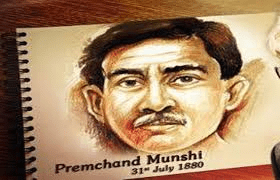
The Voice of India’s Conscience
On this day, October 8th, we remember Dhanpat Rai Srivastava, better known by his pen name Munshi Premchand, one of India’s most celebrated and influential writers.
His death anniversary is not merely a time to mourn the loss of a literary genius, but also to reflect on the invaluable contributions he made to Hindi and Urdu literature, and to social reform.
Born on July 31, 1880, in Lamhi, near Varanasi, Premchand witnessed the stark inequalities of society from a young age. His experiences with poverty, caste discrimination, and social injustice deeply shaped his writing.
Premchand didn’t just write stories; he penned down the sufferings, struggles, and resilience of the common people.
He was a pioneer of modern Hindustani literature, boldly addressing societal issues that were often brushed aside in the early 20th century. His works continue to inspire generations, bridging the gap between fiction and social reality.
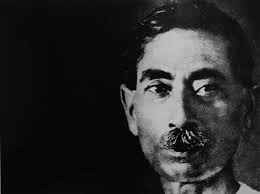
The Voice of the Voiceless
Premchand’s writing stood out because he gave voice to those who were traditionally silenced—laborers, farmers, women, and those on the fringes of society.
His stories explored the harsh realities of caste hierarchies, the oppression of women, and the exploitation of the working class.
One of his most famous works, Godaan, presents a vivid portrayal of rural India, capturing the plight of farmers trapped in the vicious cycle of debt and poverty.
Through the character of Hori, Premchand depicts the sacrifices, hardships, and silent sufferings that defined the lives of millions of Indians.
Similarly, in Karmabhoomi, he sheds light on the political awakening of the Indian masses, exploring themes of nationalism and the Gandhian ideals of non-violence and civil disobedience.
Premchand’s ability to weave intricate narratives around deeply embedded social issues earned him the title of “Upanyas Samrat” (Emperor of Novels).
Humanizing the Marginalized
What makes Premchand’s writing unique is his ability to humanize even the most marginalized characters.
In his short stories like Idgah, he explores the innocence of childhood, the power of empathy, and the universal emotions that bind us all.
The story of Hamid, a young boy who sacrifices his own desires to buy a pair of tongs for his grandmother, moves readers across generations.
It is a testament to Premchand’s profound understanding of human emotions and relationships.
In Gaban, he tackles the theme of greed and the moral dilemmas that arise when individuals are trapped by societal pressures.
Through his characters, Premchand doesn’t pass judgment; rather, he allows the readers to see the complexities of human nature and the social constructs that often force individuals into difficult choices.

A Social Reformer in Disguise
Though a writer by profession, Premchand was, in many ways, a social reformer. He believed that literature had the power to change society by exposing its flaws and championing the cause of the downtrodden.
His stories were not mere entertainment; they were a mirror held up to society, reflecting its dark corners and urging people to think question, and act.
His first collection of short stories, Soz-e-Watan (Sorrow of the Nation), published in 1907, was an anti-colonial work that caught the attention of the British authorities, leading to its confiscation.
This shows his early commitment to using his pen as a tool for political and social change.
Premchand’s stories often encouraged people to break free from oppressive customs and norms, advocating for equality, justice, and compassion.
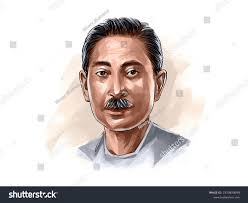
Legacy and Influence
Premchand’s legacy transcends the boundaries of time. He wrote over 300 short stories, more than a dozen novels, and numerous essays, each filled with deep insight into the human condition.
His work was also instrumental in the rise of Hindi as a modern literary language, influencing many writers who came after him.
Translations of his works into various Indian and foreign languages continue to introduce new readers to his timeless narratives.
In a world where literature often caters to entertainment, Premchand reminds us of the true power of the written word—its ability to reflect societal truths, evoke empathy, and inspire change.
His works remain relevant today as they were during the turbulent times in which they were written.
As we commemorate Munshi Premchand on his death anniversary, we honor not only a literary giant but also a compassionate soul who dedicated his life to the upliftment of humanity.
Through his words, Premchand continues to guide us toward a more just, empathetic, and conscious society.
Munshi Premchand’s writings are a treasure trove for anyone who seeks to understand the social fabric of India in the early 20th century.
His stories continue to serve as a reminder that the struggles of the past are still relevant, and the need for empathy and justice remains as important today as it was in his time.
Please click the link below for the next Poem.
Categories: infotainment
 Retiredकलम
nice post.
LikeLiked by 2 people
Thank you so much.
LikeLiked by 1 person
Vermavkv, your post describes an honorable person who represented equality. I understand why you admire such a person.
LikeLiked by 4 people
Thank you for your kind words. 💕
Yes, Munshi Premchand was truly an extraordinary figure who championed the cause of equality through his writing. I admire him because he had the courage to depict the harsh realities of society,.
Through his compassionate lens, he made us question our own roles in perpetuating or challenging injustice. His work inspires me to believe in the power of words to create change and foster a more empathetic and equal world.
LikeLiked by 2 people
“Premchand rarely gives us saints or monsters—he gives us people.”
In my recent essay on Prayaschit, I explore how characters like Subodh and Madarilal aren’t moral archetypes, but complex individuals shaped by envy, guilt, pride, and survival. If you’re interested in rethinking morality through a more psychological lens, here’s a deeper take:
Not just Prayaschit i have taker dive Into premchand volume 5 other chapters too. So if want a new lens to look at read it.
LikeLike
What a thoughtful reflection—thank you for sharing your essay.
I completely agree: one of Premchand’s greatest strengths lies in his ability
to portray human complexity without falling into the trap of clear-cut heroes or villains.
In Prayaschit, as you beautifully point out, characters like Subodh and Madarilal are not defined by rigid morality
but by their inner struggles, shaped by real emotions like guilt, pride, and survival instinct.
Your analysis offers a refreshing psychological depth, reminding us that morality isn’t always about right or wrong,
but about navigating the gray spaces in between. I look forward to reading more of your insights!
LikeLiked by 1 person
Thank you so much for your thoughtful response. It genuinely means a lot to me—especially coming from someone who clearly values the nuance in Premchand’s work. Your words affirmed exactly what I’ve been trying to explore through my reflections: that morality in his stories often lies in the gray, not the black and white.
I’ve actually written several other literary critiques on different chapters from Volume 5 of Premchand, posted in serial order. They’re all available on the Essay page of my website. If you scroll down a bit, you’ll begin to see the Premchand series unfolding one by one.
Here’s the link to the essay section:
[https://byeolreflects.wordpress.com/essay/]
I’d love to hear your thoughts if you get a chance to read more of them!
LikeLiked by 1 person
You’re most welcome—and thank you for inviting such a meaningful exchange.
It’s truly a joy to connect with someone who not only appreciates Premchand’s layered storytelling
but also engages with it so thoughtfully and critically.
I’m eager to explore the rest of your Premchand series.
The idea of unpacking each chapter from Volume 5 in serial order sounds both ambitious and deeply enriching.
It’s clear that you’ve approached these works with great care, bringing fresh psychological and moral insights to each piece.
I’ll definitely spend some time on your Essay page and share my reflections as I go through them.
LikeLiked by 1 person
Thank you so much for your thoughtful response.
It genuinely means a lot to me—especially coming from someone who clearly values the nuance in Premchand’s work.
Your words affirmed exactly what I’ve been trying to explore through my reflections:
that morality in his stories often lies in the gray, not the black and white.
LikeLiked by 1 person