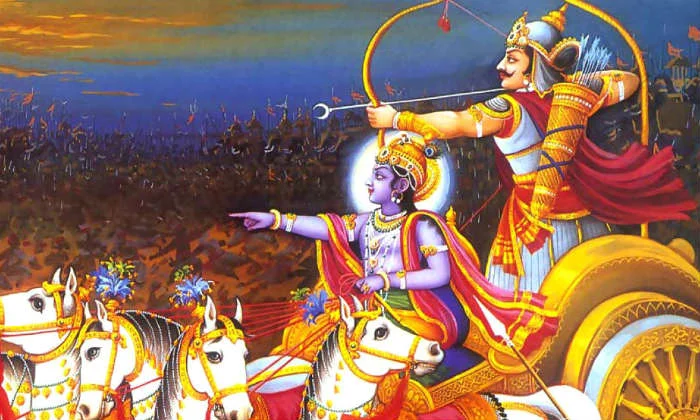
The Cost of Conflict
Dear Friends,
As we witness the ongoing conflicts between Israel and Hamas, as well as Russia and Ukraine, it’s impossible not to reflect on the devastating losses on both sides.
War brings with it immeasurable grief and destruction, leaving deep scars that take generations to heal.
This reminds me of the great Mahabharata War, an epic tale from Indian mythology that resonates with the pain and devastation we see today.
The Mahabharata, one of the most legendary epics in Indian mythology, culminates in the climactic Kurukshetra war—remembered as the greatest and most devastating conflict ever fought.
The war, which raged on for 18 days, saw lakhs of soldiers from both the Pandava and Kaurava sides, resulting in massive casualties and leaving behind a battlefield that was scarred and desolate.
When the dust finally settled, only a handful of warriors remained alive, survivors of a war that had claimed nearly every other life on the battlefield.
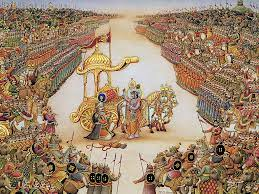
The Scale of the Armies
To grasp the sheer magnitude of this war, it’s essential to understand the size of the armies involved.
The battle saw a total of 18 Akshauhinis, an ancient Indian military formation comprising various units of soldiers, horses, chariots, and elephants.
The Kauravas fielded 11 Akshauhinis, while the Pandavas had 7. Each Akshauhini consisted of:
- Infantry: 21,870 soldiers
- Horses: 21,870
- Chariots: 21,870
- Elephants: 21,870
In total, one Akshauhini comprised approximately 109,350 warriors. This means that both sides together brought over 1.9 million warriors to the battlefield—a staggering number that underscores the scale of the conflict.
The Few Who Survived
When the war ended, only a mere 11 (or 12, depending on the interpretation) great warriors were left standing.
These survivors were considered extraordinarily fortunate, as they had lived through a war that had claimed nearly every other life on the battlefield.
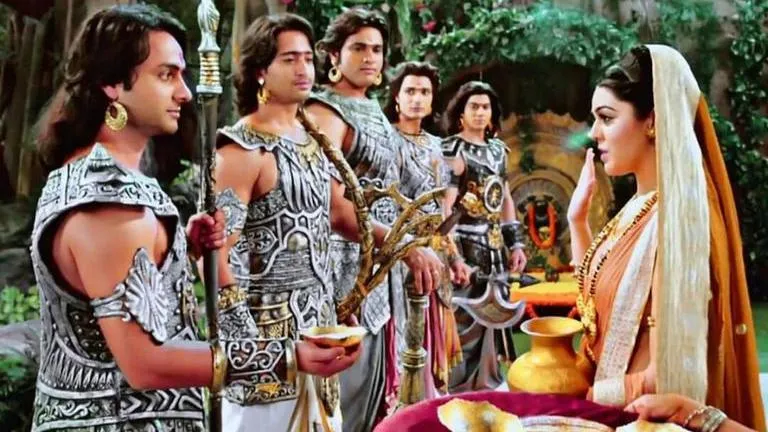
From the Pandava Side:
Yudhishthira: The eldest of the Pandavas and the righteous king, who would later rule Hastinapur.
Bhima: The mighty warrior known for his immense strength.
Arjuna: The greatest archer and hero of the Mahabharata.
Nakul: The fourth Pandava, known for his skills with horses.
Sahadeva: The youngest Pandava, known for his wisdom and knowledge.
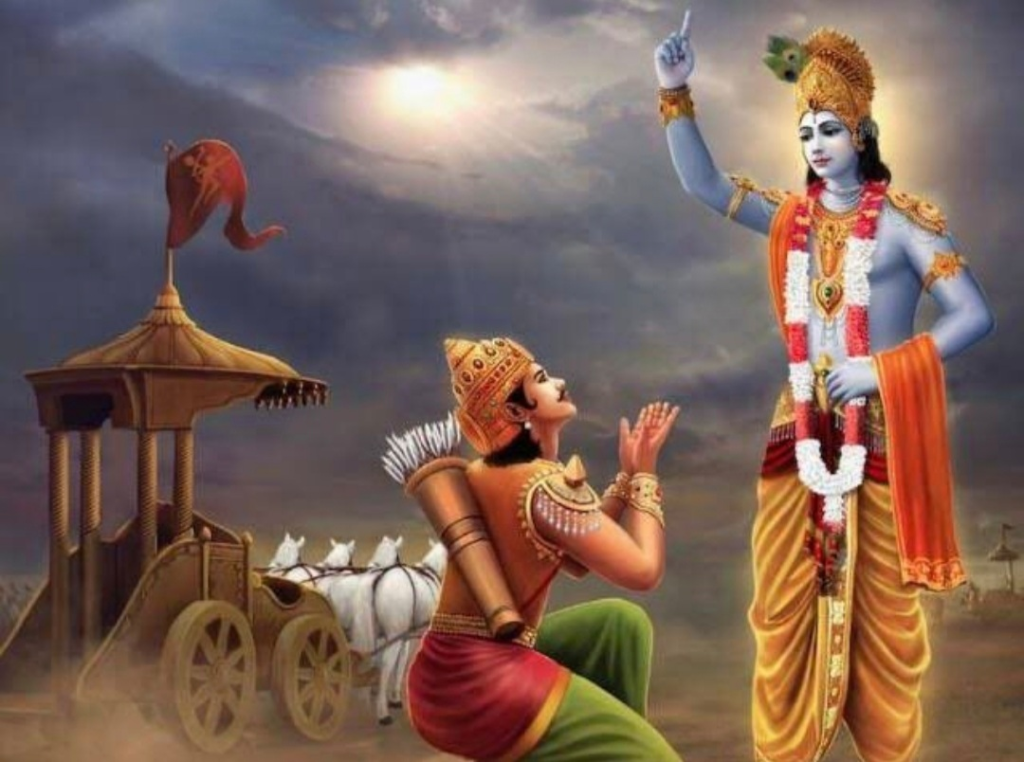
Lord Krishna: The charioteer and guide of Arjuna, who played a pivotal role in the war but had vowed not to take up arms.
Yuyutsu: The half-brother of the Kauravas, who chose to fight on the side of the Pandavas.
Satyaki: A close ally of Krishna and a formidable warrior who fought for the Pandavas.
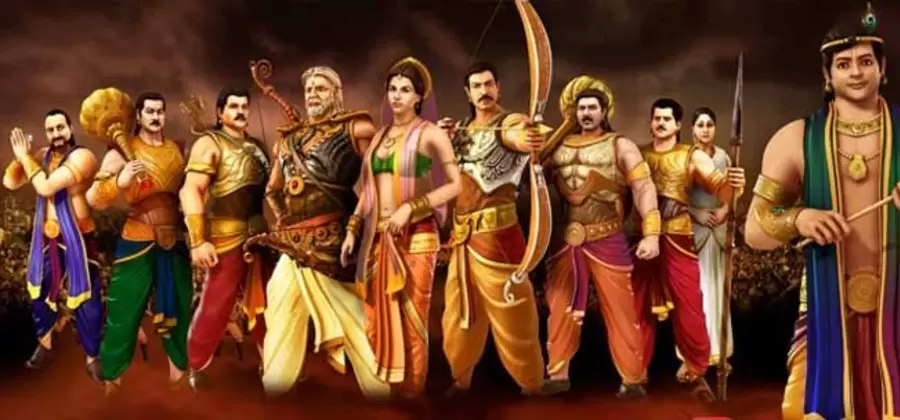
From the Kaurava Side:
Ashwatthama: The son of Dronacharya, who survived but was cursed by Krishna to wander the earth for eternity.
Kripacharya: The teacher of both the Pandavas and Kauravas, who also survived the war.
Kritavarma: A general in the Kaurava army who survived and continued his life after the war.
Bhishma Pitamah: The Silent Witness
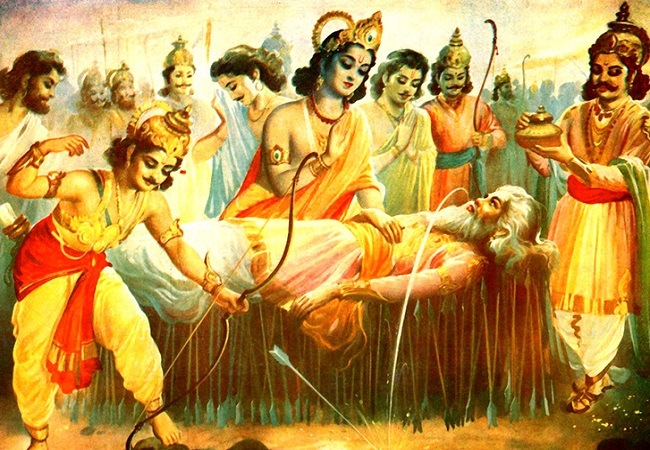
Though not technically counted among the survivors, Bhishma Pitamah was still alive when the war ended. He had been grievously wounded on the tenth day of the battle.
They lay on a bed of arrows for 58 days, surviving 40 days after the war’s conclusion. Blessed with the boon of choosing his time of death, he passed away on Makar Sankranti.
The Aftermath: A Grim Reminder
The aftermath of the Mahabharata war serves as a grim reminder of the cost of conflict. Despite the victory, the Pandavas were left to rule over a desolate kingdom, burdened with the memories of their fallen kin and the knowledge of the blood they had shed.
The survivors were not merely the victors of a great battle but also the witnesses to the immense suffering and loss that came with it.
In one of the war’s final moments, a severely injured Duryodhan lay in a forest when Ashwatthama approached him to report the situation.
He lamented that only a handful of warriors had survived: five Pandavas, Krishna, and Satyaki on the enemy side, and Kripacharya, Kritavarma, and himself on the Kaurava side.
Bhishma Pitamah’s name was omitted, as he was technically still alive, awaiting his chosen time of death.
The True Cost of War
The Mahabharata war’s aftermath is a powerful testament to the devastating consequences of war and the profound loss it inflicts on all involved.
This remarkable tale reminds us that even in victory, the cost of war is immeasurable, and the true survivors are those who bear the heavy burden of memory and loss.
As we reflect on the conflicts unfolding in our world today, let us remember the lessons of the Mahabharata. War leaves no winners, only survivors—individuals who must carry the weight of what has been lost.
The cost of war is far too great, and its impact resonates far beyond the battlefield.
BE HAPPY….BE ACTIVE….BE FOCUSED….BE ALIVE…
If you liked the post, please show your support by liking it,
following, sharing, and commenting.
Sure! Visit my website for more content. Click here
.
Categories: story
 Retiredकलम
Mahabharata is the most important book to learn all the aspects of life
LikeLiked by 2 people
Absolutely!
The Mahabharata is indeed a timeless epic that offers invaluable lessons on every aspect of life.
From leadership, morality, and justice to family dynamics, personal struggles, and spiritual wisdom,
it covers the entire spectrum of human experiences.
The characters, situations, and dilemmas portrayed in the Mahabharata resonate deeply with us,
as they mirror the complexities of real life.
It teaches us about the consequences of choices, the power of dharma (righteousness), and
the importance of self-reflection. Truly, it’s not just a story but a guide for navigating life’s challenges.
LikeLiked by 2 people
nice post..
LikeLiked by 2 people
Thank you.
LikeLiked by 1 person
You are right. The cost of war is far too great. Thank you for sharing the legend with us. If only we could learn from these teachings.
LikeLiked by 2 people
Thank you for your thoughtful reflection.
The Mahabharata indeed carries profound lessons, reminding us of the devastating cost of war,
both in terms of human lives and moral consequences.
If we could truly absorb the wisdom of these ancient stories—choosing dialogue over conflict, compassion over vengeance,
and understanding over division—the world would be a more peaceful place.
These teachings continue to resonate today, urging us to seek harmony and righteousness in our own lives.
May we all learn from the past to create a more just and compassionate future.
LikeLiked by 2 people