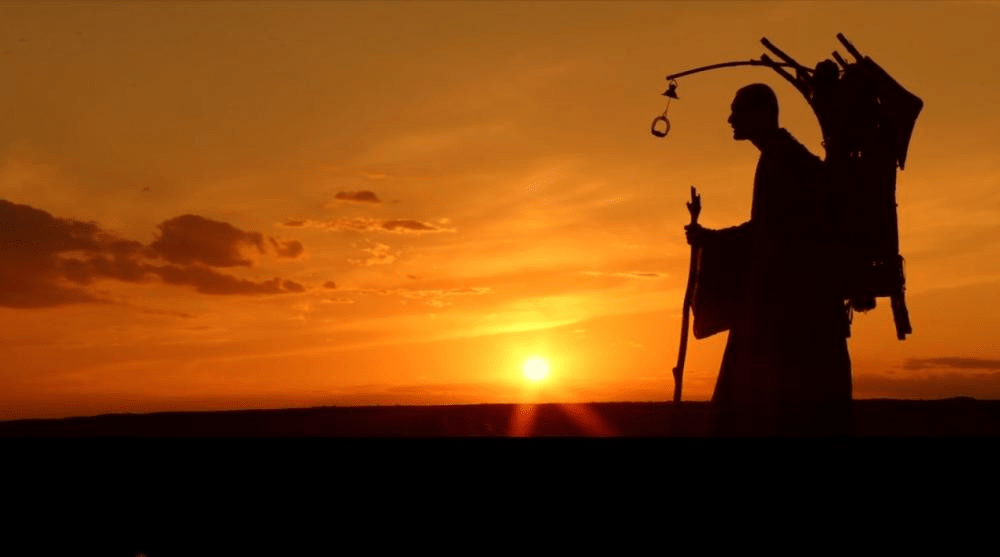
Xuanzang’s Extraordinary Odyssey: Unearthing the True Origins of Buddhism
In the annals of history, there are adventurers and explorers who leave an indelible mark on the world. One such luminary is Xuanzang.
Xuanzang : rediscovering the footsteps of the Buddha
Xuanzang was a 7th-century Chinese monk and scholar who traveled over 10,000 miles from China to India and back crossing the Gobi desert, Hindu Kush mountains, and Indo-Gangetic plain to reach Nālandā in Bihar (India). No one ever attempted such a journey before or after him.
Xuanzang left detailed and vibrant accounts of his travels which were translated from the Chinese language for the first time in the 19th century by European scholars and became the primary source of information about Buddha and his teachings. Xuanzang’s writings were the key to rediscovering the footsteps of the Buddha.
In the 7th century when Xuanzang journeyed to India, Chinese subjects were forbidden from leaving the country without official permission.
Xuanzang was denied permission to leave China, but as his mind was made up to reach India, Xuanzang braved the king’s wrath and left the country secretly.
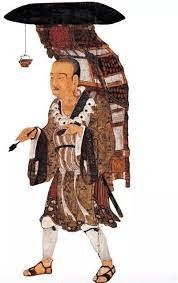
He began his journey from Xian in China, walked through hundreds of kingdoms in Central Asia and the Indian subcontinent, finally arriving in Nālandā in Bihar.
The purpose of undertaking this long and difficult journey was to collect the true teachings of Buddha from the prominent Buddhist monasteries in India and venerate the sacred places associated with Buddha.
Xuanzang spent 16 years on this trip during which he meticulously recorded all that he saw. On returning to China safely, Xuanzang dedicated his remaining life to translating the Buddhist scriptures he had collected in India and compiling his diaries into a travelogue.
Xuanzang presented his travelogue to the emperor. It was titled Ta-Tang-Hsi-yü-chi (Records of The Western Lands of the Great Tang Period). This travelogue was a masterpiece, providing the first ever written account of the lands and peoples lying to the west of China.
Xuanzang’s Journey from Xian to Nālandā
During Xuanzang’s journey, Buddhism was a thriving religion in India. Hundreds of monasteries flourished all across the Indian subcontinent serving as centres for Buddhist learning and training for monk-hood. Monasteries were supported by patronage from local kings and devotees.
Devotees visited the sacred places associated with the Buddha and performed rituals at these places. The sacred places were connected by roads forming an elaborate pilgrimage network.
How Xuanzang’s travel accounts led to the discovery of the true origin of Buddhism
Within a few centuries of Xuanzang’s journey, Buddhism started declining in the Indian subcontinent due to the arrival of Turkish rulers from Central Asia who brought with them a different religion.
Over time, all tangible and intangible Buddhist heritage in India got lost. Sacred places associated with Buddha like Lumbīnī (birthplace of Buddha), Mahābodhi (place of Enlightenment), Migadāya (place of delivering first sermon) and Kuśinagara (place of attaining Mahāparinirvāṇa) lost their significance.
All the sacred places assumed new names like…Vaiśālī and Śrāvasti where important events of Buddha’s life had taken place acquired new names Kolhuā and Sāhet respectively

The rich legacy of Buddhism,
The rich legacy of Buddhism, which had thrived in India for over fifteen centuries, was threatened with oblivion. Ignorance prevailed, with some Western scholars even postulating that Buddha was an African deity due to the statues depicting him with curly hair and large earlobes. Others believed that Buddhism had its origins in East Asia, where it was widely practiced.
The turning point in unraveling this mystery occurred in the mid-19th century. During this period, Western scholars developed a fascination with the Orient, spurring the translation of ancient travelogues like those of Xuanzang and Faxian, another Buddhist monk-scholar who had journeyed to India two centuries before Xuanzang.
As these travelogues were subjected to interpretation and investigation, they shed light on the true origins of Buddhism.

Xuanzang’s accounts played a pivotal role in this revelation. They highlighted that Buddhism had indeed originated in India and that an elaborate pilgrimage network called “In the Footsteps of the Buddha” existed.
Monks, nuns, and devotees from India and as far as East Asian regions like Japan undertook this pilgrimage, not only to earn merits but also to deepen their understanding and practice of the Dhamma.
Xuanzang’s extraordinary odyssey, fueled by an unyielding determination to unearth the authentic teachings of Buddha, reshaped our understanding of Buddhism’s origins.
His clandestine journey defied the restrictions of his time and enriched the world’s knowledge of ancient civilizations, spiritual traditions, and the sacred places where Buddhism took root.
In a world filled with tales of heroic exploits and epic quests, Xuanzang’s lesser-known story remains a testament to the indomitable human spirit and the pursuit of truth in the face of adversity.
His legacy endures, as does the knowledge that his journey paved the way for the rediscovery of the origins of one of the world’s most influential religions, Buddhism.
(Pic Courtsey: Google.com)
BE HAPPY….BE ACTIVE….BE FOCUSED….BE ALIVE…
If you liked the post, please show your support by liking it,
following, sharing, and commenting.
Sure! Visit my website for more content. Click here
Categories: infotainment
 Retiredकलम
🧡
LikeLiked by 1 person
Thank you so much.
LikeLike
Mr. Verma ! Fa Hien came to Patna when Patna was a flourishing city of the world . He saw a hospital there . It was the first hospital of the world . That time no hospital existed even in Europe . He saw a doctor was deputed in that hospital to treat the patients . He also saw two hundred Monasteries existed in Patna at that time . And people were quite affluent .
But when Hiuen Tsang visited Patna . He saw the city quite dilapidated . He saw no hospital there . And hardly two-three Monasteries existed there by that time . As soon as he entered into India , he was robbed of his things by the dacoits . And after the interference of Hershvardhan , the then King of Kanauj , who negotiated with those dacoits , Hiuen Tsang , anyhow , got back his utensils/stuffs .
All available on ARBIND KUMAR BLOG . Thanks !
LikeLiked by 3 people
Great information
LikeLiked by 2 people
Thanks !
LikeLiked by 2 people
Welcome sir
LikeLiked by 1 person
Stay happy and blessed.
LikeLiked by 1 person
Thank you so much for your appreciation.
It is helpful to boost my confidence.
LikeLike
Thank you so much, dear.
Your appreciation keep me going.
LikeLike
That is a nice information. I will visit your articles.
Thanks for sharing your feelings.
LikeLiked by 1 person
Nice post
LikeLiked by 1 person
Thank you so much.💕
LikeLiked by 1 person
Welcome sir
LikeLiked by 1 person
Stay blessed.
LikeLike
बेहतरीन ज्ञान है मुझे तो पता ही नहीं था
LikeLiked by 1 person
जी हाँ, यह भी इतिहास का महत्वपूर्ण घटना है और रोचक भी |
पढ़ने के लिए बहुत बहुत धन्यवाद |
LikeLiked by 1 person
Nice presention on history of Chinese monk Xuanzang and his visit to Nalanda to learn Buddhism.Later he spread the same in his country China.Realy he was a true scholar who has utilised his study for the welfare of the nation.
LikeLiked by 1 person
Very correct,, He was a true scholar who has utilized his study for the welfare of the nation.
Thanks for sharing your feelings.
LikeLike
It is a long article. I read it in a hurry but shall read it again leisurely as I found it quite fascinating. Thanks for this effort.
LikeLike
Good post….very well laid out…
LikeLiked by 1 person
Thank you so much.
Wishing you and your family a Happy Diwali filled with
love, laughter, and the enduring spirit of celebration!
LikeLiked by 1 person