
Hello dear friends,
I hope this Blog finds you in a cheerful mood.
Today’s writing prompt asks a fascinating—and rather uncomfortable—question:
“If you could erase one event from history, what would it be?”
At first, the question sounds like a fantasy. History has already happened. The battles have been fought, the decisions made, the lives lost, and the consequences carried across generations.
Yet, if I were given the impossible power to erase one event from human history, I would choose the Holocaust—the systematic murder of six million Jews by Nazi Germany and its collaborators during the Second World War.
Not because it was the only terrible event in history. Sadly, it wasn’t. Human history contains slavery, genocides, wars, famines, colonial violence and countless other tragedies.
But the Holocaust represents something particularly frightening: what can happen when hatred is turned into policy, prejudice into propaganda, and human beings into numbers.
“Those who cannot remember the past are condemned to repeat it.” — George Santayana
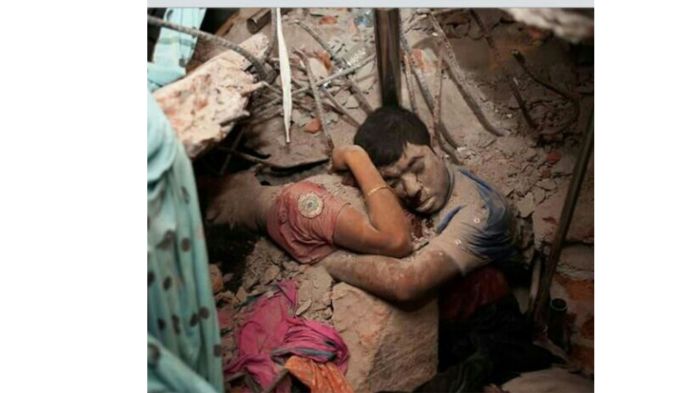
❤️ When Prejudice Became a Machine
The Holocaust did not begin with concentration camps or gas chambers.
It began with words.
People were labelled, stereotyped and dehumanised. Laws gradually stripped Jewish people of their rights. Propaganda encouraged ordinary citizens to see their neighbours differently. Discrimination became normalised.
Then came persecution, deportation, forced labour, ghettos and ultimately mass murder.
That progression is perhaps one of the most important lessons of the Holocaust.
Evil does not always arrive wearing a frightening face. Sometimes it enters quietly—through jokes, prejudice, political rhetoric, silence and the gradual acceptance of another person’s humiliation.
A society rarely becomes cruel overnight. It becomes cruel one tolerated injustice at a time.
❤️ Six Million Lives Were Not a Statistic
The number six million is almost impossible for the human mind to comprehend.
But behind that number were individual lives.
There were mothers and fathers, children and grandparents, teachers and musicians, shopkeepers and scientists, dreamers and ordinary people who had plans for tomorrow.
Every person who disappeared from history had a name, a family, a favourite song, a childhood memory and hopes for the future.
That is why remembering matters.
When we reduce historical tragedy to statistics, we risk losing its human meaning. The Holocaust reminds us that every number represents a human being whose life mattered.
❤️But Would Erasing It Really Solve the Problem?
Here comes the difficult part.
If I could actually erase the Holocaust, should I?
Perhaps there is another question hidden underneath the question.
Would removing a terrible event remove the hatred that produced it?
I am not sure.
Human beings might forget the Holocaust precisely because it never happened. The lessons about prejudice, propaganda, authoritarianism and dehumanisation might never have been learned.
And that is the paradox of history.
We wish we could erase its darkest pages, yet those pages sometimes contain the warnings we most desperately need.
Perhaps I would not erase the Holocaust after all.
Perhaps I would erase something earlier—the moment when hatred began to become acceptable, when people stopped seeing one another as fellow human beings.

❤️ The History We Must Not Repeat
We cannot change yesterday.
But we can influence tomorrow.
We can challenge prejudice when it appears in our conversations. We can question propaganda instead of blindly accepting it.
We can teach children that differences in religion, language, ethnicity, nationality or culture do not make one human life more valuable than another.
And perhaps most importantly, we can refuse to remain silent when another person’s dignity is being attacked.
History is not merely a collection of dates in a textbook.
History is memory with a responsibility.

(Courtesy: Google.com)
❤️ Maybe We Should Erase Hatred Instead
If I were granted one final wish, perhaps I would change my answer.
I would not erase a particular event from history.
I would erase the belief that one human being is inherently superior to another.
Imagine a world in which we could remove that idea from the human heart.
- No Holocaust.
- No genocide.
- No slavery justified by race.
- No religious persecution.
- No ethnic cleansing.
- No wars born from hatred.
Of course, such a wish belongs to imagination.
But imagination is where many better futures begin.
We cannot rewrite history, dear friends. But we can decide what history writes about us.
Perhaps the real question is not “Which event would you erase?”
Perhaps it is:
“What will you do today to ensure that humanity never needs to experience it again?”
And that, I believe, is the more important question.
Because we may not have the power to erase yesterday—but we do have some power to shape tomorrow.

BE HAPPY… BE ACTIVE… BE FOCUSED… BE ALIVE
If this post inspired you, show some love! 💙
✅ Like | ✅ Follow | ✅ Share | ✅ Comment
www.retiredkalam.com
Categories: infotainment


Verma ji, this is a deeply thoughtful and moving piece. You took a difficult hypothetical question and turned it into a profound meditation on memory, responsibility, and the quiet ways hatred can take root in a society. I especially appreciated how you wrestled with the paradox of erasing a tragedy—recognizing that removing the event might also remove the warning. Your final shift—from erasing an event to erasing the belief in human superiority—is both humbling and hopeful. It’s a reminder that history is not just what happened, but what we choose to do with its lessons. Beautifully written and deeply important. 🙏
LikeLiked by 1 person
hank you so much for your thoughtful and heartfelt words. 🙏 You have beautifully captured the very essence of my writing. We cannot change the painful chapters of history, but we can learn from them and ensure that hatred never takes root in our hearts. Perhaps the real change begins when we stop believing in superiority and start embracing humanity, compassion, and mutual respect. Thank you for reading so deeply and sharing such meaningful reflections. ❤️
LikeLike