Hello dear friends,
I hope this VBlog finds you in a cheerful mood.
Today’s writing prompt question made me stop and think:
“How does your mindset affect your financial success?”
After spending more than three decades in banking and now experiencing life from the other side of retirement, I have come to realise something important:
Financial success is not created only by the money we earn. It is created by the way we think about money.
Two people can have similar incomes, similar opportunities, and even similar investments, yet their financial journeys can be completely different.
Why?
Because behind every financial decision, there is a mindset.
❤️A Banker’s First Lesson: Money Needs Discipline
During my banking career, I saw people with very good incomes struggling financially and others with modest incomes building comfortable lives.
The difference was often not their salary.
It was their habits.
Some spent first and saved whatever remained. Others saved first and spent what was left.
That simple difference can change a person’s financial future.
“Do not save what is left after spending; spend what is left after saving.” — Warren Buffett
I have always found this principle remarkably practical.
Money needs discipline just as the body needs exercise.
❤️The Psychology Behind Spending
As consumers, we are surrounded by temptations.
A new phone, a better car, an expensive holiday, fashionable clothes, or the latest gadget can easily convince us that we need something when, actually, we only want it.
I have learned that one of the most powerful financial questions is:
“Will this purchase add lasting value to my life?”
If the answer is no, perhaps we can wait.
Sometimes the best investment is simply not spending money unnecessarily.

❤️Retirement Changes the Meaning of Money
When we are working, money often represents ambition.
We want to earn more, buy a house, educate our children, build savings and prepare for the future.
But retirement changes the equation.
Suddenly, money becomes less about accumulation and more about security, independence, and peace of mind.
We begin asking different questions:
- Do I have enough for tomorrow?
- Am I spending wisely?
- Can I enjoy today without compromising tomorrow?
And perhaps the most important question:
How much money is actually enough?
❤️The Market Teaches Us About Our Mind
Investing can be an excellent teacher of human psychology.
When markets rise, greed whispers:
“Buy more!”
When markets fall, fear screams:
“Sell everything!”
Neither emotion is necessarily a good financial adviser.
A calm and patient mindset is often more valuable than trying to predict every movement of the market.
“The investor’s chief problem—and even his worst enemy—is likely to be himself.” — Benjamin Graham
This is one lesson that applies far beyond investing.
Our biggest financial enemy may not always be inflation, the market or unexpected expenses.
Sometimes, it is our own emotions.
❤️Don’t Compare Your Financial Journey

One of the easiest ways to lose financial peace is to compare ourselves with others.
- Someone has a bigger house.
- Someone drives a more expensive car.
- Someone travels more frequently.
- Someone appears to have a much larger investment portfolio.
But we rarely know the complete story behind another person’s lifestyle.
Comparison can turn contentment into dissatisfaction.
I have learned that financial success should be measured against our own needs, responsibilities and circumstances, not someone else’s lifestyle.
“Comparison is the thief of joy.” — Theodore Roosevelt
It can also be the thief of financial wisdom.
❤️The Greatest Investment Is Still Yourself
Money can buy comfort, but it cannot automatically buy wisdom.
As I entered retirement, I realised that life needed a new kind of wealth.
- Time became valuable.
- Health became valuable.
- Relationships became valuable.
- Reading, writing, painting, walking, playing and learning new things became valuable.
I began to understand that a rich life is larger than a rich bank account.
What is the use of financial success if we have no time to enjoy it?

❤️My Retired Kalam Lesson
After all these years, my understanding of financial success has become quite simple.
- Earn honestly.
Save regularly.
Spend thoughtfully.
Invest patiently.
Avoid unnecessary debt.
Don’t let fear or greed control you.
And never allow money to become more important than life itself.
Money is a wonderful servant but a terrible master.
The right mindset doesn’t promise that we will become wealthy.
It does something more valuable.
It helps us become responsible, patient and content with what we have while wisely preparing for what lies ahead.
Perhaps that is the real answer to today’s prompt.
Our financial future is not determined only by the size of our income. It is shaped by the quality of our decisions—and our decisions are shaped by our mindset.
So, dear friends, the next time you look at your bank balance, also look within yourself.
Ask:
“What does my attitude towards money say about me?”
Because sometimes, the biggest financial transformation doesn’t begin in the bank.
It begins in the mind.
And that is one lesson this retired banker continues to learn—one day, one decision, and one rupee at a time.

Categories: infotainment
 Retiredकलम
That’s why I don’t have apps whom I can purchase something online. It’s tantalizing. Wonderful thoughts, Verma
LikeLiked by 2 people
Thank you so much! ❤️
I completely agree—online shopping can be incredibly tempting. Sometimes, the best way to save money is simply to keep temptation out of sight! 😊
I’m glad you enjoyed the thoughts and found them meaningful. Warm regards and gratitude! 🙏
LikeLiked by 2 people
You’re welcome, Verma
LikeLiked by 2 people
Thank you, Sir.
Stay happy and blessed.
LikeLiked by 2 people
very nice .
LikeLiked by 2 people
Thank you so much.
LikeLiked by 1 person
LikeLiked by 2 people
Hi Verma ji, I noticed that someone has replied to your comment with a promotional link, using my Nihshabd post image/link along with it. They are using it for their own benefit. Could you please delete that reply from your comment section? I’d really appreciate it. 🙏 Thank you for understanding. 🙏🏻
LikeLiked by 3 people
Definitely. Thank you for bringing this to my attention. 🙏
I understand your concern, and I certainly don’t want anyone using your post or image for promotional purposes without your permission.
I’ll delete the reply from my comment section.
I’m sorry this happened. Please let me know which article received comments. 🙏🏻
LikeLiked by 1 person
Thank you so much for understanding and for checking. 🙏🏻 Could you please also check the post where I left the comment? I just want to know whether my name, image, or link is appearing there along with the promotional comment. If you could please let me know, I’d really appreciate it. ❤️
LikeLiked by 3 people
You’re most welcome. 🙏🏻
Yes, I’ll check the post where you originally left the comment as well, and I’ll carefully see whether your name, image, or link is appearing alongside the promotional comment
LikeLiked by 1 person
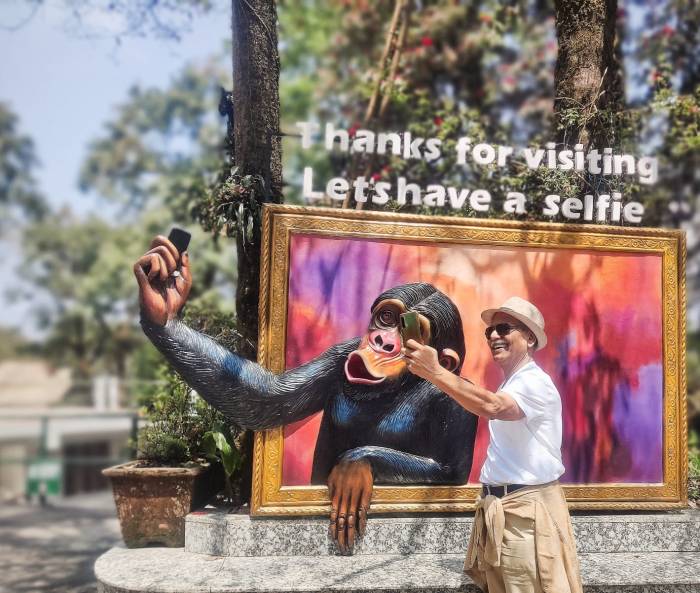
“Financial success is not created only by the money we earn. It is created by the way we think about money.” Great words of wisdom. (I like your selfie picture.)
LikeLiked by 3 people
Thank you so much for your kind words! 😊
I’m glad the thought resonated with you. Indeed, our attitude toward money often matters as much as the money itself. And thank you for liking the selfie—I’m happy you enjoyed it! ❤️
LikeLiked by 2 people
I really enjoyed this reflection Verma ji. 🤍There’s something so comforting about the way you connect money with discipline, patience, contentment, and ultimately, the way we choose to live. The reminder that a rich life is much more than a rich bank account really stayed with me. So many valuable lessons here, shared with the wisdom that can only come from years of experience. 🦋✨
LikeLiked by 2 people
Thank you so much for your beautiful and thoughtful words. ❤️
I’m truly glad that the reflection resonated with you.
Over the years, I’ve learned that money is only one part of a rich life…
discipline, contentment, relationships, health, and peace of mind are equally valuable.
LikeLiked by 1 person
Great post from you.
Since you have been in this field, your understanding and perspective matters.
Thank you for your words of wisdom.
LikeLiked by 2 people
Thank you so much for your kind and thoughtful words. ❤️
I truly appreciate your appreciation. Whatever understanding I have gained over the years has come from experience, observation, and, most importantly, from continuing to learn. I’m happy if my words can offer even a little wisdom, encouragement, or a different perspective. 🙏
LikeLiked by 2 people
Great post
LikeLiked by 3 people
Thank you so much.
Your words mean a lot.
LikeLiked by 2 people
You’re very welcome.
LikeLiked by 2 people
Thank you so much.
Stay connected and keep sharing.
LikeLiked by 2 people
A thoughtful reflection on how financial success begins not with income, but with discipline, emotional balance, and clarity about what truly matters. Retirement indeed teaches us that wealth is ultimately about having enough and having the wisdom to use it well.
LikeLiked by 1 person
Thank you for such a thoughtful observation. 🙏
I completely agree—financial success is as much about discipline and emotional balance as it is about income.
Retirement has certainly taught me that “having enough” brings a different kind of wealth,
especially when we have the wisdom to use it wisely and enjoy the life we have built.
LikeLiked by 2 people
Three decades in banking gives you a vantage point most of us never get – seeing high earners struggling while modest incomes built comfortable lives. That contrast makes the mindset argument far more convincing than any theory would. We’ve found the same thing with travel budgeting: the constraint is almost never the number, it’s how you decide to think about it.
LikeLiked by 3 people
Thank you for this thoughtful observation. You’ve captured something I learned repeatedly during my years in banking: income certainly matters, but our financial habits, priorities, and mindset often matter just as much.
I saw people with impressive incomes who were constantly under financial pressure, while others with modest earnings lived comfortably because they knew how to manage what they had.
LikeLiked by 1 person