
Hello dear friends,
I hope this blog finds you in a cheerful mood.
Today’s prompt—“What’s your favorite meme?”—may sound lighthearted at first. But behind this simple question lies a fascinating story about how human communication has evolved in the internet era.
Memes are no longer just jokes; they are cultural units of meaning, spreading faster than news headlines and often influencing public opinion, emotions, and even marketing strategies.
Let’s explore this world with a mix of facts, figures, and insight.
1. What Exactly Is a Meme?
The term “meme” was first introduced in 1976 by evolutionary biologist Richard Dawkins in his book The Selfish Gene. He used it to describe how ideas spread in culture similarly to genes in biology.
Fast forward to today, and memes have evolved into:
- Images with text
- Short videos (especially on platforms like TikTok and Instagram Reels)
- GIFs
- Catchphrases and viral formats
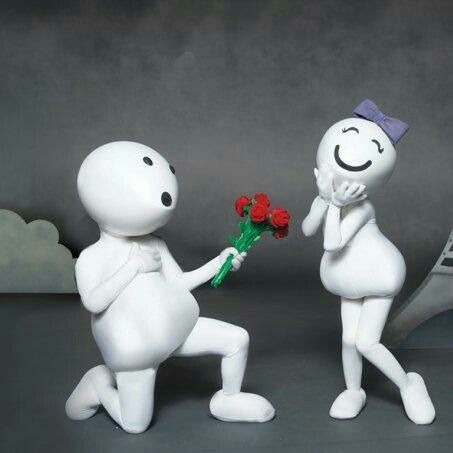
In short, a meme is now a unit of cultural transmission through digital humor and relatability.
2. The Scale of Meme Culture Today
Memes are no longer niche internet jokes—they are a global communication system.
Here are some eye-opening facts:
- Over 5 billion people use the internet globally (ITU estimates).
- Social media users spend an average of 2.5 hours per day online.
- Platforms like Instagram and TikTok see hundreds of millions of meme-style posts daily.
- On Reddit alone, meme communities like r/memes and r/dankmemes have tens of millions of active users.
A 2023 report by social media analytics firms suggested that over 70% of Gen Z users share memes weekly, and nearly 40% share them daily.
This means memes are not occasional entertainment—they are a daily language of communication.
3. Why Memes Work So Well
Memes succeed because they activate three powerful psychological triggers:
a) Relatability
Humans are social beings. When we see a meme about stress, procrastination, or awkward situations, our brain instantly thinks: “That’s me.”
b) Cognitive Ease
Memes are fast. The brain processes images 60,000 times faster than text, which is why memes feel instant and effortless.
c) Emotional Release
Humor reduces stress. Studies in psychology show that laughter lowers cortisol (stress hormone) levels and increases dopamine, the “feel-good” chemical.
So when someone laughs at a meme, it’s not just entertainment—it is micro-therapy.

4. The Most Popular Meme Categories
Over time, memes have developed distinct genres, almost like film categories:
🐶 Relatable Everyday Memes
Example: “This is fine” dog sitting in a burning room
These memes reflect real-life stress with humor.
📉 Expectation vs Reality Memes
They highlight the gap between ambition and real life outcomes.
🤯 Absurdist Memes
Completely irrational humor that makes no logical sense—but still feels funny.
🎭 Pop Culture Memes
Based on movies, celebrities, and TV shows.
💼 Work-Life Memes
Especially popular after 2020, reflecting burnout, remote work, and corporate culture.

5. Memes as a Communication Tool in 2026
In today’s digital world, memes are doing more than making people laugh—they are shaping communication itself.
- Brands now use memes in marketing campaigns.
- Political movements use memes to influence public opinion.
- Educational content creators use memes to simplify complex topics.
Even major companies like Netflix and Spotify actively use meme marketing to engage younger audiences.
In fact, marketing studies show that meme-based campaigns can increase engagement rates by up to 60–80% compared to traditional posts.
6. The Speed of Virality
One of the most fascinating aspects of memes is how fast they travel.
- A viral meme can reach millions of users within 24–48 hours
- TikTok trends can spread globally in less than 12 hours
- Instagram meme pages often gain thousands of followers overnight after a viral post
This makes memes one of the fastest-moving forms of content in human history.

7. So, What Is My Favorite Meme?
If I had to choose—not just emotionally but analytically—it would be the “relatable chaos” meme format.
Why?
Because it reflects a universal truth: life is often messy, unpredictable, and slightly absurd—but shared humor makes it bearable.
A single image saying “I have everything under control” while everything is clearly not under control captures a feeling that entire paragraphs sometimes fail to express.
That is the genius of memes—they compress emotional truth into a single frame.
Conclusion: More Than Just Internet Jokes
Memes are often dismissed as trivial internet content, but in reality, they are one of the most powerful cultural tools of the 21st century.
They:
- Reflect society
- Spread ideas instantly
- Build communities
- Provide emotional relief
- And most importantly, connect strangers through shared laughter
So the next time someone asks, “What’s your favorite meme?” remember—it’s not just about humor. It’s about identity, emotion, and how we navigate the modern digital world together.
And maybe that’s why memes feel so universal:
because in a complicated world, they let us say the simplest truth—
“I get it. Me too.”

Categories: infotainment


very nice .
LikeLiked by 5 people
Thank you so much.
LikeLiked by 2 people
Thanks for putting this together. The section on exploring meme culture retiredकलम added a useful perspective. A related resource for dijital pazarlama ajansı is https://cythradigital.com/.
LikeLiked by 2 people
Verma ji, this is brilliantly articulated! You’ve perfectly captured what makes memes so much more than just internet fluff—they’re the emotional shorthand of our generation. The way you’ve woven together the science, psychology, and cultural impact shows deep understanding. And that closing line—’I get it. Me too.’—is exactly why memes resonate so deeply. You’ve turned a lighthearted question into a powerful reflection on human connection. Well done, sir! 👏📱
LikeLiked by 4 people
Thank you so much for your generous and thoughtful words. 🙏 Your observation about memes being the “emotional shorthand of our generation” is wonderful—and I think that is exactly what makes them so fascinating.
What begins as a simple joke or image can sometimes say what a long conversation cannot: “I’ve felt this too.” That tiny moment of recognition creates an unexpected connection between strangers.
LikeLiked by 2 people
Very nice guide on what memes are!
LikeLiked by 4 people
Absolutely! 😊 Sometimes a simple meme is all it takes to brighten the day. A little laughter can be a wonderful reminder that life doesn’t always have to be taken so seriously. Keep smiling and keep sharing the joy! 😄
LikeLiked by 3 people
Well shared. Now some memes make people smile.
LikeLiked by 4 people
Thank you so much 😊
Sometimes a simple meme is all it takes to brighten the day. A little laughter can be a wonderful reminder that life doesn’t always have to be taken so seriously. Keep smiling and keep sharing the joy! 😄
LikeLiked by 2 people
Verma ji, such an interesting take on something we often dismiss as “just a meme”! 😊🤍I loved how you connected humor with psychology, culture, and everyday life. The idea that memes have become a language of their own is so true. And that final thought—“I get it. Me too.”—beautifully captures why we keep sharing them. A thoughtful and engaging read! 🦋✨
LikeLiked by 3 people
Thank you so much for your thoughtful words! 😊
I’m delighted that you enjoyed the post. Memes may look simple on the surface, but they often capture our emotions, habits, frustrations, and everyday experiences in just a few seconds. That little moment of recognition—“I get it. Me too.”—is perhaps what makes them so universally relatable.
LikeLiked by 2 people
La meme cultura es una ventana al mundo moderno y sus experiencias. ¡Es fascinante observar cómo las historias se viralizan y se transforman a través de la red!
LikeLiked by 2 people
Thank you for your thoughtful comment! 😊
I completely agree—the meme culture has become a fascinating window into modern life, capturing our humor, emotions, and everyday experiences in just a few words or images.
LikeLiked by 1 person