
Hello, dear friends,
I hope this blog finds you in a cheerful mood.
Today’s writing prompt poses a fascinating question:
“What’s a time you followed your gut and it turned out to be exactly right?”
At first glance, it sounds like a simple invitation to recall a lucky guess.
But the more I reflected on it, the more I realized that our “gut feelings” often emerge from a deep reservoir of experiences, observations, and instincts that our conscious minds haven’t fully processed yet.
Have you ever met someone and instantly sensed that something wasn’t quite right? Or chosen an unfamiliar path simply because it felt like the better option? Most of us have experienced those moments when an inner voice whispers, Pay attention.
Sometimes, listening to that voice changes everything.
Today, I would like to share one such incident from my own life that perfectly justifies this prompt.
❤️The Job Interview I Never Took
Retirement is often described as a well-earned period of rest and relaxation. Yet, for many people, including me, it also brings an unexpected emptiness.
After retiring from the banking profession following thirty-two years of dedicated service, I suddenly found myself with an abundance of time and a shortage of purpose.
The hustle and bustle of bank life, the daily interactions with colleagues and customers, and the sense of responsibility that had defined my routine for decades had all disappeared overnight.
Staying at home all the time made me restless. My mind often wandered back to my active banking days.
Some well-meaning friends suggested that I take up a private job.
“You have vast experience,” they said. “Finding a suitable position won’t be difficult.”
The suggestion appealed to me. It seemed like an opportunity to remain productive and engaged.
Soon enough, a friend informed me about an excellent job opening. On paper, it looked perfect. The salary was attractive, the position prestigious, and everyone encouraged me to accept it.
I attended the interview, met the management team, and toured the office.
Everything appeared impressive.
Yet throughout the visit, I felt an unshakable discomfort.
Nothing obvious was wrong, but I noticed subtle signs. Employees avoided eye contact. Conversations felt rehearsed. Beneath the polished appearance, there was an atmosphere of tension and uneasiness.
Logic argued that I would be foolish to decline such an opportunity.
My intuition said otherwise.
Against the advice of many well-wishers, I turned down the offer.
Months later, news spread that the company was experiencing serious internal conflicts, financial instability, and widespread employee dissatisfaction. Several staff members resigned under stressful circumstances.
That was the moment I realized that my “gut feeling” had not been irrational fear.
It had been quiet wisdom assembled from countless small observations that my conscious mind had noticed but had not fully acknowledged.
❤️What Science Says About Intuition
Interestingly, modern science has begun to validate what people have long called intuition.
According to psychologists, intuition is not magic. It is the brain’s remarkable ability to rapidly process patterns based on accumulated experiences.
Nobel Prize-winning psychologist Daniel Kahneman, in his influential book Thinking, Fast and Slow, describes this phenomenon as System 1 thinking—fast, automatic judgments formed through years of learning and experience.
Research conducted at the University of Iowa suggests that people often unconsciously recognize danger or opportunity before they can logically explain why.
Their bodies respond through subtle emotional and physiological cues long before the conscious mind catches up.
Perhaps our gut feelings are not mysterious predictions after all.
Perhaps they are simply our minds connecting dots faster than conscious reasoning allows.
❤️Intuition Versus Impulsiveness
Of course, not every impulse deserves blind obedience.
There is an important difference between intuition and impulsiveness.
Impulsiveness says:
“Act immediately because I want this now.”
Intuition whispers:
“Pause. Something deserves your attention.”
True intuition is often calm rather than dramatic. It nudges rather than shouts.
The challenge lies in learning to distinguish fear from wisdom, anxiety from insight, and impulse from genuine instinct.
❤️A New Direction After Retirement
Declining that job offer proved to be one of the best decisions of my retired life.
Instead of forcing myself into an environment that did not feel right, I listened to my inner compass.
My intuition gently guided me toward exploring new possibilities.
I began blogging.
I started writing poems and short stories.
With the encouragement of true friends, I discovered the joy of expressing my thoughts through words. I also enrolled in drawing and painting classes—activities I had never seriously pursued during my busy banking career.
These creative pursuits enriched my life in ways I had never imagined.
They kept my mind active, expanded my knowledge, introduced me to wonderful communities, and gave me a renewed sense of purpose.
Retirement, I discovered, was not the end of productivity.
It was the beginning of rediscovering myself.

❤️My Final Submission
Looking back, I do not believe that following our gut guarantees perfection. Intuition can occasionally mislead us, especially when influenced by prejudice or unresolved fears.
However, there are moments when that quiet inner voice becomes one of our wisest companions.
It asks us to pay attention.
It encourages caution when something feels wrong.
It inspires courage when an unexplained certainty tells us to leap toward possibility.
Maybe the greatest lesson for me is this:
Trust your mind, but don’t ignore your heart.
Friends, the next time your intuition gently taps you on the shoulder, pause and listen.
You might discover that the wisdom you seek has been within you all along.
As Ray Bradbury beautifully said:
“Your intuition knows what to write, so get out of the way.”
Now, I would love to hear from you.
Have you ever followed your gut feeling and later discovered it was exactly right? What happened, and what did it teach you?
Until next time, stay curious, stay courageous, and never underestimate the quiet voice within.
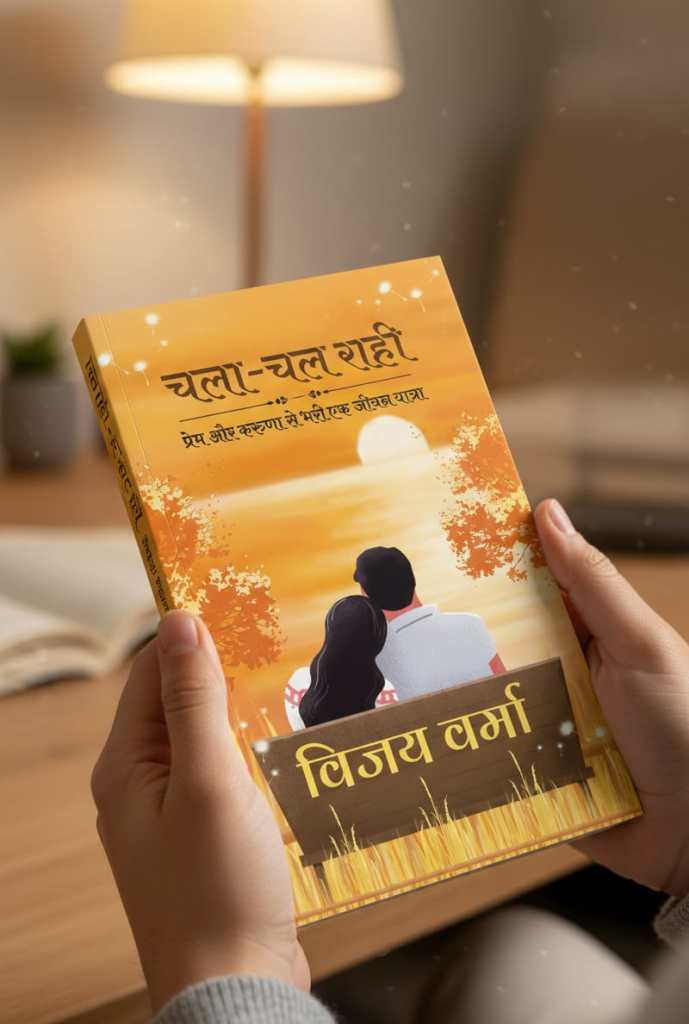
My book is now available on Amazon.
You can find it here: https://amzn.in/d/0gBYPlvz
I truly appreciate your interest and support—it means a lot!
Categories: infotainment


I have the book of Kahneman but unfortunately, I didn’t finish it. A few pages I read show that the book is very interesting, but needs more critical thinking to absorb the book.
LikeLiked by 2 people
I can completely relate to that. Thinking, Fast and Slow is a fascinating book, but it isn’t the kind of book one can race through. Kahneman challenges us to examine how our minds work, and that requires frequent pauses for reflection. I found that even a few pages can provide enough material to think about for an entire day.
LikeLiked by 2 people
I really enjoyed reading this Verma ji. Your story is such a lovely example of how our inner voice often knows things before our mind does. So glad you trusted it, because that one decision not only saved you from the wrong path but also opened the door to a beautiful new chapter filled with creativity, learning, and purpose. 🤍✨
LikeLiked by 2 people
Thank you so much for your thoughtful and encouraging words. 🤍✨ Your comment beautifully captures what I was trying to express through my story.
Looking back, I realize that declining that job was not merely about avoiding the wrong path; it was also about creating space for a different kind of growth. At the time, I only had a feeling that something wasn’t right. I never imagined that listening to that quiet inner voice would lead me toward blogging, poetry, painting, and a renewed sense of purpose in retirement.
LikeLiked by 1 person
very nice .
LikeLiked by 1 person
Thank you so much.
LikeLike
What a beautiful and deeply reflective piece, Verma ji! ❤️
Your story resonates on so many levels—not just as a testament to trusting one’s intuition, but as a gentle reminder that life after retirement isn’t about slowing down, but about redirecting our energies toward what truly nourishes us.
The way you described that interview experience—the subtle signs, the rehearsed conversations, the employees avoiding eye contact—paints such a vivid picture. It’s remarkable how our subconscious picks up on these micro-signals long before our conscious mind can piece them together. You didn’t just follow a “feeling”; you followed years of accumulated wisdom from your banking career, finely tuned instincts that had been quietly observing human behavior for decades.
What I admire most is your courage to go against the advice of well-wishers. That takes real strength—to stand firm in your decision when logic and others’ opinions point in a different direction. And the beautiful part? That “no” opened doors you never expected. Blogging, poetry, painting… these aren’t just hobbies; they’re revelations of the person you were always meant to become beyond the banker’s suit.
The distinction you made between intuition and impulsiveness is so crucial. Intuition whispers; impulsiveness shouts. That’s a lesson many spend a lifetime learning, and you’ve articulated it with such clarity.
I also appreciate how you acknowledged that intuition isn’t infallible—it can be colored by fears or biases. That honesty makes your reflection even more trustworthy.
To answer your question: Yes, I’ve had moments where I followed my gut and later felt that quiet sense of “I knew it.” Once, I chose a different route home for no apparent reason, only to learn later that my usual path had been blocked by an accident. Small, perhaps, but it reminded me that our inner compass works in mysterious ways—always paying attention, even when we aren’t.
Thank you for sharing this piece of your journey, Verma ji. It’s not just a story about a job you didn’t take; it’s a story about the life you chose instead. And that, I think, is the most inspiring part.
Keep writing, keep creating, and keep listening to that quiet voice within. 🙏✨
LikeLiked by 1 person
Thank you from the bottom of my heart for such a thoughtful and generous response. ❤️🙏
I was deeply touched by the care with which you read my post. You not only understood the incident itself, but also the emotions and lessons hidden beneath it. Your observation that intuition is often “accumulated wisdom” rather than mere instinct resonated with me profoundly.
Perhaps those thirty-two years in banking quietly trained me to notice what words often conceal—small gestures, uneasy silences, and the atmosphere between people.
LikeLike
This resonated deeply. The distinction you drew between intuition and impulsiveness is something I have been thinking about a lot lately. That quiet inner voice that nudges rather than shouts — I am learning to trust mine more. Thank you for sharing this so honestly.
LikeLiked by 2 people
Thank you so much for your thoughtful reflection. It means a great deal to know that this distinction resonated with you.
Stay connected and keep sharing.
LikeLiked by 1 person
So impressive 👍🥰
God Bless you
LikeLiked by 1 person
Thank you so much for your kind and encouraging words. 👍🥰🙏
Your appreciation truly means a lot to me. As writers and readers, we inspire one another through our shared thoughts, stories, and reflections. Knowing that something I wrote resonated with you is a blessing in itself.
LikeLiked by 1 person
That detail about the polished office where employees avoided eye contact and conversations felt rehearsed gave me chills — your gut was reading the room far better than the spreadsheet was. We’ve had similar moments on the road, walking away from a “perfect on paper” guesthouse because something just felt off, and being grateful later. What a gift that the same instinct nudged you toward blogging and painting. Thirty-two years of pattern-reading clearly didn’t retire when you did.
LikeLiked by 1 person
Thank you so much for your thoughtful words. 😊🙏
I smiled when I read about your experience of walking away from a guesthouse that looked perfect on paper but somehow didn’t feel right. It really does remind us that intuition often notices what our conscious mind cannot immediately explain.
I believe that years of interacting with people, observing expressions, listening carefully, and reading situations leave quiet footprints within us. During my 32 years in banking, I may not have realised that I was developing that inner pattern-recognition. Retirement ended my official role, but as you beautifully said, those instincts did not retire with me.
LikeLike
A police officer once told me that we have good instincts but think it’s silly to listen to them but we should.
LikeLiked by 1 person
I think that police officer gave you some very wise advice.
Our instincts are often the mind’s way of processing countless small details that we notice without consciously realizing it. A change in someone’s tone, an unusual atmosphere, a subtle inconsistency—our intuition quietly gathers these signals long before our logical mind catches up. Too often, we dismiss that inner voice because we fear appearing irrational or overly cautious.
LikeLiked by 1 person
I do truly believe we have the ability to put together clues when something is not quite right.
And some of us are a little better at it or maybe even a little worse. I don’t know if I can tell the difference.
My wife seems to have a keen sense of something’s not quite right.
I have a dull sense of something is not quite right.
And to take it one step farther, one most introduced the term red flags.
We see people making the same mistakes over and over again in relationships or decision decisions. We ignore the red flags that exist.
LikeLiked by 1 person
Thank you for sharing this thoughtful perspective.
I agree with you. I believe most of us pick up clues long before we consciously understand what they mean. Sometimes it’s a sharp intuition, and sometimes it’s only a faint feeling that something doesn’t quite fit. Your description of your wife having a keen sense and yourself having a duller one made me smile—it shows that intuition can vary from person to person, but it is valuable in all its forms.
LikeLike
Thank you so much.
LikeLike