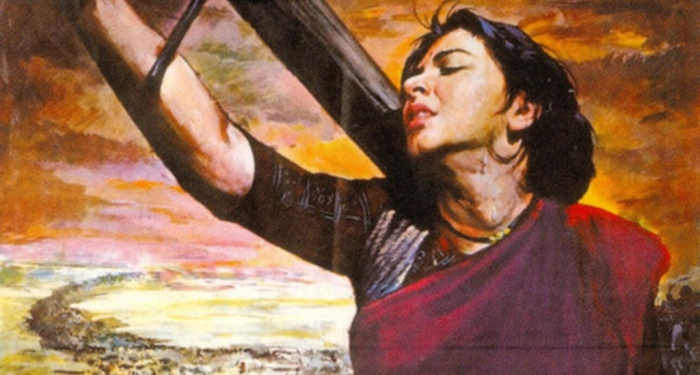


The Emotional Weight of a Final Page
“There is something quietly powerful about the last page of a book.”
Endings are strange little things. They don’t just close a story—they echo inside us. Sometimes they feel satisfying, sometimes unsettling, and sometimes they refuse to leave our minds at all.
A good ending doesn’t end the story; it extends its life within the reader.
So when I think about the prompt—If I could change the ending of any book, which one would it be?—I realize it is not about correcting literature. It is about how deeply stories touch us, and how personally we sometimes carry their pain.
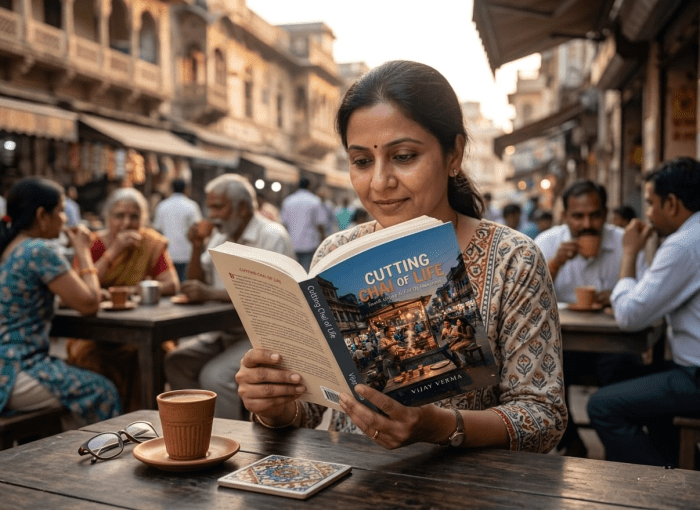
When Stories Become Personal: An Emotional Reader’s Truth
“We don’t just read stories; sometimes, we live inside them.”
I have to admit something honestly—I am an emotional person. When I read a novel or watch a film with a sad ending, I don’t just observe it; I feel it deeply. My eyes often fill with tears, even when I know it is “just a story.”
Even then, my heart quietly whispers: “Maybe this ending could have been different.”
A Childhood Memory: The Ending of Mother India
One memory still stays vivid from my childhood school days. I had secretly gone with my friends to watch the iconic film Mother India.
I was too young to fully understand its depth, but the story fascinated me. It was about struggle, dignity, sacrifice, and survival against all odds. Everything felt powerful and inspiring—until the final scene.
The mother, forced by circumstances, shoots her own son.
That moment broke something inside my child’s heart. I cried uncontrollably. My friends tried to comfort me, saying, “It’s just a film, not real life.” But emotions don’t always listen to logic. For me, it felt painfully real.
Even today, I remember that ending clearly. And somewhere inside, a quiet thought still lingers:
Could there have been another way?
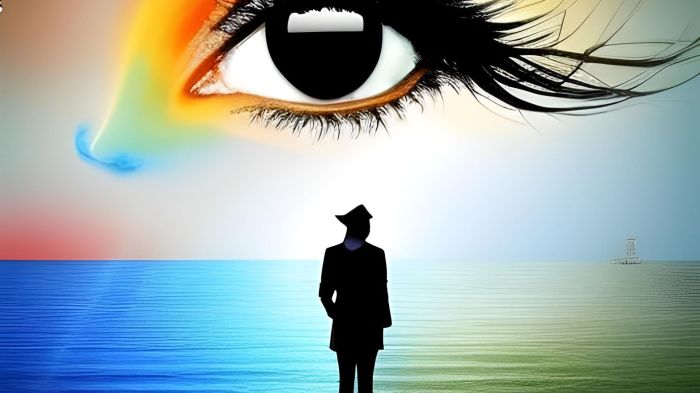
Dystopia and Silence: The Ending of 1984
“Freedom is the freedom to say that two plus two make four.” — George Orwell
The ending of 1984 is one of the most haunting conclusions in literature. Winston’s final surrender to Big Brother is not just defeat—it is the erasure of self.
If I could change anything, I would not rewrite the system or give him a heroic escape. That would weaken the warning.
Instead, I would plant something subtle in the ending—a flicker of inner resistance that survives even in surrender.
Not loud rebellion. Not victory.
Just a thought that cannot be fully controlled.
Because even in darkness, the human mind deserves at least a hidden space of freedom.
Love and Loss: Reimagining The Fault in Our Stars
“Some infinities are bigger than other infinities.” — John Green
In The Fault in Our Stars, Hazel and Augustus give us a love story that burns brightly and ends too soon. Their story is beautiful precisely because it is fragile—but that doesn’t make the ending any easier to accept.
If I could change something, I would not remove the sadness. Instead, I would extend what comes after it.
A continuation where love does not end with loss, but transforms into strength. Where grief and gratitude sit together quietly, like two old companions.
Because sometimes the real ending of love is not death—it is how we carry it forward.
Beyond “Happily Ever After”: The World of Harry Potter
Even in a world of magic like Harry Potter and the Deathly Hallows, I find myself wondering what happens after the final page.
The story gives closure. The battle ends. Peace returns. But life continues.
If I could add something, it would be simple:
- Ron laughing freely in the kitchen
- Hermione reading a book just for joy
- Harry learning to live without destiny chasing him
Because after a life of prophecy and war, ordinary days become the most magical ending of all.
Why We Want to Change Endings
“We do not change endings because they are wrong—we change them because they matter.”
The truth is simple: we don’t wish to change endings because stories are flawed. We wish to change them because we are emotionally invested in them.
A changed ending is not rejection—it is connection. It is a way of staying longer with something that already moved us deeply.
Stories That Reflect Life
Perhaps the deeper truth is this: the endings we want to rewrite in books often reflect the endings we struggle to accept in life.
- Endings of relationships
- Endings of childhood
- Endings of old versions of ourselves
We often search for closure that feels gentle, explanations that feel complete, and departures that feel fair.
But life doesn’t always write in that way.
The Final Submission: Endings That Never End
“Stories may end on paper, but not in the heart.”
Even when a book closes, its emotional world continues inside us. We imagine alternatives, rewrite scenes in our minds, and sometimes return to those stories years later with different feelings.
And maybe that is the quiet magic of literature:
Even after the last page, the story is never truly over.
BE HAPPY… BE ACTIVE… BE FOCUSED… BE ALIVE
If this post inspired you, show some love! 💙
✅ Like | ✅ Follow | ✅ Share | ✅ Comment
www.retiredkalam.com
Categories: infotainment
 Retiredकलम
Great post Verma ji.
I agree with your thoughts and I also love Happy endings.
I wish, life was like that for everyone.
Happiness and sadness are two sides of the same coin.
A beautiful read.
Thank you for sharing this.
LikeLiked by 2 people
Thank you so much for your thoughtful words. 🌷
I couldn’t agree more—happy endings have a special place in our hearts because they reassure us that love, kindness, and perseverance can eventually triumph over hardship. How wonderful it would be if life offered such endings to everyone.
LikeLiked by 2 people
A poignant and reflective meditation on endings, capturing how the final page of a book can evoke emotions of closure, loss, gratitude, and the lasting impact of a meaningful journey. 📖✨💙
LikeLiked by 2 people
Thank you so much for this beautiful reflection. 💙📖✨
I’m truly touched that the piece resonated with you in this way. Endings have a unique power—they invite us to pause and look back, not only at the journey of the characters but also at the emotions they awaken within us. Closure, loss, gratitude, hope—often, all of them coexist on the final page.
LikeLiked by 2 people
This was such a thoughtful and heartfelt read Verma ji✨. I especially loved the idea that we don’t want to change endings because stories are flawed, but because they have become a part of us. Your reflections on Mother India, 1984, and Harry Potter beautifully show how literature stays alive long after the last page is turned. 📚✨💙
LikeLiked by 1 person
Thank you so much for your kind and thoughtful words. 💙📚✨
I’m truly touched that those reflections resonated with you. I have always felt that the stories that move us most are the ones we carry within ourselves long after we’ve reached the final page. We may not always agree with their endings, but perhaps that very ache is proof of how deeply we cared.
LikeLiked by 1 person
Great post Sir 👍
LikeLiked by 1 person
Thank you so much for your kind appreciation. 🙏😊
I’m delighted that you enjoyed the post. Your encouragement means a great deal to me and motivates me to keep sharing my thoughts and reflections. It’s always heartening to know that something we write resonates with others.
Thank you once again for takin
LikeLiked by 2 people
An interesting question, and youve given us some good insights. Im not sure I’d change endings. I agreed with your comment about the best stories continue with us after those final words. It also makes me think about those ocassional films where they make versions with alternate endings or plays where they’ve reshape the endings. Sometimes it might work, sometimes we just feel cheated.
LikeLiked by 1 person
Thank you for sharing your feelings.👏
I think you’ve touched upon something very true. Perhaps not every ending needs to be changed, because many of them achieve exactly what the author intended—even when they leave us unsettled. The fact that we continue to think about them long after the story ends is often a sign of their power.
I also agree with your observation about alternate endings in films and plays. Sometimes they offer an intriguing “what if” that enriches our understanding of the story, but at other times they can feel emotionally dishonest, almost as though the original journey has been altered in a way that diminishes its impact. As readers and viewers, we invest our hearts in the narrative, and when an ending no longer feels earned, it can leave us feeling somewhat cheated.
LikeLiked by 1 person
A beautifully reflective piece Verma ji.
You capture something many readers feel but rarely express that our desire to change an ending comes not from disagreement with the author, but from the depth of our emotional connection to the story. The thought that “stories may end on paper, but not in the heart” is especially poignant. A thoughtful, heartfelt exploration of literature, memory, and the human longing for hope.
LikeLiked by 2 people
Thank you so much for your generous and thoughtful reflection. 🌷📚💙
I am truly touched by the way you’ve understood the heart of the piece. You’re absolutely right—our urge to rewrite certain endings is rarely born from disagreement with the author. More often, it is a testament to how deeply we have loved the characters, invested in their journeys, and allowed their joys and sorrows to become part of our own emotional landscape.
LikeLiked by 2 people
very nice .
LikeLiked by 2 people
Thank you so much.
LikeLiked by 1 person
Your instinct on 1984 is so much wiser than the usual ‘give Winston an escape’ — keeping the warning intact but leaving ‘a thought that cannot be fully controlled’ is the kind of edit that would haunt me in the best way. And the Harry Potter wish floored me: Ron laughing in the kitchen, Hermione reading purely for joy, Harry finally living without destiny chasing him. After all that war, ordinary days really would be the most magical ending. The Mother India memory landed too — there’s a particular ache to a film breaking your heart before you’re old enough to have words for it.
LikeLiked by 2 people
I really appreciate how closely you engaged with those ideas. 🌿
With 1984, I’ve always felt that changing the ending entirely would weaken its warning. But adding even a small, unbroken inner space—something the system cannot fully erase—keeps the brutality intact while also acknowledging a quieter truth about human consciousness. It’s often in those almost-invisible corners of thought that resistance survives longest.
And your reading of the Harry Potter idea feels especially grounded. After years of prophecy, conflict, and survival, the idea that peace would look like ordinary life—shared meals, unremarkable laughter, reading for no purpose beyond joy—feels almost radical. Sometimes the absence of urgency is the real reward.
The Mother India memory you mentioned is very real in how it shapes us. Some stories reach us before we have the emotional vocabulary to process them, so they stay as pure feeling—loss, confusion, empathy—without explanation. Those early impressions tend to linger in a different way than anything we understand later.
LikeLiked by 1 person
An apt description of how many of us feel after investing ourselves in a movie or a book and than having the ending come up a bit short. I know there are not always happy endings in life, but ending a sad story with a small ray of hope helps us keep on. But authors and script writers like to be dramatic and sometimes go for the shock. This is what keeps us invested, I guess. Happy Wednesday. Allan
LikeLiked by 3 people
You’ve captured that delicate tension really well—the space between realism and emotional closure. 🌿
There’s something very human about wanting a small ray of hope at the end, even when we accept that life itself doesn’t always offer neat resolutions. A hint of light in a difficult ending doesn’t erase the truth of the story; it simply helps us carry it a little more gently after the last page is turned.
LikeLiked by 2 people