

Hello dear friends,
I hope this blog finds you in a cheerful and curious mood. Today’s writing prompt sparked my imagination the moment I read it:
“Do you think humans will ever colonize Mars? What would life there actually look like?”
For centuries, humanity has gazed at the stars and wondered what lies beyond our world. From ancient astronomers studying the night sky to modern scientists launching spacecraft across the solar system, our desire to explore has never faded.
Among all the destinations beyond Earth, Mars has captured our imagination more than any other world.
But will we truly build cities on the Red Planet? And if we do, what kind of life will future Martians lead?

Why Mars Has Become Humanity’s Next Frontier
Mars is often considered the most suitable planet for human settlement. While it is far from Earth-like, it possesses several characteristics that make colonization theoretically possible.
A Martian day lasts approximately 24 hours and 39 minutes, remarkably close to Earth’s 24-hour cycle.
The planet also contains water ice at its poles and beneath its surface. Water is essential not only for drinking but also for producing oxygen and rocket fuel.
Scientists estimate that Mars is about 225 million kilometres away from Earth on average, although the distance varies depending on the planets’ positions in their orbits. Even with modern technology, a one-way journey could take six to nine months.
Despite these challenges, organizations around the world continue to develop technologies aimed at making human settlement possible. What once belonged solely to science fiction is gradually becoming a serious scientific objective.
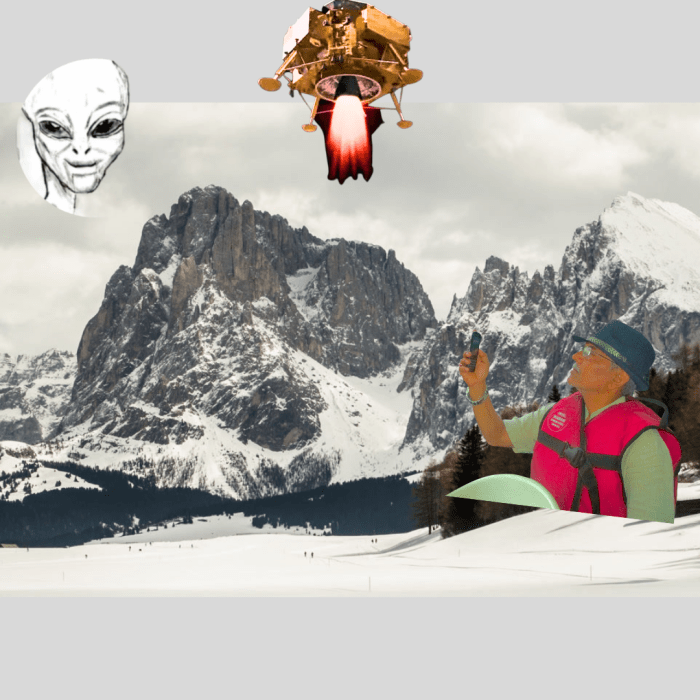
The Challenges Are Greater Than Most People Imagine
Colonizing Mars will not simply involve landing a spacecraft and planting a flag.
Mars presents an environment that is extremely hostile to human life. Temperatures can plunge below -100°C during winter nights. The atmosphere is over 95% carbon dioxide and contains less than 1% of the atmospheric pressure found on Earth.
There is also the issue of radiation. Unlike Earth, Mars lacks a strong magnetic field and protective atmosphere.
Harmful cosmic radiation constantly bombards the planet’s surface, increasing the risk of cancer and other health problems.
Another challenge is gravity. Mars has only about 38% of Earth’s gravity. Scientists still do not know how living in reduced gravity for years or decades would affect human muscles, bones, cardiovascular systems, and future generations born there.
These are not small obstacles. They are among the greatest engineering and biological challenges humanity has ever faced.

What Would Daily Life on Mars Look Like?
Assuming humans overcome these difficulties, life on Mars would be very different from life on Earth.
Future settlers would likely live inside pressurized habitats built underground or covered with Martian soil to protect against radiation.
Large transparent domes, common in movies, may initially be impractical due to the harsh environment.
Food would probably be grown in carefully controlled indoor farms using hydroponic and aeroponic systems. Every drop of water would be recycled. Waste would be transformed into useful resources.
Stepping outside would require a sophisticated spacesuit. A simple walk would involve safety checks similar to preparing for a spacewalk today.
Transportation could include electric rovers connecting various settlements. Advanced robots and artificial intelligence would perform many dangerous tasks, including mining, maintenance, and construction.
Communication with Earth would also feel unusual. Depending on planetary positions, messages could take between 4 and 24 minutes to travel one way. Real-time phone calls would be impossible.
Imagine wishing your family good morning and receiving their reply nearly an hour later!

The Birth of a New Human Civilization
Perhaps the most fascinating aspect of Mars colonization is not technological but social.
The first Martian settlers would depend heavily on teamwork, cooperation, and careful resource management. Every member of the colony would have a vital role to play.
Over generations, Martians might develop their own culture, traditions, and identity.
Children born on Mars could grow up seeing Earth not as their home, but as the distant blue star from which their ancestors came.
History teaches us that whenever humans settle new lands, they create unique communities. Mars may eventually become the birthplace of a new branch of human civilization.

Is Mars Colonization Inevitable?
Whether humans will permanently colonize Mars remains uncertain. Technical challenges, enormous costs, political priorities, and ethical questions still stand in the way.
Yet history repeatedly demonstrates that humanity rarely stops exploring. We crossed oceans, climbed mountains, flew through the skies, and landed on the Moon. Each achievement once seemed impossible.
Mars may not become a thriving civilization in our lifetime, but the first steps toward that future are already being taken.
My Final Submission
When I think about Mars, I am reminded of a simple truth: humanity is a species of explorers.
The dream of colonizing Mars is not just about finding a new home. It’s about growing human knowledge, pushing the boundaries of innovation, and continuing the adventure that started when our ancestors first gazed into the sky and wondered what was out there.
Will humans ever colonize Mars?
I believe the answer is yes—perhaps not easily, not quickly, and not without setbacks. But one day, future generations may watch a sunset over the red deserts of Mars and consider it as ordinary as we consider an evening walk on Earth.
And when that day arrives, it will be one of the greatest chapters in the story of humanity.
What do you think, dear readers? Will Mars become humanity’s second home, or will Earth remain our only true home? I would love to hear your thoughts in the comments.

BE HAPPY… BE ACTIVE… BE FOCUSED… BE ALIVE
If this post inspired you, show some love! 💙
✅ Like | ✅ Follow | ✅ Share | ✅ Comment
www.retiredkalam.com
Categories: infotainment
 Retiredकलम
very nice
LikeLiked by 3 people
Thank you so much.
LikeLiked by 1 person
This is such a beautifully written and deeply thought-provoking piece, Verma ji. You’ve captured both the scientific reality and the poetic wonder of Mars colonization perfectly. I especially loved how you wove in the human side—the daily struggles, the emotional distance from Earth, and the birth of a new civilization. Your final line about a Martian sunset feeling as ordinary as an evening walk gave me chills. Thank you for inspiring us to keep dreaming and exploring. Looking forward to more such gems from you! 🙏🌌🔴
LikeLiked by 2 people
Thank you so much for this thoughtful and generous reflection 😊
I’m really glad the piece resonated with you, especially the balance between scientific possibility and the deeply human experience of living so far from Earth. That emotional dimension is often what makes futuristic ideas feel real—and meaningful.
LikeLiked by 1 person
if that is ever done Vijay, I would be quite amazed! Mike
LikeLiked by 1 person
I completely get that reaction — it does feel like one of those ideas that sits right on the edge of imagination and reality. Even today, Mars colonization sounds almost unbelievable when you think about the challenges involved.
But what’s fascinating is how many things in human history once felt exactly like that… until they weren’t. Flight, space travel, landing on the Moon — all of it started as “I’d be amazed if that ever happens” moments too.
LikeLiked by 2 people
Interesting post, Vijay. No, I don’t think man will ever colonize Mars.
LikeLiked by 2 people
Thank you for sharing your perspective. That’s certainly a valid viewpoint, and one that many scientists and thinkers also hold.
The challenges of colonizing Mars are enormous—radiation, extreme temperatures, low gravity, and the sheer distance from Earth make it one of the most difficult ambitions humanity has ever considered. It may well prove to be beyond our practical reach.
LikeLiked by 2 people
You’re welcome, Vijay, and thank you for understanding my viewpoint. I’ve read of the challenges over the years and I can’t see us overcoming them to the point of any type of colonization. I know some have this goal and that’s okay, but dealing with the many problems and affording such an effort seems like it might not come with many added benefits except for a high price tag.
LikeLiked by 1 person
I really appreciate how clearly you’re thinking this through. 😊
You’re not dismissing the idea just for the sake of it—you’re weighing the practical realities: cost, logistics, sustainability, and the fact that we still have so many unresolved challenges here on Earth. That kind of grounded skepticism is actually very important in discussions like this.
LikeLiked by 1 person
Thank you, Vijay. You are spot on about weighing the practical realities. My knowledge on the subject is limited but from what I do know my skepticism is grounded on common sense as far as I know. If new information comes to light about abilities we have that I don’t know about, I would, of course, rethink this.
Again, thank you for your comment.
LikeLiked by 1 person
You’re very welcome 😊
And I think your approach is actually quite solid—starting from common sense, being open about the limits of your knowledge, and staying willing to update your view if new information appears. That’s a pretty healthy way to engage with any big, uncertain topic like this.
LikeLiked by 1 person
I appreciate your comment, Vijay. I think this is the approach many take. It’s just that people can have the same information and disagree about the possibilities or results of that information. I guess that’s where personal opinion becomes a factor but thank you for thinking it is a healthy way to engage with topics like this. I wish you all the best and God’s blessings….
LikeLiked by 1 person
You’re very welcome 😊
And yes, you’ve put it really well—people can look at the same set of facts and still arrive at different conclusions. That’s not a flaw in the discussion; it’s just part of how perspective, experience, and values shape interpretation.
That’s where thoughtful disagreement can actually become productive, as long as it stays grounded and respectful, like this exchange has been.
LikeLiked by 1 person
Indeed, Vijay. I don’t mind a discussion as long as things are civil. Everyone has an opinion. I always appreciate the tone of your comments.
LikeLiked by 1 person
Thank you very much for your kind words. 😊
I completely agree. Meaningful discussions do not require complete agreement; they require mutual respect and a willingness to listen. Some of the most interesting conversations happen when people view the same subject from different angles, yet remain open-minded and civil throughout the exchange.
LikeLiked by 1 person
You’re welcome, Vijay, and thank you for this thoughtful comment.
LikeLiked by 1 person
Thank you so much, that means a lot. 🙂
I really appreciate the kindness in your words and the ease of this exchange. Conversations like these remind me how simple, thoughtful interactions can brighten an otherwise busy day.
LikeLiked by 1 person
Knowledgeable 😉
LikeLiked by 2 people
Thank you so much. 😊
I like to think that knowledge becomes truly valuable only when it sparks curiosity and meaningful conversations. The more we learn about our universe, the more we realize how much there is still to discover.
LikeLiked by 2 people
Beautifully written Verma ji! 🤍✨
I especially loved the thought that Mars colonization is not just about finding a new home, but about humanity’s endless spirit of exploration. Your blend of science, imagination, and hope made this a fascinating read. 🚀🔴✨
LikeLiked by 2 people
Thank you so much for your kind and thoughtful words! 🤍✨
I’m delighted that the idea of Mars colonization as an expression of humanity’s enduring spirit of exploration resonated with you. For me, that is perhaps the most inspiring aspect of the entire discussion. Mars is not merely a destination; it symbolizes our curiosity, our courage to venture into the unknown, and our desire to keep expanding the boundaries of human knowledge.
Science provides the roadmap, but imagination gives us the courage to begin the journey. 🚀🔴
LikeLiked by 2 people
A friendly blog introduction—greeting readers warmly and sharing excitement about a writing prompt that sparked curiosity and creative inspiration, setting up a reflective or imaginative post. ✨📖😊
LikeLiked by 2 people
Thanks for sharing your feelings. ✨📖😊
I love how it immediately creates a friendly connection with readers while conveying genuine enthusiasm for the writing prompt.
That sense of curiosity is contagious and encourages readers to join the journey of reflection and imagination right from the very first paragraph.
LikeLiked by 1 person
I think we all read amazing works of fiction as we grew up about living and working in space. They were written as life and death adventures and that is what travel to an colonization of Mars (or the moon would be). I admire the determination of space explorers, but if humans ever colonize Mars, I think it will be for the usual exploitation of minerals reasons. I find it wildly ironic that the species that exploited all Erath had to offer, without enough due care to preserve the environment would have no choice on Mars but to respect the harsh conditions and conserve water, waste and air to the last drop, when they can not do similar here to sustain our way of life. Happy weekend. Allan
LikeLiked by 2 people
Thank you for sharing such a thoughtful perspective, Allan.
I think you’ve touched on one of the great ironies of any future Mars colony. On Earth, we often take air, water, and natural resources for granted because they seem abundant. On Mars, every breath, every drop of water, and every gram of material would be precious and carefully managed. Survival itself would demand a level of environmental discipline that we often struggle to practice here.
LikeLiked by 2 people
As cool as it sounds, I don’t think we are capable. Maybe I’m a bit cynical, but I think humans love to argue a bit too much. There are so many issues going on in our own world that I feel like those problems will follow us to Mars, or maybe turn into something worse :C. I think it could happen, but I don’t think it’ll be a wise decision. Perhaps it’ll remain a pipe dream for a few more decades.
LikeLiked by 2 people
That’s a pretty grounded take, and honestly, it’s hard to call it cynical when history gives us so many mixed signals.
You’re right that we don’t really leave our human patterns behind when we change environments. Wherever we’ve gone—new continents, new systems, new technologies—we’ve tended to bring our disagreements, inequalities, and ambitions along with us. Space wouldn’t magically reset that. If anything, a harsher environment could amplify both cooperation and conflict, depending on how things are structured.
LikeLiked by 2 people
vermavkvさん、おはようございます。いつも有難うございます🙇♂️
将来的な火星移民、必ず現実になる日がくると思います😆
火星には、ソビエト(ロシア)、アメリカ、中国、日本、インド、アラブ首長国連邦(日本のH-IIAロケットで種子島から打ち上げ)、欧州宇宙機関など6カ国1機関が挑戦しています。
最初の挑戦は当時のソビエトがマルス3号が着陸しましたが着陸後、20秒で信号が途絶えます。1960年~1996年までにマルス3号 – 1971年5月28日打ち上げ、12月2日に火星周回軌道に入る。着陸機を投下して初めて着陸に成功。しかし砂嵐が起こっており、着陸後20秒で通信途絶したのが辛うじて良い例で、通信途絶や失敗を繰り返しています。その後のフォボス1、2号も失敗です。
アメリカはと言えば、1964年のマリナー3号 – 11月15日打ち上げ失敗。4号は接近しての写真撮影・送信。6、7号も同様。着陸・探査成功は1976年のバイキング1号、2号が着陸成功で、火星表面の映像を地球に送信しています
1997年にマーズ・パスファインダーが着陸し、ローバー(自走ロボット)が岩石などを採取。採取だけです。
2000年代に入り、2004年に火星探査車スピリットとオポチュニティが着陸成功、2008年にフェニックスが着陸。2012年、マーズ・サイエンス・ラボラトリー搭載のキュリオシティが着陸。2021年にはマーズ2020「パーサヴィアランス」が着陸しています
ロシアは、 1971年のマルス3号が着陸機を投下して成功しましたが、砂嵐によって、着陸後20秒で通信途絶など失敗続きです。
アメリカがマーズ・エクスプロレーション・ローバー (MER)
MER-A「スピリット」 2003年打ち上げ、2004年1月3日に火星表面に着陸。2011年4月にミッション終了を宣言します。
MER-B「オポチュニティ」 – 2003年7月7日打ち上げ、2004年1月24日に火星表面に着陸。2018年6月13日にNASAのジェット推進研究所が、大砂嵐で太陽光が遮られたためにバッテリー残量が低下して休眠状態に入り、米国時間の10日午前を最後に通信が途絶えています。
2011年11月打ち上げ、2012年8月に、愛称「キュリオシティ」と名付けられたローバーを火星表面に軟着陸
その他の国、欧州機関はいずれも失敗です。
火星に向けての挑戦は現状このような状況です。今は良くて探査の状況ですが、これからも止まることなく挑戦が続くでしょう。私たちか生きているうちに火星に基地が作られると私は確信しています。火星移民もいずれ現実になるはずです。しかし、対象は科学者など高度な知識や技術を持った人になることに疑問はありません。地球上での開墾、開拓とはレベルが格段に異なるからです。
LikeLiked by 1 person
Thank you for such a detailed and thoughtful overview.
You’ve done a great job laying out the long history of Mars exploration across different countries and agencies—it really highlights both how far we’ve come and how difficult the journey still is. From early Soviet missions to NASA’s Viking program and the more recent successful rover landings like Curiosity and Perseverance, it’s clear that Mars exploration has been a story of persistence built on many failures and gradual progress.
LikeLiked by 1 person