

Hello dear friends,
I hope this blog finds you in a cheerful and reflective mood.
Today’s writing prompt carries a quiet sense of nostalgia:
“How has technology changed your job?”
As I sat with this question, my mind wandered back to a time before screens took over our desks and days—when work had a different rhythm, a different texture, and perhaps, a different soul.
It reminded me of a journey—from heavy ledgers to light keyboards, from familiar faces across counters to digital interfaces across screens. A journey that has not only transformed the way we work, but also the way we connect, think, and experience our professional lives.
So, let us take a moment to pause, look back, and reflect—
Has technology truly made our work better, or simply faster?
The Pre-Computer Rhythm
Before the digital revolution took hold in the late 20th century, life moved at a deliberate pace.
Communication relied on handwritten letters, telegrams, and face-to-face conversations. A reply could take days, sometimes weeks—but it carried thoughtfulness and intent.
Workplaces functioned without automation. In fact, studies suggest that before widespread computer adoption in the 1980s and 1990s, over 90% of business records globally were maintained on paper.
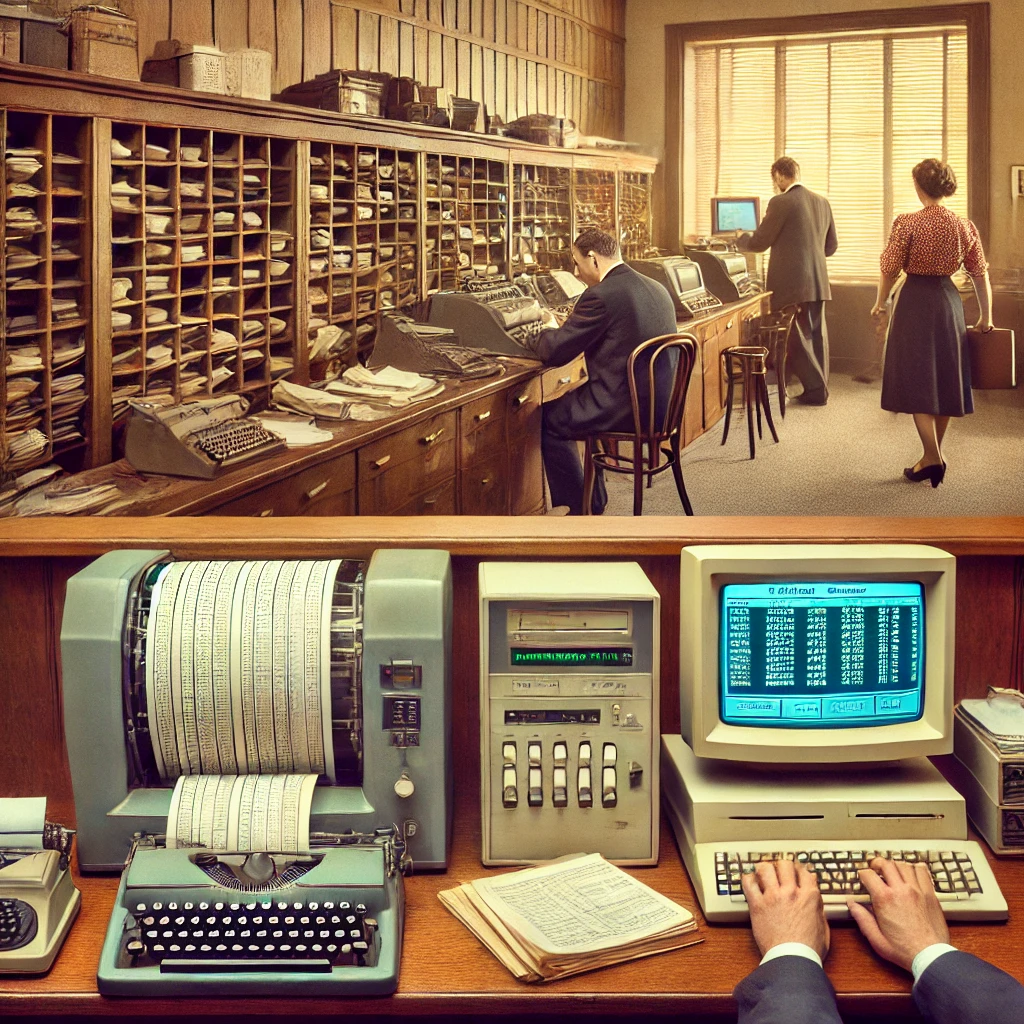
Offices were lined with filing cabinets, and retrieving a single document often meant a physical search through stacks of files.
Efficiency was not measured in milliseconds but in human effort, discipline, and accuracy.

Banking Before Computerisation
Nowhere was this more evident than in banking.
I recall those early days vividly. Banks were filled with massive ledgers—thick, weighty books that recorded every transaction by hand.
Each entry required precision, and balancing accounts was not just a task but a responsibility that demanded complete focus.
Month-end closings were significant events. The financial year-end in March often meant late nights, careful cross-checking, and collective effort. While there was additional remuneration, what truly stood out was the sense of teamwork and shared purpose.
Customers had a personal relationship with their banks. They walked into branches, greeted familiar faces, and discussed their needs with staff who knew them by name.
Transactions took longer, but they were built on trust and human connection.
The Digital Transformation
Then came computerisation—a turning point that redefined not just banking, but the entire professional landscape.
By the early 2000s, banks worldwide had largely transitioned to digital systems. Today, according to global financial data, over 80% of banking transactions are conducted digitally, whether through ATMs, mobile apps, or online platforms.
Tasks that once took hours—like balancing ledgers or generating reports—can now be completed in seconds. ATMs reduced dependency on branch visits, and internet banking brought financial services into people’s homes.
However, this transformation was not without its challenges.
For many professionals, especially those who had spent years mastering manual systems, adapting to computers required a complete shift in mindset.
Training sessions became routine, and learning new software often came through trial and error.
Some welcomed the efficiency. Others felt a quiet loss—the fading of personal interaction and the craftsmanship of manual work.
The Present Landscape
Today, technology continues to evolve at an unprecedented pace.
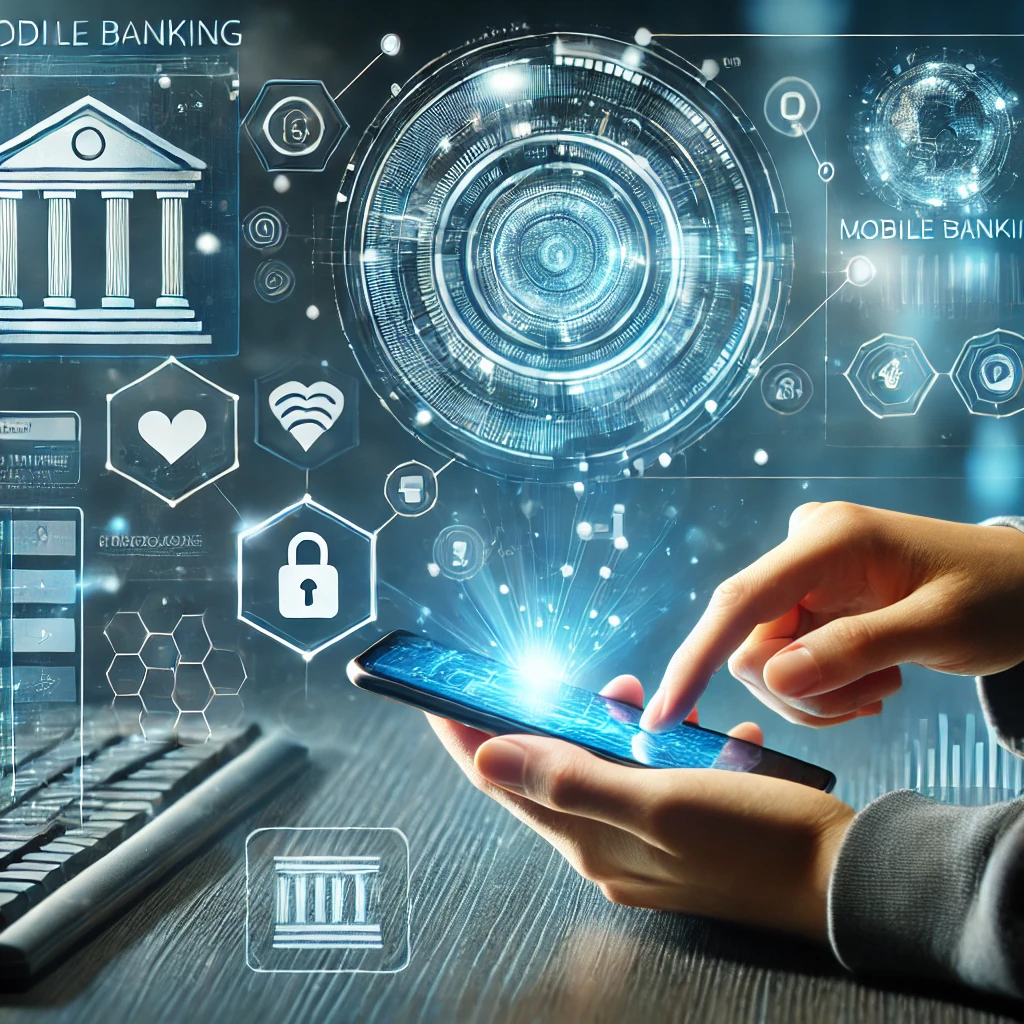
Artificial intelligence is now capable of detecting fraudulent transactions within milliseconds. Mobile banking apps allow users to manage finances instantly, and emerging technologies like blockchain promise enhanced security and transparency.
Globally, the digital economy contributes over 15% of the world’s GDP, and this share continues to grow. In India alone, digital payments have seen exponential growth, with billions of transactions processed monthly through platforms like UPI.
The role of a banker—or any professional—has fundamentally changed. The focus has shifted from manual execution to analysis, decision-making, and customer experience.
Has Technology Made Life Easier?
The answer is both yes—and not entirely.
On one hand, technology has undeniably improved efficiency, accuracy, and accessibility. Tasks are faster, data is safer, and services are more convenient than ever before.
On the other hand, something subtle has been lost.
Workplaces today are often more transactional and less personal. Conversations have moved from desks to screens. Relationships, once nurtured through daily interactions, are now mediated by emails and virtual meetings.
A study on workplace behavior found that face-to-face communication can be up to 34 times more effective than email, highlighting what we may be losing in this digital shift.

A Thoughtful Balance
Having witnessed both worlds, I feel fortunate. The pre-computer era taught patience, discipline, and the value of human connection. The digital age offers speed, convenience, and boundless possibilities.
The real challenge lies not in choosing one over the other, but in balancing both.
As we embrace technology, we must not lose sight of empathy, personal relationships, and the satisfaction that comes from meaningful work. Efficiency should not replace humanity—it should enhance it.
Looking Ahead
The evolution of work is far from over. With advancements in artificial intelligence and automation, the next few decades may transform our professional lives even further.
And perhaps, years from now, we will look back at today—with the same sense of nostalgia.
So, the question remains:
Has technology truly made our work better, or simply faster?
Maybe the answer lies not in the tools we use, but in how we choose to use them.

My book is now available on Amazon.
You can find it here: https://amzn.in/d/0gBYPlvz
I truly appreciate your interest and support—it means a lot.
Categories: infotainment
 Retiredकलम
very nice .
LikeLiked by 1 person
Thank you so much.
LikeLike
I miss the days before the technology took over. Our relationships were completely different. I miss the humanity of it all. Thanks for this!
LikeLiked by 1 person
I understand that feeling—it’s something many of us quietly carry. There was a warmth and simplicity in those days that made connections feel more personal and unhurried.
At the same time, perhaps the essence of that humanity isn’t lost—it’s just waiting for us to bring it back into how we use today’s tools. A mindful message, a real conversation, a moment of presence can still recreate that same depth.
LikeLiked by 1 person
What a beautifully reflective and heartfelt piece, Verma ji. You’ve captured something so precious—the soul of work before it became optimized, before it was measured in milliseconds rather than moments.
Your observation about month-end closings being “significant events” rather than automated processes really resonated. There’s something profoundly human about collective effort, about staying late together, about the weight of responsibility shared among colleagues. That “sense of teamwork and shared purpose” you mention—can efficiency ever truly replicate that?
And this line stopped me: “Efficiency should not replace humanity—it should enhance it.” So simply said, yet so profound. We often treat technology and humanity as opposing forces when they could be complementary.
You’re right—the question isn really whether technology has made work “better,” because better means different things. Faster transactions? Absolutely. Richer human connections? Perhaps not.
Your journey from ledgers to keyboards isn’t just a career arc—it’s a witnessing of how we as a society shifted what we value. Thank you for reminding us that progress doesn’t have to mean leaving warmth behind.
Would love to hear more about those late-night March closing sessions sometime—the stories behind the ledgers.
LikeLiked by 1 person
Thank you so much for this deeply thoughtful reflection—it truly means a lot to me. I’m glad those moments and memories resonated with you. You’ve captured it so well—efficiency brings speed, but it’s the shared effort and human connection that give work its soul.
Those late-night March closings were indeed special—tiring, yes, but filled with camaraderie, laughter, and a sense of purpose that stayed long after the numbers were done.
LikeLike
Well written and insightful piece.
Technology has definitely enriched our lives. There are plus and minus in everything. But the fact remains that technology is a friend and part of our regular life now.
Thank you for sharing this excellent post.
LikeLiked by 1 person
Thank you so much for your thoughtful words! I completely agree—technology has become an integral part of our lives, and like everything else, it comes with both benefits and challenges. The key, perhaps, lies in how mindfully we use it.
I’m glad the piece resonated with you. Really appreciate you taking the time to share your perspective! ✨
LikeLiked by 1 person
This is so beautifully written—softly nostalgic yet thoughtfully balanced. 🌿
You’ve captured not just the shift in technology, but the quiet emotions that came with it—the loss, the gain, and everything in between.
That line “efficiency should not replace humanity—it should enhance it” stays with you. Simple, but so powerful. 💫
LikeLiked by 1 person
Thank you so much for your kind and thoughtful words 🌿
I’m truly glad the piece resonated with you—not just on the surface, but in that quieter space where memory and emotion meet. That balance between what we’ve gained and what we’ve gently let go of is something I often find myself reflecting on.
LikeLiked by 1 person
Ive actually been marking essays today on exactly this topic. 🤣
LikeLiked by 1 person
Haha, what a coincidence! 😄
You must be seeing every possible angle on this topic then—probably everything from “technology makes life easy” to “we’ve lost the human touch.” It’s such an interesting theme because there really isn’t a single right answer, just different lived experiences.
LikeLiked by 1 person
Very true. It impacts us all in different ways and that goes fir companies too. It was interesting to read one essay that said their employer banned all AI use
LikeLiked by 1 person
That is interesting—and honestly, a bit surprising in today’s world.
I can understand the concern behind it though. For some companies, especially where confidentiality, originality, or compliance really matter, AI might feel like a risk rather than a tool. It’s probably their way of staying cautious until they fully understand the implications.
LikeLiked by 1 person
I, too, feel very fortunate to have witnessed both worlds. I consider those of us in the middle to be the bridge generations. I wonder if some day in the future people will look back and say how much we sacrificed connection for convenience. Balance is key.
LikeLiked by 1 person
That’s such a beautiful way to put it—the bridge generation. It really does feel like we’ve had one foot in each world, learning the language of both.
We’ve known the warmth of unhurried conversations and handwritten moments, and at the same time, we’ve adapted to a world that moves at the speed of a click. That perspective is rare, and in many ways, it’s a quiet privilege.
LikeLiked by 1 person