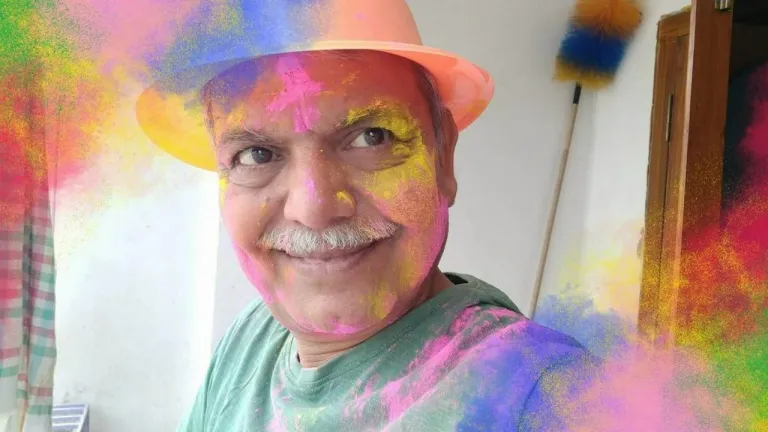
Festival Holi: Colours of happiness
Hello dear friends,
I hope this Blog finds you in a cheerful mood. Today, we are celebrating the festival Holi.
Holi—the festival where the air turns pink, yellow, and green, and even the most serious faces break into laughter—is truly one of India’s most vibrant celebrations.
Known as the Festival of Colors, Holi is not just about playing with gulal; it is about celebrating life itself.
Observed on the full moon day in the Hindu month of Phalguna, this joyous festival marks the arrival of spring and carries with it deep cultural, spiritual, and social significance.
The Spiritual Essence: Victory of Good Over Evil
At the heart of Holi lies a powerful message—the triumph of good over evil and truth over falsehood. The legend most closely associated with Holi is that of the demon king Hiranyakashipu, his devoted son Prahlada, and the compassionate protector Vishnu.
Hiranyakashipu, blessed with near-immortality by Brahma, became arrogant and demanded that everyone worship him as a god.
However, his son Prahlada remained steadfast in his devotion to Lord Vishnu. Enraged by this defiance, Hiranyakashipu tried repeatedly to kill his son.
In one such attempt, Prahlada was made to sit on a burning pyre with his aunt Holika, who had a boon that protected her from fire.
Yet, divine justice prevailed—Holika was burned to ashes while Prahlada emerged unharmed. Eventually, Lord Vishnu incarnated in a fierce form and destroyed Hiranyakashipu.
This story reminds us that no matter how powerful evil may appear, goodness and faith ultimately prevail. The ritual of Holika Dahan, the bonfire lit on the eve of Holi, symbolizes the burning away of negativity, ego, and injustice from our lives.
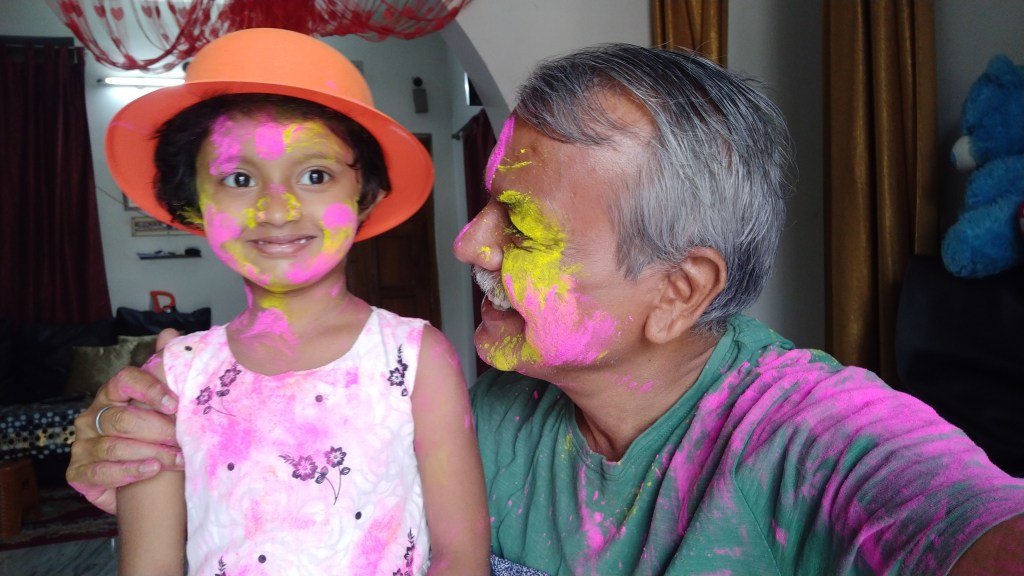
Welcoming Spring and New Beginnings
Holi also marks the end of winter and the joyful arrival of spring. Fields begin to bloom, mustard flowers sway in golden glory, and nature itself seems to celebrate renewal.
The festival captures this transformation beautifully—just as the earth adorns itself in colors, so do we.
Spring signifies new beginnings, hope, and fresh opportunities. Holi encourages us to let go of past grievances, mend broken relationships, and start anew. It is often called the “festival of love” because it dissolves social barriers.
On this day, distinctions of caste, creed, age, and status fade away. Everyone becomes equal under a shower of colors.
The Joyous Celebrations
Holi is celebrated with unmatched enthusiasm across India and in many parts of the world.
The festivities begin with Holika Dahan, where families and communities gather around a bonfire, offering prayers and seeking blessings for prosperity and protection.
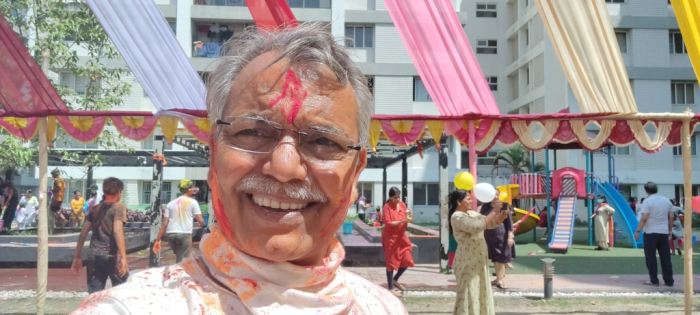
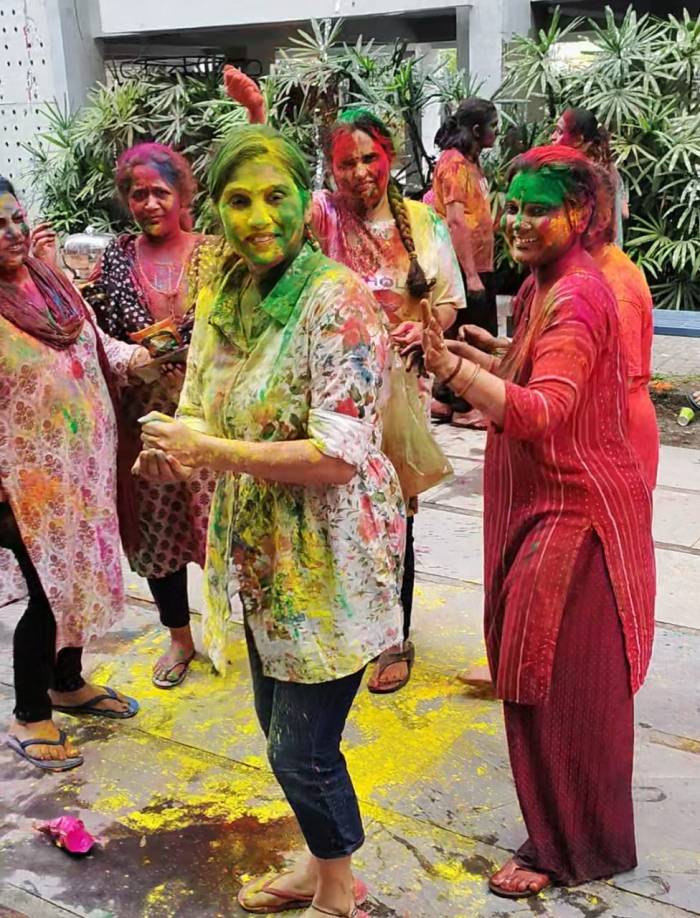
The following day—Rangwali Holi—is a burst of energy and excitement. Streets, parks, and courtyards transform into arenas of laughter and play.
People smear each other with colored powders, splash water, and dance to the rhythmic beats of the dhol. The spirit is infectious; even strangers greet each other with a cheerful “Happy Holi!”
Traditional sweets and delicacies add flavor to the celebration. Gujiya, filled with khoya and dry fruits, crispy mathri, and refreshing thandai, are lovingly prepared in households.
Sharing these treats strengthens bonds and spreads sweetness in more ways than one.
The Divine Holi of Mathura and Vrindavan
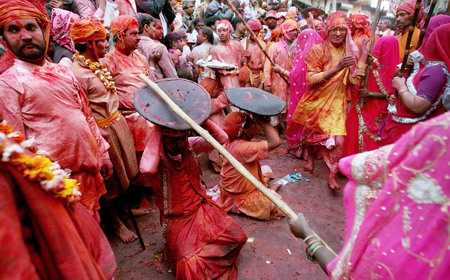
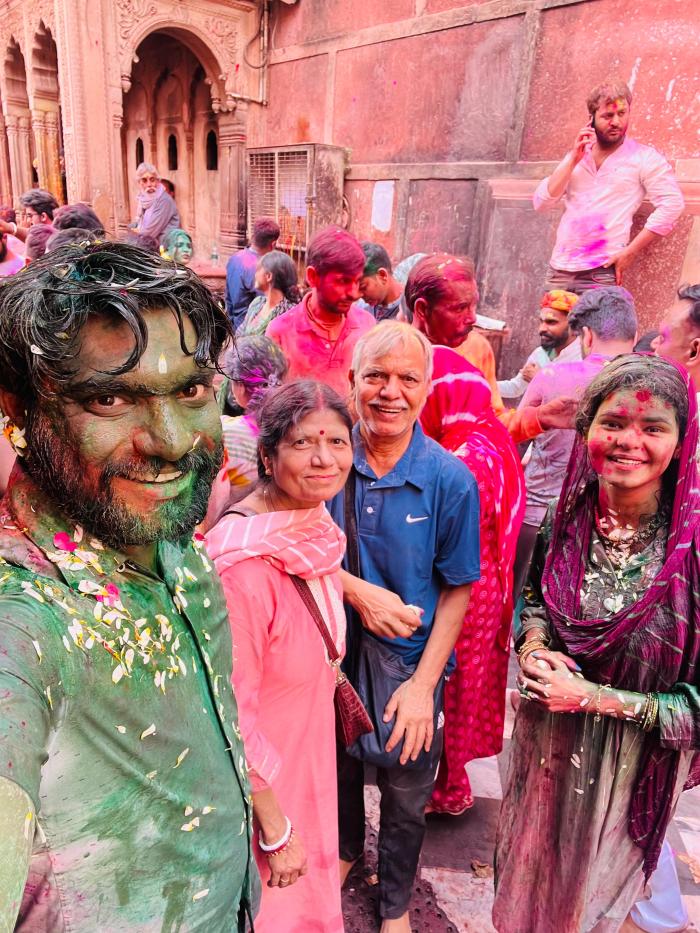
In the sacred towns of Mathura and Vrindavan, believed to be associated with Krishna, Holi is celebrated with extraordinary devotion and grandeur.
Here, the festival extends over several days, filled with temple rituals, devotional songs, and unique traditions like playing Holi with flowers.
The celebrations reflect the playful spirit of Lord Krishna, who is said to have enjoyed splashing colors on Radha and the gopis.
In these towns, Holi becomes not just a festival but a divine experience—where devotion blends seamlessly with joy.
A Festival of Unity and Humanity
Beyond mythology and rituals, Holi carries a timeless social message. It teaches us to forgive, to reconnect, and to embrace one another with open hearts.
In today’s fast-paced world, where misunderstandings and divisions often grow silently, Holi offers a beautiful reminder: life is meant to be colorful, shared, and celebrated together.
The festival encourages us to burn our negativity in the fire of Holika Dahan and to paint our lives with positivity, compassion, and hope the next morning.
It is a celebration of resilience—the belief that goodness will always shine through darkness.
A Joyful Promise
As we celebrate Holi today, let us vow to fill our lives with the true colors of happiness, kindness, and harmony.
Let us rise above differences and cherish the relationships that make life meaningful. May this festival bring renewed faith, vibrant health, and boundless joy to every home.
Holi is not merely a festival—it is an emotion, a philosophy, and a celebration of the eternal victory of light over darkness.
Splash joy. Spray love. Scatter happiness. That’s the true spirit of Holi.”
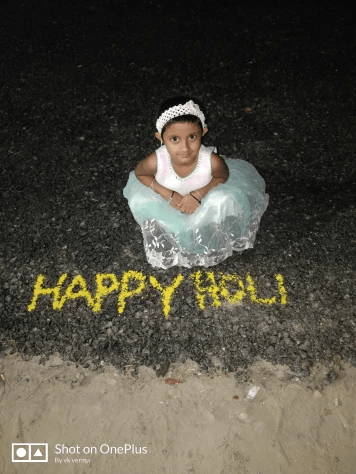
Wishing you and your loved ones a Holi filled with laughter, love, and the brightest colors of happiness.
Categories: Uncategorized
 Retiredकलम
Dear Verma ji, Your blog beautifully captures the true spirit of Holi vibrant, meaningful, and deeply uplifting.
I especially appreciate how you wove together the spiritual essence of Prahlada’s unwavering faith and the divine intervention of Vishnu, along with the cultural joy of colors, sweets, and togetherness. The message of burning negativity through Holika Dahan and embracing renewal with Rangwali Holi is expressed with warmth and clarity.
Your description of spring’s arrival and the dissolving of social barriers highlights Holi not merely as a festival, but as a philosophy of life where forgiveness, equality, and shared happiness take center stage. The section on the divine celebrations in Mathura and Vrindavan adds a devotional depth that makes the narrative even more enchanting, reflecting the playful love of Krishna.
“Splash joy. Spray love. Scatter happiness.” what a delightful and memorable closing line!
This is not just a blog post; it is a heartfelt celebration of faith, unity, and renewal. Wishing you continued inspiration and a life always painted in the brightest hues of positivity.
-Vijay Srivastava
LikeLiked by 1 person
Your words truly touched my heart. Thank you for reading the blog with such depth and generosity of spirit.
I’m especially grateful that the message of Prahlada’s unwavering faith and the divine grace of Vishnu resonated with you. For me, Holi has always been more than celebration — it is reflection, renewal, and quiet courage wrapped in color. When readers like you connect with that essence, it feels like the true purpose of writing is fulfilled.
You beautifully understood the symbolism of Holika Dahan and Rangwali Holi — first the burning away, then the blossoming. That rhythm mirrors life itself, doesn’t it? We release, we rise, and then we rejoice.
LikeLiked by 2 people
I like the message of this celebration: victory of good over evil.
LikeLiked by 1 person
That really is the heart of it, isn’t it?
Beyond the colors, the sweets, the music — Holi stands on that timeless truth: good may be challenged, but it is never ultimately defeated. The story of Prahlada and Hiranyakashipu isn’t just mythology; it’s a reminder that faith, integrity, and courage outlast arrogance and cruelty. And when Vishnu intervenes, it symbolizes something powerful — that justice may take time, but it arrives.
LikeLiked by 1 person
Lord Vishnu certainly didn’t forgive Hiranyakashyapu but slew him and his sister, Holika. Even the Mahābhārata centres on this message – there are things God doesn’t forgive. Neither should humans.
Forgiveness is a very pleasurable thing. In a pleasure-seeking world, one can see people running to forgive even things that should not be forgiven. One reason the world is seeing a rise in crime rates and mental illness.
Happy Holi! I used to be terrified of this festival. The gulal didn’t agree with the eczema on my skin. Still Happy Holi!
LikeLiked by 1 person
That’s a powerful reflection — and I really appreciate the honesty in it.
You’re right that in the story, Vishnu doesn’t “forgive” Hiranyakashipu in the sentimental sense. He destroys him. And yes, even the Mahabharata wrestles deeply with justice, dharma, and the hard truth that some actions demand consequences. Holi’s roots aren’t soft and pastel — they rise from fire. From standing firm when wrong crosses a line.
LikeLiked by 1 person
What do you mean by “…Vishnu doesn’t ‘forgive’ Hiranyakashipu in the sentimental sense…”?
LikeLiked by 1 person
That’s a thoughtful question — I’m glad you asked.
When I said Vishnu doesn’t “forgive” Hiranyakashipu in the sentimental sense, I meant that the story doesn’t portray mercy as overlooking wrongdoing or excusing harm. Vishnu, in the form of Narasimha, doesn’t reconcile, negotiate, or pardon. He intervenes decisively to end tyranny and protect Prahlada.
So it’s not forgiveness as in, “It’s okay, I understand.”
It’s justice restoring balance.
In many modern discussions, forgiveness is sometimes framed as softness or unconditional acceptance. But this myth reminds us that compassion and protection can coexist with firmness. Dharma sometimes requires action, not absolution.
LikeLiked by 1 person
Did you know the idea of an all-forgiving God gained momentum with the rise of Christianity and teachings of Jesus? For Hindus and, in fact, all the Eastern religions, God instituted the school of karma to balance the scales of justice. Every time evil tries to overpower good, a battle ensues between good and evil which good always wins, though it takes years before the battle is finally won. During this interval, God merely fills the cup of negative karma of the violators and one fine day, brings an end, through His representative on earth, to evil.
LikeLiked by 1 person
That’s a thoughtful and layered way of looking at it.
It’s true that in Christianity — especially through the teachings of Jesus Christ — forgiveness becomes a central spiritual theme. The emphasis on loving one’s enemies and divine grace shaped a powerful idea of an all-forgiving God in much of Western theology.
At the same time, in Hindu thought and many Eastern traditions, the principle of karma plays a foundational role. Texts like the Bhagavad Gita and the broader philosophical framework of Sanatana Dharma describe a moral universe governed by cause and effect. Actions generate consequences — not as punishment, but as balance. In that sense, justice is woven into the structure of existence itself.
LikeLiked by 1 person
Happy Holi!
LikeLiked by 1 person
Happy Holi to you too! 🌸✨
May your day be filled with bright colors, light-hearted laughter, and moments that feel fresh and joyful. May the spirit of Holi bring new beginnings, warm connections, and a little extra sparkle to your year ahead.
Stay safe, stay smiling, and keep shining in your own beautiful colors. 💛💚💖
LikeLiked by 1 person
Verma ji, Welcome to the colorful world of Holi, dear friends! Your beautiful post on the Festival of Colors has us all smiling—let’s splash joy together! Happy Holi!🎉🌹👍🏻
LikeLiked by 2 people
Thank you so much for such a cheerful and vibrant message! 🎉🌸
Your words truly feel like a splash of color themselves — full of warmth and celebration. I’m so happy the post brought smiles and shared joy. After all, that’s the true spirit of Holi — coming together, laughing freely, and letting happiness spill over into every corner of life.
LikeLiked by 1 person
What a beautiful celebration of life and colors, Verma Ji! 🌸 I loved how you captured not just the joy of Holi, but also its deeper meaning—new beginnings, forgiveness, and the triumph of goodness. Truly inspiring! Wishing you and your family a vibrant, joyful, and colorful Holi! 💛💚💖
LikeLiked by 1 person
Thank you so much for your beautiful and heartfelt wishes 🌸🙏
I’m truly happy that the deeper spirit of Holi resonated with you — beyond the colors and celebration. For me, the festival has always been about renewal, quiet forgiveness, and that timeless faith that goodness ultimately prevails. When that message reaches someone’s heart, it makes the writing worthwhile.
LikeLiked by 1 person
Beautifully written 💦💦Happy Holi to you and your family sir🙏
LikeLiked by 1 person
Thank you so much for your kind wishes 🙏🌸
Your words truly add more color to the celebration. Wishing you and your loved ones a Holi filled with laughter, harmony, and beautiful memories that stay long after the colors fade.
May this festival bring peace to your heart and brightness to your days ahead. Happy Holi! 🌈✨
LikeLiked by 1 person
Happy Holi.
LikeLiked by 1 person
Happy Holi to you too.
LikeLike
Happy Holi🎊💐🙏
LikeLiked by 2 people
Thank you so much .
Your words truly add more color to the celebration. Wishing you and your loved ones a Holi filled with laughter, harmony, and beautiful memories that stay long after the colors fade.
LikeLiked by 1 person
होली की हार्दिक शुभकामनाएँ आपको और आपके पूरे परिवार को सर जी 🌈🙏🏻
LikeLiked by 1 person
आपको भी होली की हार्दिक शुभकामनाएँ 🙏🌈
आपके स्नेहपूर्ण संदेश के लिए दिल से धन्यवाद। ईश्वर करे यह होली आपके जीवन में खुशियों के नए रंग भरे, घर-परिवार में प्रेम, शांति और समृद्धि बनी रहे।
रंगों का यह पावन पर्व आपके हर दिन को उज्ज्वल और उत्साह से भर दे।
आप और आपके पूरे परिवार को ढेरों शुभकामनाएँ। 🌸✨
LikeLiked by 1 person
Happy Holi Day, Sir V and family! May you always be as cheerful and life be as colorful as the Festival of Holi.
LikeLiked by 2 people
Thank you so much! 😊
Wishing you a vibrant and joyful Holi as well—may your days be filled with color, laughter, and happiness! 🌸🌈
LikeLiked by 1 person