

Hello dear friends,
I hope this blog finds you in a cheerful mood. Today’s writing prompt stopped me in my tracks: How have your political views changed over time?
It’s one of those questions that looks simple on the surface, but the longer you sit with it, the more it asks of you—honesty, self-awareness, and the courage to admit growth.
Like many people, my earliest political views weren’t carefully reasoned conclusions; they were inherited. They came from family conversations, cultural norms, and the social circles I moved in.

politics felt less like civic engagement
At that stage of life, politics felt less like civic engagement and more like identity. You picked a side, absorbed its talking points, and defended it with confidence—often without fully understanding the complexity underneath.
Certainty was easy then. The world appeared neatly divided into right and wrong, good and bad, us and them. I mistook conviction for understanding and passion for wisdom.
Looking back, I don’t judge that version of myself too harshly; after all, everyone begins somewhere. But time has a way of humbling even our most firmly held beliefs.
Education was the first quiet force that disrupted my political comfort zone. Studying history revealed how often progress is messy, uneven, and driven by unintended consequences.
Economics introduced the uncomfortable truth that trade-offs are unavoidable—every policy choice helps someone and disappoints someone else.
The more I learned, the harder it became to cling to oversimplified answers.
Then came lived experience, which proved even more influential than books or classrooms.
As I encountered people from different backgrounds—financially, culturally, and ideologically—politics stopped being abstract.
I saw how policies played out in real lives: a friend struggling to afford healthcare, a colleague navigating immigration uncertainty, a family member impacted by economic instability.
These experiences challenged my tendency to view political debates as theoretical exercises rather than human stories.

Over time, I also grew wary of outrage-driven politics.
In my younger years, the loudest voices often sounded like the most convincing ones. Anger felt energizing, even righteous.
But constant exposure to political noise—especially in the age of social media—revealed how easily outrage can be manufactured and weaponized.
I began to value nuance over volume, evidence over virality, and thoughtful dialogue over winning arguments.
One of the most meaningful changes in my political outlook has been my relationship with certainty.
I once believed that strong beliefs required unwavering confidence. Now, I see doubt as a form of strength.
Being willing to revise an opinion when presented with new evidence doesn’t signal weakness; it signals intellectual honesty.
Politics is not a static belief system—it’s an ongoing conversation shaped by evolving realities.
Interestingly, while some of my opinions have shifted, my core values have become clearer. Fairness, dignity, accountability, and opportunity matter more to me now than party labels or ideological purity.
Instead of asking which side a policy belongs to, I’m more inclined to ask: Does this reduce harm? Does it expand opportunity? Who benefits, and who might be left behind?

Perhaps the most important evolution has been learning how to listen.
Disagreement used to feel personal, even threatening. Today, I try—imperfectly—to approach opposing views with curiosity rather than defensiveness.
Understanding where someone is coming from doesn’t require agreement, but it does require empathy. And empathy, I’ve learned, is essential for any meaningful political progress.
When I reflect on how my political views have changed over time, I don’t see a straight path from ignorance to enlightenment.
I see a winding journey marked by questions, missteps, revisions, and growth.
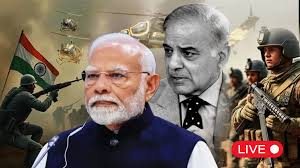
My final submission
In a world that rewards instant certainty and rigid identities, choosing to think deeply and remain open to change may be one of the most responsible political acts we can offer.
So if your political views have shifted—or are still evolving—take that as a sign of engagement, not inconsistency.
Growth is not about switching sides; it’s about widening the lens through which we understand the world and our place in it.
BE HAPPY… BE ACTIVE… BE FOCUSED… BE ALIVE
If this post inspired you, show some love! 💙
✅ Like | ✅ Follow | ✅ Share | ✅ Comment
www.retiredkalam.com
Categories: infotainment
 Retiredकलम
Well said. Politics is every where in our life too. Wishing you a very happy new year 🥳
LikeLiked by 2 people
Absolutely true—politics touches our lives in subtle and not-so-subtle ways every day. Awareness matters.
Thank you for the thoughtful note, and wishing you a very happy, peaceful, and hopeful New Year as well 🥳✨
LikeLiked by 2 people
🙏
LikeLiked by 2 people
Good evening.
have a restful night.
LikeLiked by 1 person
very nice .
LikeLiked by 2 people
Thank you so much.
LikeLiked by 1 person
Yes we all need to evolve politically. Happy Nee Year!
LikeLiked by 2 people
Absolutely agree—growth and evolution, especially in how we think and engage politically, is so important. Here’s to learning, listening better, and moving forward with more awareness. Happy New Year to you too! 🎉✨
LikeLiked by 1 person
What a beautifully articulated reflection, Verma ji. Your words don’t just describe a political journey—they map the very path to genuine maturity and thoughtful citizenship. You’ve captured the quiet courage it takes to move from the comfort of inherited certainty to the nuanced, empathetic understanding that comes with true engagement.
The most profound line for me was: “Growth is not about switching sides; it’s about widening the lens.” That is a piece of wisdom to be held close. It reframes evolution not as disloyalty to a past self, but as a commitment to a deeper, more compassionate truth.
Your journey from viewing politics as identity to understanding it as a complex conversation about human dignity is a gift—not just to you, but to everyone who has the privilege of engaging with you. It’s a reminder that the most powerful political stance is one grounded in humility, continuous learning, and a steadfast focus on our shared humanity.
Thank you for this honest and moving “final submission.” It is a testament to a mind that thinks and a heart that cares. Wishing you continued growth and meaningful conversations on the path ahead.
Warm regards.
Srikanth
LikeLiked by 3 people
Thank you, Srikanth, for such a generous and deeply thoughtful response. I’m genuinely touched by the care with which you read and reflected on my words. Your articulation of the journey—especially the idea of moving from inherited certainty toward empathetic understanding—beautifully extends the conversation in ways I hadn’t fully considered myself.
I’m especially grateful for how you reframed growth not as abandonment of the past, but as an expansion of perspective. That lens you describe is something I continue to work toward, imperfectly but earnestly. If these reflections resonate, it’s because many of us are quietly wrestling with the same questions about identity, humility, and shared responsibility.
Thank you for engaging with such openness and generosity of spirit. Conversations like this give me hope that thoughtful, human-centered dialogue still has a place—and a future.
LikeLiked by 1 person
Well said. The days of picking a team and cheering for them as they smash the other team into the ground belong to sports matches, not politics. Quite frankly, I wish it was less about politics and more about governing. After all, we hire the leaders for their job. We are their boss, but they treat us more like children. I started off as a conservative, but they moved too far right, then I became more liberal and they moved too far left. Just like Goldilocks and the 3 bears, I know find the middle to be “just right”. Fora country and a people to move forward, it should not be about winners and losers, it should be about compromise so both sides come out ahead. Not sure we will ever get there in my lifetime. Happy New Year. Allan
LikeLiked by 2 people
Thank you for sharing this, Allan. I couldn’t agree more—the idea that politics should look less like a spectator sport and more like the serious work of governing feels especially important right now. The Goldilocks analogy is spot on; balance and compromise may not be flashy, but they’re usually where real progress lives.
Your reflection captures a quiet truth many people feel but rarely articulate so clearly. Even if the destination feels uncertain, conversations like this are a reminder that the middle ground still exists—and that thoughtful voices haven’t disappeared.
Wishing you a hopeful and steady New Year.
LikeLiked by 2 people
Well said! I don’t think I could have said it better. 😊
You are right — our political views are influenced by our upbringing, cultural beliefs, lived experiences, and society as a whole.
Now that I am in my 40s, I am learning the importance of not being quick to react, especially to social media. In my 30s, I felt confused and unsure of my political beliefs. In my 40s, I am evolving and taking more time to research and understand.
I also like that you mention taking time to understand opposing views. This is important because it helps us have a deeper understanding instead of being quick to assume or judge.
LikeLiked by 2 people
Thank you for sharing this so openly. I really appreciate how thoughtfully you’ve articulated your own evolution—it resonates deeply. That shift from reacting to reflecting, especially in the age of social media, feels like a quiet but powerful form of growth.
What you describe about your 30s and 40s makes a lot of sense. Clarity often doesn’t arrive all at once; it’s shaped through patience, curiosity, and a willingness to sit with uncertainty. Taking the time to research, listen, and truly understand—especially viewpoints different from our own—isn’t always easy, but it’s where deeper wisdom tends to emerge.
LikeLiked by 2 people
Ah yes, political views evolve as the person who holds them does too. My views used to align with woke liberals (though I did not explicitly identity as one). But October 7th, 2023 opened my eyes to its pitfalls. Now I’m awake and aware, not woke.
LikeLiked by 2 people
That makes sense. Big, unsettling events have a way of forcing deeper reflection, and it’s natural for perspectives to shift as we process new information and lived experiences.
Political labels can be limiting anyway—they often freeze people in time while real understanding keeps moving. Staying “awake and aware,” questioning assumptions, and thinking critically rather than aligning automatically with any camp is usually a sign of growth, not contradiction. What matters most is the willingness to keep examining your views with honesty and empathy.
LikeLiked by 2 people