
The Village of My Childhood
Although most of my childhood was spent in the bustling city, I was fortunate enough to experience the serenity and charm of village life on multiple occasions.
Every summer vacation or family wedding provided me with an opportunity to visit my ancestral village, Korji Chak. Those were some of the golden days of my life, and even today, my heart fills with nostalgia as I reminisce about those carefree times.
One of the things I loved most about the village was its purity—the clean air, the fresh water, and the simple yet joyful way of life.
Unlike the city, where people were often too busy to acknowledge each other, the villagers were warm and welcoming. My childhood friends in the village were more like a close-knit gang, always exploring, playing, and finding adventures in the most unexpected places.
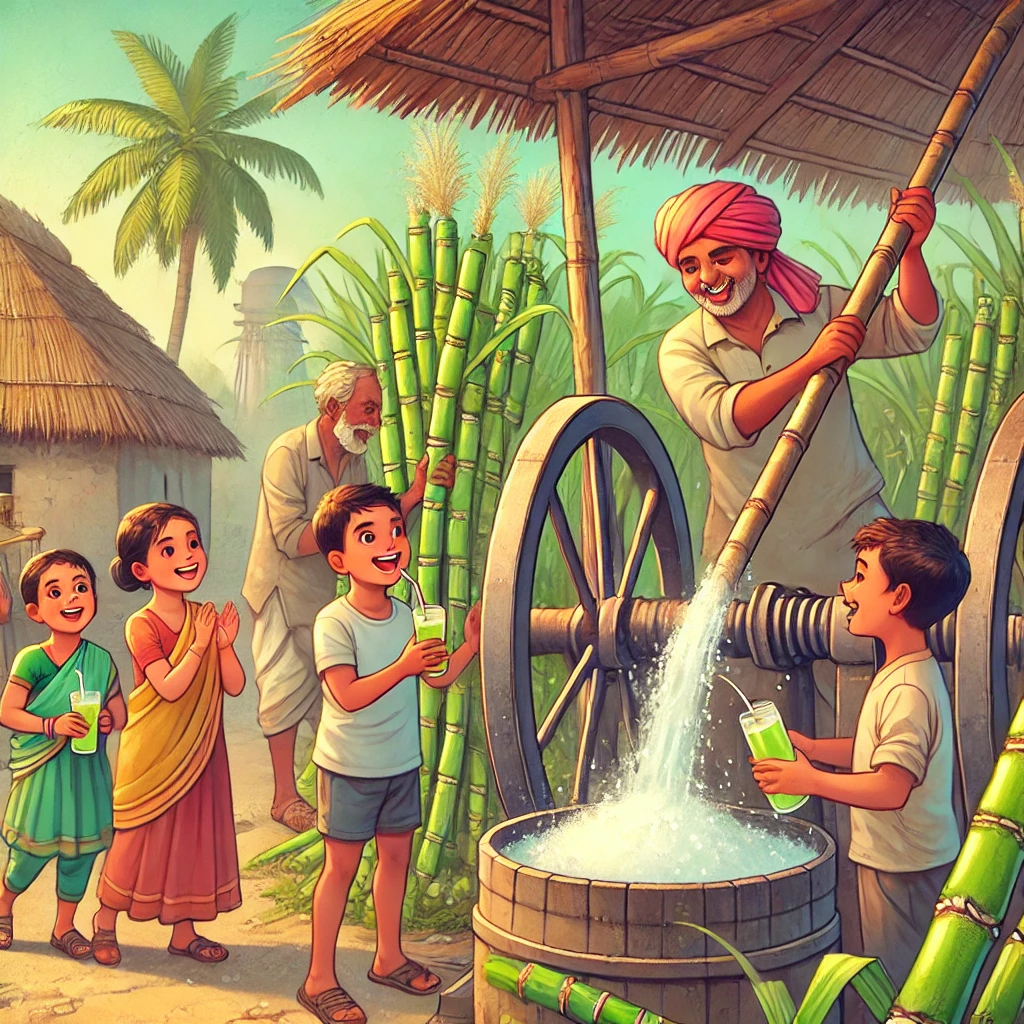
During the sugarcane season, the air was filled with the sweet aroma of fresh juice being extracted from the cane.
My childhood memories
My friends and I would gather around the traditional mill, sipping on sugarcane juice until our stomachs could hold no more. When jaggery was being made, we would eagerly wait for the moment when we could taste the hot, freshly prepared gur.
It was an experience like no other, one that no amount of city-bought sweets could match.
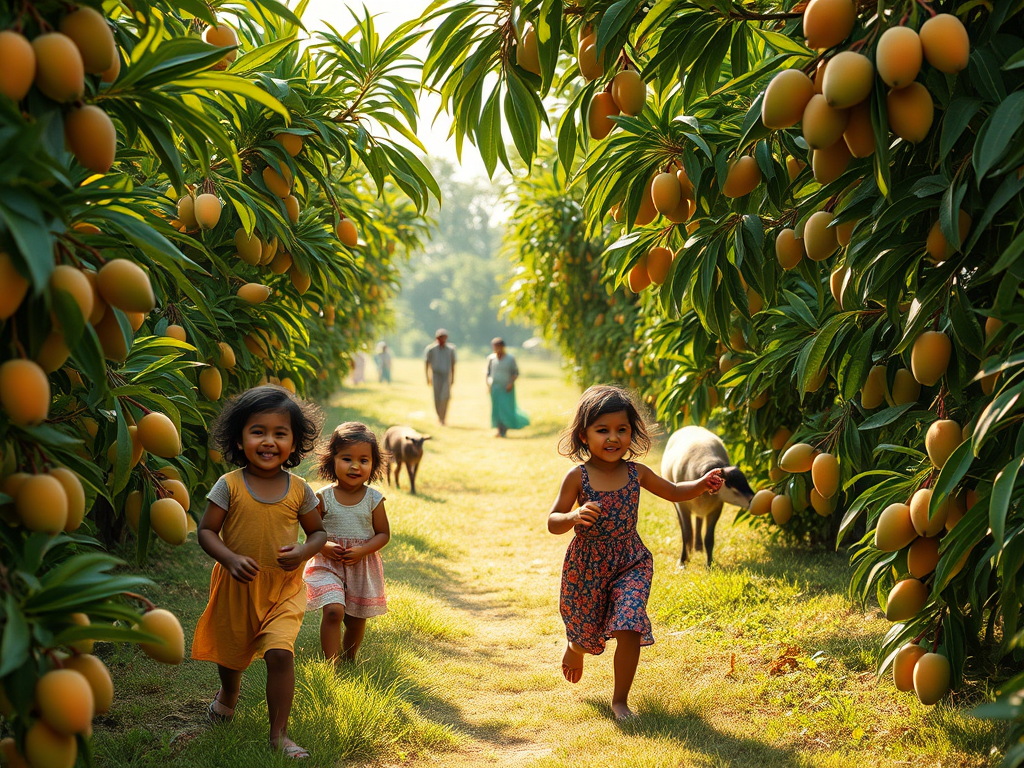
Then came mango season, which was perhaps the most exciting time of the year. Our group of mischievous yet enthusiastic kids would spend the entire day in the mango orchards.
Climbing trees, plucking raw and ripe mangoes, and relishing them under the shade of the very trees that bore them—those were the joys that defined our summers.
The tartness of the raw mangoes and the sweetness of the ripe ones remain imprinted on my taste buds to this day.
the life of the farmers
Beyond these childhood escapades, what truly fascinated me about the village was the life of the farmers.
There was something deeply profound about the way they lived—rooted in tradition, yet in complete harmony with nature.

One of the most remarkable things about these farmers was their deep respect for their animals. If a bullock needed to relieve excreta while plowing the field, the farmer would patiently pause, allowing the animal to do so comfortably.
It was an unspoken understanding between man and beast, a sign of the innate compassion that was instilled in them from birth.
Farmer’s love for their animals
The farmers held their cattle in the highest regard, often feeding them pure homemade ghee on auspicious occasions.
The ghee, which today would cost a fortune, was an essential part of their livestock’s diet, ensuring strength and vitality. Such was their love for their animals that when an ox became too old to work, it was never sold to butchers.
Instead, it was allowed to live the rest of its days in peace, fed and cared for as a lifelong companion. The death of an ox was a moment of mourning for the farmer and his family, as they had shared years of toil and hardship together.
This deep connection extended beyond animals to every living being in the village. The farmers understood the rhythms of nature better than any scholar.
If they heard the cry of a lapwing (a small bird) while plowing, they knew it was nesting nearby. Rather than disturbing its eggs, they would carefully leave that patch of land untouched.
Such was their wisdom and respect for life, despite being considered “uneducated” by modern standards.
Another striking aspect of village life was their faith and spirituality. Almost every farmer was deeply religious, finding solace in devotion.
Even during the busiest of days, they never forgot to first feed their animals before eating their own meals. This selfless nature was ingrained in their very existence.
Despite the lack of modern education, the villagers were wise in ways that textbooks could never teach.
They enjoy abundant peace, community spirit, and contentment.
Their knowledge of seasons, crops, and natural remedies was passed down through generations, ensuring a self-sufficient and sustainable way of life.
They may not have been rich in material wealth, but they were abundant in peace, community spirit, and contentment.
That was the India of my childhood—the India of simplicity, purity, and unparalleled humanity. An India where people found happiness in small joys, where relationships were valued above material possessions, and where even the humblest farmer lived a life of dignity and respect.
Looking back, I realize that those days were truly precious. They taught me the value of gratitude, the importance of kindness, and the beauty of a life well-lived.
In a rapidly modernizing world, I often wonder if we are losing touch with the essence of that India—the India that was truly incredible.

BE HAPPY….BE ACTIVE….BE FOCUSED….BE ALIVE…
If you liked the post, please show your support by liking it,
following, sharing, and commenting.
Sure! Visit my website for more content. Click here
Categories: Uncategorized
 Retiredकलम
very nice
LikeLiked by 3 people
Thank you so much.
LikeLike
Beautiful and nostalgic! 🐄 🥭 🏏
LikeLiked by 2 people
Thank you so much! 😊
I’m glad you found it nostalgic. These memories of village life, simple joys, and childhood adventures will always hold a special place in my heart. 🌿🐄🥭🏏
Do you have any similar cherished memories? I’d love to hear them! 😊
LikeLiked by 1 person
Thank you Verma ji, I completely agree. These are lifelong memories and it gives amazing feelings.
I will someday write about mine and will share here with you 😊
LikeLiked by 1 person
Thank you so much, Sir 😊
I’m glad you connected with these memories. They truly are priceless treasures of life.
I would love to read about your experiences whenever you share them! Looking forward to it. 😊✨🙏
LikeLiked by 1 person
Amazing place on our Earth.
LikeLiked by 5 people
Absolutely! 😊
There’s nothing quite like the charm of a village—the fresh air, the simplicity, and the warmth of the people. It truly is a paradise on Earth! 🌿🌾✨
Have you ever experienced village life? 😊
LikeLiked by 1 person
great article 😍❤️
LikeLike
Thank you so much, dear.
LikeLike
How beautiful! ❤️
LikeLiked by 3 people
Thank you so much! 😊❤️
I’m glad you found it beautiful. These memories are truly close to my heart. 🌿✨
Do you have any special memories that bring you joy? 😊
LikeLiked by 2 people
so beautiful article. Happy sunday 🌺
LikeLiked by 3 people
Thank you so much! 😊
I’m glad you liked it. Wishing you a wonderful and joyful Sunday too! 🌸✨
Stay blessed! 🙏😊
LikeLiked by 2 people
Beautiful article!
LikeLiked by 3 people
Thank you so much! 😊
I’m delighted that you enjoyed it. Your kind words mean a lot! ✨🙏
LikeLiked by 2 people
Thanks for sharing your wonderful memories! 🏄♂️
LikeLiked by 4 people
You’re very welcome! 😊
Your appreciation means a lot. Reminiscing about these beautiful memories fills my heart with joy. I’m glad you enjoyed them! 🌿✨
Do you have any cherished memories of your own that you’d like to share? 😊
LikeLiked by 2 people
Beautiful ❤️
LikeLike
Thank you so much.
Your words mean a lot.
LikeLike
Wonderful ⭐
LikeLike
Thank you so much, dear.
LikeLike
💯💚💛🧡❤️
Happy and blessed day 🌅
🦋 Best regards 🌎🇪🇦
LikeLike
Thank you so much, dear.
LikeLiked by 1 person