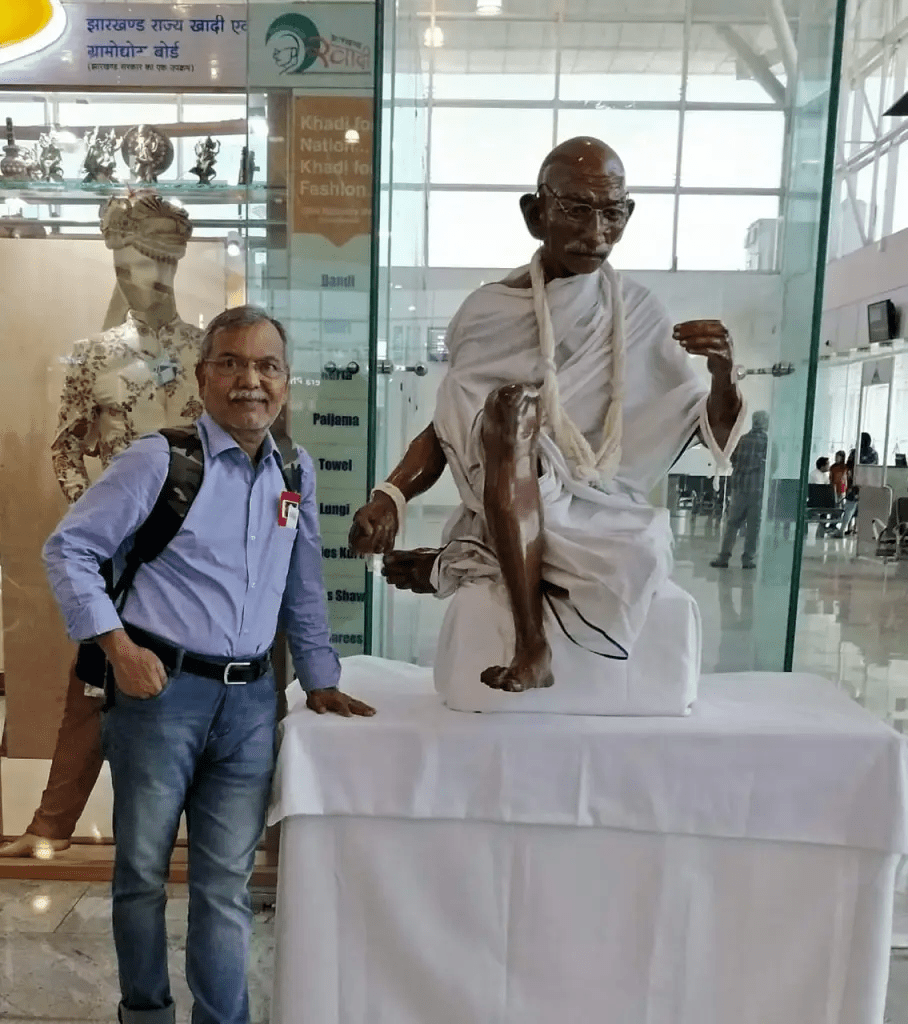


Imagine a quiet room, time stretching and bending as a figure from history walks in, ready to engage in conversation. If I could meet any historical figure, without hesitation, I would choose Mahatma Gandhi.
In a world that often feels dominated by power struggles and fleeting values, Gandhi’s unwavering commitment to truth, non-violence, and justice stands out as an inspiring beacon.
Meeting him would be more than just a historical thrill—it would be a profound lesson in courage, resilience, and purpose.
The Fascination with Gandhi’s Philosophy
Gandhi was a master of conviction. In an era where brute force was often equated with strength, he wielded non-violence as his greatest weapon.
His philosophy of “Satyagraha,” or “truth-force,” empowered millions and redefined resistance as a path of moral courage rather than aggression.
I would ask him: How did he maintain such steadfast resolve in the face of oppression, and what advice would he give to those of us seeking purpose in a world that often feels divided?
This question goes beyond curiosity. In an age where personal battles can feel overwhelming, Gandhi’s spirit of perseverance could remind us that individual choices—no matter how small—can lead to monumental changes.
Hearing him discuss this would offer a glimpse into the psychology of someone who didn’t just protest but transformed an entire nation.

The Power of Simple Living
Another compelling aspect of Gandhi’s life is his dedication to simplicity. In today’s materialistic world, where success is often measured by accumulation, Gandhi’s life of modesty serves as a refreshing counterpoint.
Despite having access to fame and power, he chose to live humbly, using his lifestyle as a form of protest against inequality and colonial rule.
Meeting Gandhi would allow me to explore his thoughts on contentment, a value he embraced. I would ask him how one can find happiness without attachment to wealth or prestige.
His philosophy would surely shed light on the fact that simplicity isn’t a lack of ambition but a way to focus on what truly matters.
Gandhi’s life was proof that even the humblest means could serve the highest ends.
The Art of Forgiveness
Few people in history have exhibited Gandhi’s ability to forgive. Despite the countless injustices he faced, he held no bitterness toward those who opposed him, including the British colonizers.
In fact, his advocacy for forgiveness and peace—qualities many find difficult even on a personal scale—showed a profound understanding of human nature.
I’d ask Gandhi what forgiveness truly means to him. For many of us, letting go of grievances is a struggle, yet he achieved it on a scale most of us can hardly
imagine. His insights could help us navigate our own lives with a similar sense of peace, recognizing that harboring resentment only chains us to the past.

Relevance in Today’s World
In a world where anger and polarization often drive public discourse, Gandhi’s principles are more relevant than ever.
With social and political tensions running high, his approach to unity through understanding feels like a missing piece in today’s world.
I would ask him how he believes society can bridge gaps and foster empathy in times of conflict.
Gandhi’s wisdom could serve as a guide for tackling the modern world’s unique challenges. His emphasis on peace, mutual respect, and understanding could offer us a blueprint for creating a more compassionate society.
A conversation with him would not only be enlightening but perhaps a call to action—to take these timeless values and adapt them to our own lives.
The Takeaway from Such a Meeting
If I had the chance to meet Gandhi, it would be about more than just hearing his stories. It would be about absorbing the principles he stood for: the quiet power of truth, the strength of compassion, and the courage to live according to one’s values, even when the world resists.
Gandhi’s life was a testament to the idea that true change begins within, and meeting him would be a reminder that every individual has the power to make a difference.
In a single conversation, I believe he would offer timeless guidance that could reshape how I approach life’s challenges.
And that, perhaps, is why the idea of meeting a historical figure is so enchanting—it’s not just about the person, but about the insights and lessons they leave with us, forever shaping who we are and who we aspire to become.

BE HAPPY….BE ACTIVE….BE FOCUSED….BE ALIVE…
If you liked the post, please show your support by liking it,
following, sharing, and commenting.
Sure! Visit my website for more content. Click here
Categories: infotainment
 Retiredकलम
50% Mahatma Gandhi & 50% Jiddu krishnamurti 🙏
LikeLiked by 2 people
What a beautiful combination to aspire to—50% Mahatma Gandhi and 50% Jiddu Krishnamurti! 🙏 Gandhi’s unwavering commitment to truth, nonviolence, and service blended with Krishnamurti’s profound exploration of freedom, awareness, and inner transformation create a powerful vision of a balanced, enlightened life. Together, they represent both action in the world and deep self-reflection—a harmony of change within and without. Thank you for sharing such an inspiring thought! 🌟
LikeLiked by 2 people
I studied Eastern religions in college, but briefly. I like the principles you spotlighted here.
LikeLiked by 2 people
Thank you for your kind words and for sharing that you’ve studied Eastern religions—
it’s wonderful to know that you’ve explored this rich and profound subject.
The principles of compassion, unity, and shared humanity resonate deeply across cultures and religions, and I’m glad they stood out to you.
It’s always a joy to exchange thoughts on such meaningful topics!
LikeLiked by 1 person
👍
LikeLiked by 2 people
Thank you so much.
LikeLiked by 2 people
🙂🙃😉
LikeLiked by 2 people
Stay happy and blessed.😊😊
LikeLiked by 1 person
very nice
LikeLiked by 2 people
Thank you so much.
LikeLiked by 1 person
great
LikeLiked by 1 person
Thank you so much for your visit.
I am happy you like this post.
LikeLike
Nice post
LikeLiked by 1 person
Thank you so much for your read.
Do you like Gandhi Philosophy?
LikeLike