Discovering the Enigmatic Forest Giraffe
Today, on World Okapi Day, we celebrate one of the most elusive and fascinating animals of our time—the okapi.
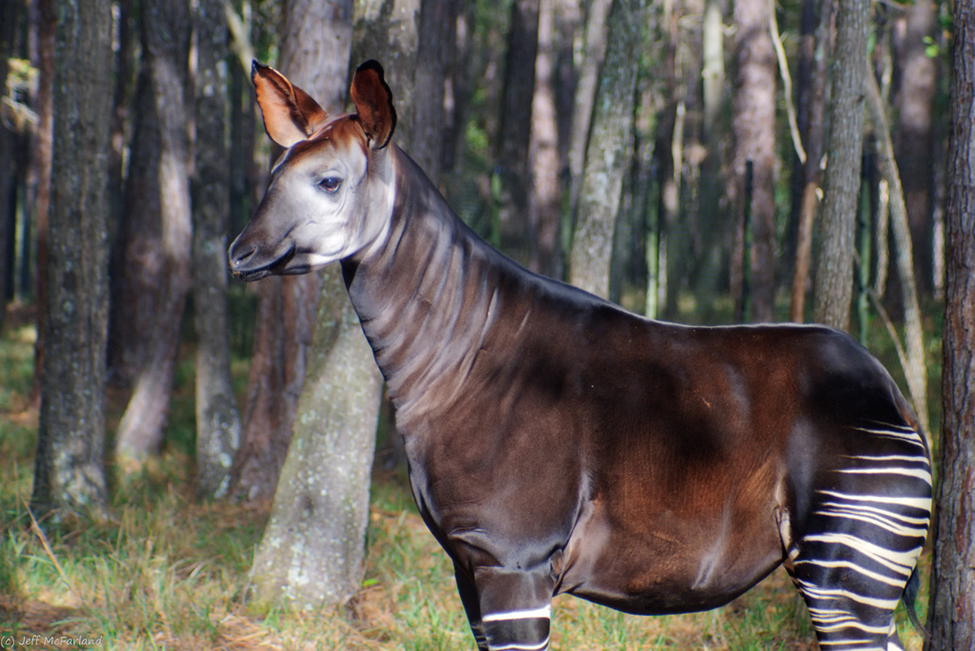
Often referred to as the “forest giraffe,” this remarkable species is the giraffe’s only living relative and can only be found in the dense forests of the Democratic Republic of the Congo (DRC).
Despite its striking appearance and evolutionary significance, the okapi remains relatively unknown to the wider world.
Let’s dive into some lesser-known facts about this endangered mammal and why it deserves more of our attention.
A Mysterious Discovery
Though native peoples of Central Africa had known about the okapi for generations, it was not officially documented by Western science until 1901.
The British explorer Sir Harry Johnston is credited with its discovery, giving the species its scientific name, Okapia johnstoni.
Native pygmies described the animal to Johnston as a type of horse, but to the scientific world, the okapi was a puzzle—part zebra, part giraffe.
A Solitary Forest Dweller
The okapi is a shy, solitary animal that lives in the deep rainforests of the DRC. Unlike the giraffe, which lives in the savannah, the okapi prefers to walk through the shaded undergrowth along familiar paths.
Its quiet and secretive nature has kept it hidden from humans for many years.
Stripes for Camouflage
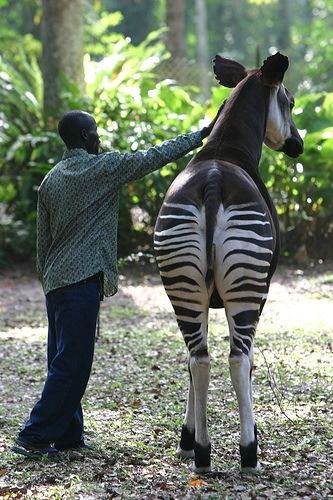
One of the most visually striking features of the okapi is its zebra-like stripes on its legs and hindquarters. While these may resemble the black-and-white patterns of zebras, the stripes serve a very different purpose—camouflage.
The okapi’s dark chocolate brown coat and contrasting white stripes blend seamlessly with the shadowy forest environment, helping it avoid detection by predators like leopards.

Giraffe-Like Traits
Though the okapi looks vastly different from the giraffe, it shares many characteristics with its cousin.
Both animals have long necks, though the okapi’s is shorter and more adapted to its forest habitat. The male okapi also sports small, skin-covered horns called ossicones, similar to those found on male giraffes, though much shorter.
Another surprising similarity is their prehensile tongues, which are long and flexible enough to grasp leaves from high branches—an essential tool for a forest browser.
Okapis and Their Role in Ecosystems
The okapi is more than just a curious animal; it plays a vital role in maintaining the health of its rainforest habitat.
As a browser, the okapi feeds on over 100 different types of plants, helping to control the growth of vegetation and dispersing seeds as they move through the forest.
Its diet consists of leaves, buds, fruits, and fungi, including many species that are toxic to other animals. This selective foraging is critical for sustaining the diversity of plant life in the region.
Okapi Conservation Challenges
Despite its vital ecological role, the okapi is listed as endangered, with fewer than 10,000 individuals remaining in the wild.
The primary threat to its survival is habitat destruction caused by logging, mining, and human settlements, particularly in and around the Ituri Rainforest.
Poaching, armed conflict, and the illegal wildlife trade further exacerbate the okapi’s vulnerability.
Thankfully, there are ongoing efforts to protect this iconic species. The Okapi Wildlife Reserve, located in the eastern DRC, is a UNESCO World Heritage site dedicated to the conservation of okapis and their habitat.
Numerous organizations, including the Okapi Conservation Project and the Wildlife Conservation Society (WCS), are working closely with local communities and international partners to safeguard these animals.
These efforts include habitat restoration, anti-poaching patrols, and environmental education programs aimed at fostering coexistence between humans and wildlife.

The Future of the Okapi
While much work remains to ensure the survival of the okapi, the progress made by conservation groups gives hope.
The protection of the okapi is not just about saving a single species, but about preserving one of the last untouched rainforests in the world and its unique biodiversity.
Every step taken to secure the okapi’s future also safeguards the countless other species that call the Congo Basin home.
On this World Okapi Day, let’s celebrate the beauty, mystery, and importance of this rare species.
The okapi may be one of the most enigmatic mammals on Earth, but with continued conservation efforts, its future can be as bright as the hidden forests it inhabits.

BE HAPPY….BE ACTIVE….BE FOCUSED….BE ALIVE…
If you liked the post, please show your support by liking it,
following, sharing, and commenting.
Sure! Visit my website for more content. Click here
Categories: infotainment
 Retiredकलम
nice post.
LikeLiked by 2 people
Thank you so much.
LikeLiked by 1 person
Nice share.
LikeLiked by 2 people
Thank you so much.💕
I’m glad you enjoyed it. Always happy to share something interesting. 😊
LikeLiked by 2 people
It’s my pleasure. 😊
LikeLiked by 2 people
The pleasure is mine! 😊
Glad we could connect over it. Stay happy and blessed.
LikeLiked by 2 people
Thank you for bringing this delightful animal to my attention. How interesting!
LikeLiked by 3 people
You’re very welcome.💕
I’m so glad you found the okapi as fascinating as I do. It’s always a pleasure to share such unique and delightful creatures with others.
Stay happy and blessed.😊
LikeLiked by 2 people
Thank you for visiting our website! We deeply appreciate your enthusiasm and the care you continually show. Your presence means the world to us. We are sending you all our best wishes and heartfelt prayers for your success—past, present, and future. May your journey ahead be filled with joy, growth, and endless possibilities. Thank you once again for being here with us!
LikeLiked by 3 people
You are welcome.
Stay connected and stay happy,
LikeLiked by 2 people