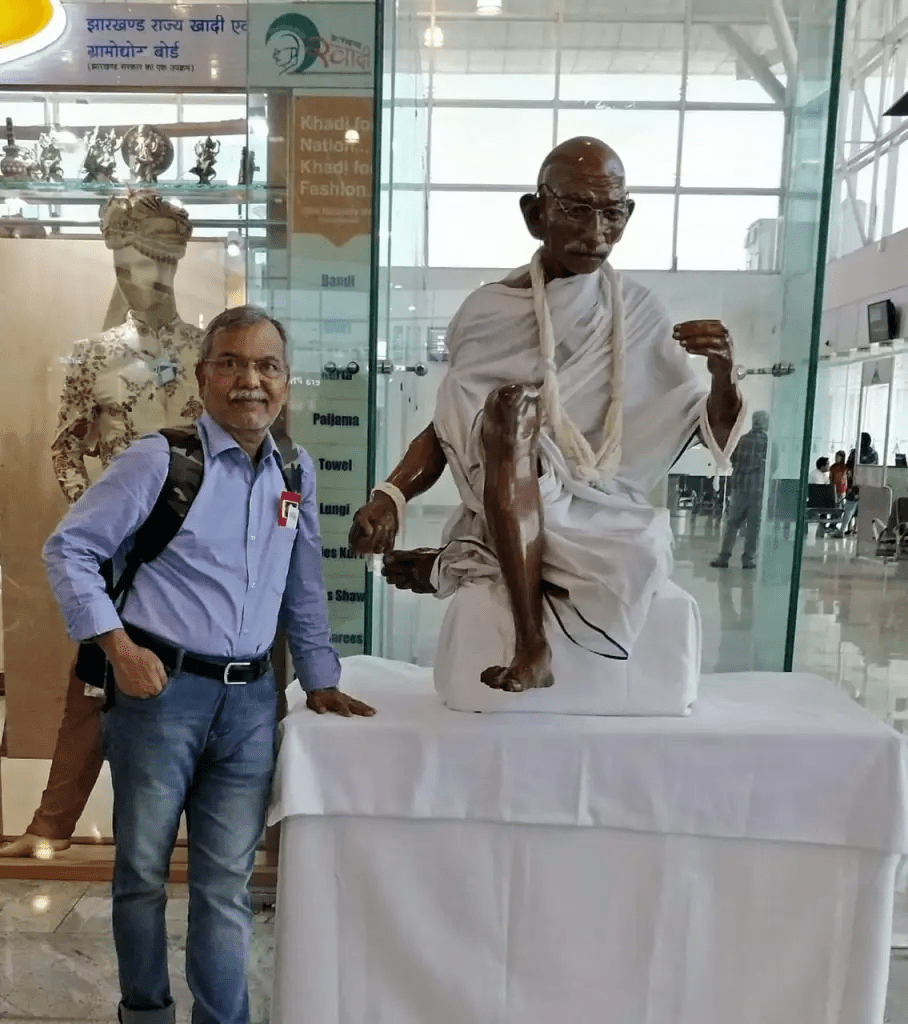
Celebrating Gandhi Jayanti & Lal Bahadur Shastri Jayanti:
Friends,
Today, 2nd October, we celebrate Gandhi Jayanti to mark the birth anniversary of Mahatma Gandhi, lovingly called the Father of the Nation.
Gandhi ji led India’s freedom movement alongside many other national leaders, using the powerful weapon of non-violence (Ahimsa) against British rule.
One of Gandhi ji’s most profound teachings was:
“You must not lose faith in humanity. Humanity is an ocean; if a few drops of the ocean are dirty, the ocean does not become dirty.”
This highlights his unwavering faith in humanity, even during the most difficult times.
Understanding Ahimsa and Satyagraha
Gandhi understood nonviolence deeply, from its Sanskrit root “Ahimsa.” While Ahimsa is often translated as nonviolence, it encompasses much more.
Gandhi believed Ahimsa was not just the absence of physical violence but also the avoidance of passive violence—meaning actions like hatred, discrimination, and injustice. To him, Ahimsa was love itself.

His approach to Satyagraha, or “truth force,” was another unique contribution. For Gandhi, Satyagraha meant more than a political strategy; it was a way of life where truth (Satya) is pursued through nonviolence.
He believed that if one remained firmly aligned with truth, even in the face of oppression, victory was inevitable.
“You can chain me, you can torture me, you can even destroy this body, but you will never imprison my mind,” he said.
A lesser-known fact about Gandhi is that his philosophy of nonviolence inspired global leaders like Martin Luther King Jr. and Nelson Mandela in their respective civil rights struggles.
In recognition of his enduring legacy, the United Nations declared 2nd October as the International Day of Non-Violence.
The Essence of Satyagraha
Gandhi taught that Satyagraha was a tool for personal and collective growth. It’s not about winning or losing but about creating a new harmony.
In Satyagraha, there is no room for harming the opponent; instead, it seeks to convert them through love and understanding.
“Satyagraha is soul force,” Gandhi said, emphasizing that truth is the essence of the soul. Holding fast to truth empowers individuals to face any challenge, knowing that truth will always prevail.
Satyagraha in Action
One of the greatest examples of Satyagraha was the Salt March (Dandi March) in 1930. This 240-mile journey was Gandhi’s protest against the British monopoly on salt.
His peaceful act of defiance not only challenged colonial rule but also inspired millions of Indians to stand up for their rights nonviolently.
Few know that Gandhi intentionally chose salt, a simple but essential commodity, to symbolize how even the smallest injustices should be confronted.

Lesser-Known Facts about Gandhi Ji
- Vegetarianism as Activism: Gandhi’s embrace of vegetarianism was not just a dietary choice but a profound spiritual and political statement.
He believed that consuming meat contributed to violence and advocated for simple, compassionate living. - Gandhi and the Spinning Wheel: His promotion of the charkha (spinning wheel) was symbolic of self-reliance.
Many might not know that Gandhi learned how to spin cotton late in life, and he encouraged others to do the same to resist British economic dominance.
Gandhi’s Message for Today
The relevance of Satyagraha and Ahimsa transcends time. In a world increasingly rife with conflict, Gandhi’s teachings remind us that resisting evil with love is the only way to achieve lasting peace.
“If we start resisting evil with evil, violence with violence, anger with anger, then we are only adding fuel to the fire,” Gandhi warned. The true power lies in dissipating hatred through the force of truth and nonviolence.
As we remember Mahatma Gandhi, let’s also reflect on the life and contributions of another towering leader, Lal Bahadur Shastri, whose birth anniversary also falls on this day.
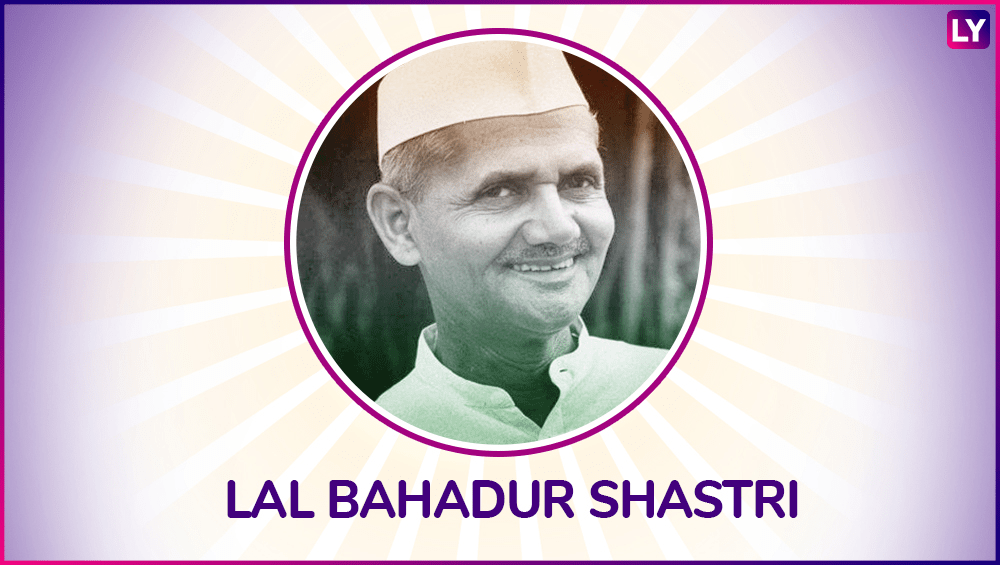
Remembering Lal Bahadur Shastri
Born on 2nd October 1904, Lal Bahadur Shastri became India’s second Prime Minister after independence. A firm believer in simplicity and integrity, Shastri ji played a crucial role in nation-building.
Shastri ji is perhaps best remembered for coining the slogan “Jai Jawan, Jai Kisan” (Hail the soldier, Hail the farmer) during the 1965 Indo-Pak war.
This slogan became a clarion call for unity, emphasizing the importance of both farmers and soldiers in safeguarding the nation.
Lesser-Known Facts about Lal Bahadur Shastri
- The Humble Hero: Shastri ji’s humility was legendary. He resigned from his position as Railway Minister in 1956 after a tragic train accident, taking moral responsibility, a rare act of accountability in politics.
- A Silent Revolutionary: Shastri ji was deeply influenced by Gandhi’s principles and actively participated in the Salt Satyagraha and other non-cooperation movements.
Few know that he spent over two years in prison for his participation in the Salt March.
As Prime Minister, he also championed India’s Green Revolution, ensuring food security for millions of Indians.
Friends, as we commemorate the birth anniversaries of Mahatma Gandhi and Lal Bahadur Shastri, let us be inspired by their lives of simplicity, truth, and dedication to the nation.
Their contributions remind us of the enduring power of nonviolence, truth, and service to others
Please click below the link for the next Blog.
Categories: infotainment
 Retiredकलम
nice one.
LikeLiked by 1 person
Thank you.
LikeLike
Great personality ( Bapu)
LikeLiked by 2 people
Yes, dear.
That is why, they called as Father of Nation.
LikeLike
Yes (दे दी हमे आज़ादी बिना खड़क बिना ढाल साबरमती के संत आपने कर दिया कमाल 🌺🌺)
LikeLiked by 1 person
बिल्कुल सही कहा आपने! महात्मा गांधी ने अहिंसा और सत्याग्रह के माध्यम से हमें आज़ादी दिलाई, बिना किसी हिंसा के। साबरमती के इस संत ने न केवल भारत को आज़ादी दी बल्कि पूरी दुनिया को सिखाया कि सत्य और अहिंसा से भी बड़े से बड़ा परिवर्तन लाया जा सकता है। उनका योगदान सदैव प्रेरणास्रोत रहेगा। जय जवान, जय किसान! 🌸🌸
LikeLike
Agree 👍
LikeLiked by 1 person
Absolutely! Gandhi ji’s timeless principles of truth and nonviolence continue to inspire generations.
His wisdom reminds us that change can be achieved through peace, and his legacy will forever be a beacon of hope for humanity. 🙏🌿
LikeLike
yes sir ,Right
LikeLiked by 1 person
Thank you, Jyoti.
Have a nice day.
LikeLike
hello I was on the net and I looked at your site. I think it is great.You can post your site on my free classified site
Tim
LikeLiked by 1 person
Thanks for sharing.
LikeLike