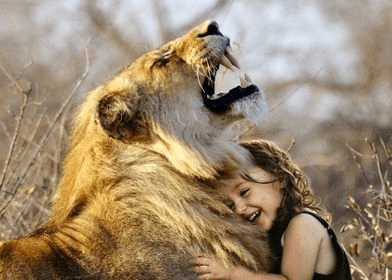
“World Lion Day”
On World Lion Day, we take a moment to appreciate the king of the jungle—an awe-inspiring creature whose presence commands respect and whose roar echoes through the African savannas and beyond.
Lions have captured the human imagination for centuries, symbolizing strength, courage, and majesty. But beyond their well-known reputation, there are fascinating and lesser-known facts about lions that make them even more intriguing.
The Lion’s Majestic Role in the Ecosystem
Lions are not just formidable predators; they are keystone species, crucial to the balance of their ecosystem. In ecological terms, a keystone species is one whose existence is vital for the survival of its environment.
If lions disappeared, the savanna ecosystem would be imbalanced. Without lions to control herbivore populations, such as wildebeest, zebras, and African buffalo, these animals would overgraze the land, depleting savanna grasses.
This could lead to a chain reaction affecting other plant and animal species, potentially causing the collapse of the ecosystem.

The Largest Lion Ever Recorded
When it comes to size, lions have long been admired for their impressive stature. The largest lion ever recorded in the wild was a male in South Africa, shot in 1936, weighing a staggering 690 pounds.
While this record has held strong, there was an even larger lion in captivity. In 1959, Dublin Zoo in Ireland was home to a lion that tipped the scales at an incredible 827 pounds, making it the largest lion ever recorded.
But the title of the largest lion that ever lived belongs to a prehistoric species, the American cave lion (Panthera atrox).
This giant feline roamed North America between 340,000 and 11,000 years ago and was estimated to weigh up to 1,153 pounds—making it one of the largest cats to have ever existed.

Threats to the King
Asiatic Lions: The Lesser-Known Cousins
When we think of lions, we often picture the African savanna, but there is another subspecies that is just as fascinating—the Asiatic lion (Panthera leo leo). These lions once roamed vast regions from the Middle East to India but are now confined to the Gir Forest in India.
Despite their smaller population and range, Asiatic lions play a crucial role in their ecosystem, similar to their African counterparts.
Asiatic lions are slightly smaller than African lions, with adult males typically weighing up to 418 pounds. The largest wild Asiatic lion ever recorded was hunted in 1620 and weighed an impressive 675 pounds.
These lions are also known for their unique appearance, with a less pronounced mane that gives them a distinct look compared to their African cousins.

The Role of Captive Breeding in Lion Conservation
As apex predators, lions face numerous threats, including habitat destruction, human-wildlife conflict, and trophy hunting. The decline in lion populations has made conservation efforts more critical than ever.
One of the key strategies in lion conservation is captive breeding. This practice helps maintain the genetic diversity of lion populations and allows for reintroduction into the wild, helping to bolster declining numbers.
Organizations worldwide are working tirelessly to monitor and protect wild lion populations, and breeding programs in zoos and wildlife reserves play a vital role in these efforts.
Captive breeding is not just about keeping lions in captivity; it’s about ensuring that future generations can witness these magnificent creatures in their natural habitats.

Lesser-Known Lion Facts
- Roar of a King: A lion’s roar can be heard up to five miles away, serving as a powerful communication tool to declare territory and warn rivals.
- Night Vision: Lions have exceptional night vision, allowing them to hunt effectively in the dark. Their eyes have a special layer that reflects light, giving them a glowing appearance at night.
- Social Structure: Unlike other big cats, lions are social animals that live in groups called prides. A pride typically consists of a few males, several females, and their offspring.
- Short Lifespan in the Wild: Despite their majestic appearance, lions have relatively short lifespans in the wild, averaging 10-14 years. In captivity, they can live up to 20-25 years.
- Ligers: The Lion-Tiger Hybrid: A lesser-known fact is the existence of ligers, the offspring of a male lion and a female tiger. Ligers are the largest of all big cats, with the largest known liger, named Hercules, weighing 922 pounds.
World Lion Day is a call to action.
Let us come together to ensure that the roar of the lion continues to echo through the savannas for generations to come.
By appreciating their magnificence and supporting conservation efforts, we can safeguard the future of these iconic creatures and the ecosystems they call home.
What are your thoughts on lion conservation? Share your views in the comments below.

(All Pic Courtesy: Pinterest)
Categories: infotainment
 Retiredकलम
very nice.
LikeLiked by 3 people
Thank you.
LikeLike