


Hello dear friends, I hope this blog finds you in a cheerful mood too.
What Were Your Parents Doing at Your Age?
Rewriting the Timeline of Success Across Generations
At first glance, the question seems simple: What were your parents doing at your age? Yet the moment we pause to answer it, the prompt opens a door to reflection far deeper than nostalgia.
It invites us to compare timelines, measure expectations, and reconsider what progress and success really mean in different eras.
For many of our parents, adulthood followed a clearer script than it does today. By their mid-twenties or early thirties, a large number had completed their education, secured stable employment, married, and begun raising families.
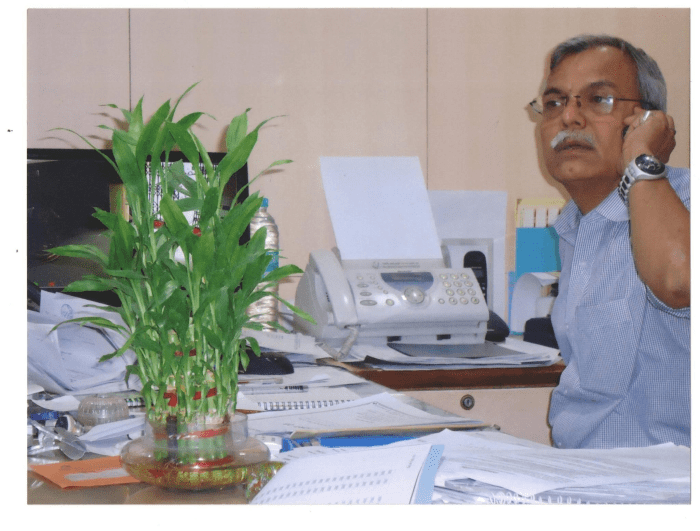
Job loyalty was rewarded
Careers were often linear—one company, one profession, decades of steady service. Loyalty was rewarded with pensions, job security, and a visible ladder of advancement.
The concept of “finding yourself” after thirty was uncommon; responsibility and survival usually took priority over self-exploration.
Their lives were also shaped by forms of scarcity that many of us have never experienced firsthand. Some grew up in the shadow of war or economic hardship.
Others faced limited access to higher education or lived in tightly knit communities where expectations were fixed, and deviation was discouraged.
Dreams certainly existed, but they were often filtered through practicality. Passion was considered a luxury; stability was the goal.

Career paths were moving in straight lines
Today, many of us find ourselves in a very different landscape. At the same age our parents were settling down, we may still be figuring things out.
Career paths zigzag instead of moving in straight lines. It’s common to change jobs, industries, or even countries several times.
Education no longer ends neatly in our early twenties; people return to school later in life as markets evolve and interests shift.
Marriage and parenthood—once early milestones—are frequently postponed or intentionally declined.
This shift doesn’t signal failure or delay; it reflects a fundamentally transformed world. Economies have moved from industrial to digital.
Automation, globalization, and rapid technological change reward adaptability more than long-term loyalty.
Housing costs have risen, job security has weakened, and the cost of living has outpaced wages in many regions.
Milestones that once seemed straightforward now require careful planning, financial resilience, and often a measure of luck.

There is also a psychological evolution between generations.
Many of our parents were defined largely by what they did—their job title, their role, their responsibilities.
Today, we are encouraged to define ourselves by who we are: our values, passions, emotional well-being, and sense of purpose.
Therapy, self-care, and mental health awareness—concepts once dismissed or stigmatized—now play a central role in how we approach adulthood.
We ask deeper questions, sometimes to the point of overthinking, about fulfillment and meaning.
Still, comparisons can feel uncomfortable.
Looking at where our parents stood at our age may stir anxiety, as if we are behind in a race we never agreed to run.
But the purpose of this reflection is not judgment; it is context. Our parents ran on a different track, with different rules, obstacles, and rewards.
Recognizing this can deepen our appreciation for them. Many carried immense responsibility at a young age with limited support systems.
They built stability from uncertainty and made sacrifices that shaped the opportunities we now have.
Even if they rarely spoke about burnout or deferred dreams, those silent struggles became the foundation for our possibilities.

Different Clocks, Different Chapters
The real power of this question lies not in comparison, but in understanding.
When we acknowledge how dramatically the world has changed, we grant ourselves permission to grow at our own pace—and we gain compassion for the paths our parents walked.
Their timeline was not better or worse than ours; it was simply shaped by a different moment in history.
So if your life looks nothing like your parents’ did at your age, take comfort in that truth. You are not late. You are living according to the rhythm of your time.
And someday, when another generation asks what you were doing at their age, your story—just like theirs—will make perfect sense in the context of the world that shaped it.
BE HAPPY… BE ACTIVE… BE FOCUSED… BE ALIVE
If this post inspired you, show some love! 💙
✅ Like | ✅ Follow | ✅ Share | ✅ Comment
www.retiredkalam.com
Categories: infotainment
 Retiredकलम
very nice .
LikeLiked by 1 person
Thank you so much.
LikeLike
I completely agree with you. I remember my mother telling me that my father used to hand over his salary to her and she used ro hide a certain amount for the end of the month days. My father worked in the Indian Railways. She used to stitch our clothes. But we never felt anything wanting because we were used to what we had. She used to save a little money every month and after many months she and her friend went to buy a sari for herself. In 1979 my father went to Nigeria for three years. After that she did not have to save money to buy a saree. But she always said the pleasure she got out of buying that one saree was far greater.
LikeLiked by 1 person
What a beautiful story—you’ve painted such a vivid picture of your parents’ lives and values. It’s amazing how small acts, like your mother carefully saving money or stitching clothes, carry such deep meaning and joy. That sari she bought after months of saving isn’t just a piece of clothing—it’s a symbol of patience, resourcefulness, and the pride in creating something for herself. It’s also touching how she appreciated that one purchase so much more than later ones, showing that the effort and anticipation often make moments unforgettable.
Your story really captures how love, care, and simple pleasures shaped their lives—and reminds us that happiness doesn’t always come from abundance, but from intention, effort, and the joy of small victories. Thank you for sharing such a warm memory.
LikeLiked by 1 person
As have said my father died when I was twelve. My mother never remarried and went to work right after. In 1992, my mother finally retired at the age of 70. She worked for the same company for over 35 years barely missing anytime. We gave her a surprise retirement in the house I live in now!
LikeLiked by 1 person
Wow, what a beautiful tribute to your mother! 🌷 It’s incredible to hear about her dedication, strength, and perseverance over 35 years of work. A surprise retirement celebration at home must have been such a heartfelt and emotional moment—what a wonderful way to honor her lifelong commitment and sacrifices. She truly sounds like an extraordinary woman! 💛
LikeLiked by 1 person
I loved the reflection, my friend! It’s so interesting to realize that each generation runs its own race. While our parents followed linear paths, today we’ve learned to value flexibility, curiosity, and self-knowledge. No delays or comparisons: we’re living at the pace of our time, and that’s also success. Have a week full of artistic inspiration. 😊🙏🏻✨📖✍🏻🏞️🖌️
LikeLiked by 3 people
Thank you so much, my friend! 😊 I love how you captured the essence of our times—embracing curiosity, flexibility, and self-discovery really is its own kind of success. Wishing you a week overflowing with creativity, inspiration, and beautiful moments of flow in all your endeavors! ✨🎨📖✍🏻🌿
LikeLiked by 1 person
love the hat!
LikeLiked by 1 person
Thank you so much. 😊
I’m glad you like it— That hat really do add a fun touch, don’t they? 😄🧢
LikeLiked by 1 person
This really resonated with me, Verma ji. The line about our parents building ‘stability from uncertainty’ is so powerful. It’s a wonderful reminder that their sacrifices gave us the very freedom to define success differently today. Thank you for this wisdom.🌷🤝
LikeLiked by 2 people
Thank you so much for your kind and thoughtful words. I’m truly glad that line resonated with you—it means a lot to know it spoke to your heart. Our parents’ journeys are indeed powerful lessons in resilience and love, and remembering their sacrifices helps us stay grounded and grateful. I sincerely appreciate your reflection and encouragement 🌷🤝
LikeLike
Nice blog on past and present scenarios.
LikeLiked by 2 people
Thank you so much—I truly appreciate your kind words. I’m really glad you enjoyed the reflection on past and present times. It’s always fascinating to look back at earlier generations and see how their journeys, struggles, and values shaped the lives we live today. Those comparisons don’t just show differences; they also reveal timeless lessons about resilience, gratitude, and what truly matters.
LikeLike
Thank you so much.
LikeLike