


Hello dear friends,
I hope this blog finds you in a cheerful and thoughtful mood.
Today’s writing prompt stirred my emotions deeply. The question—“Who is your favorite historical figure?”—may seem simple at first, but it opened a doorway into the pages of history, evoking images of courage, sacrifice, and unwavering resolve.
There are many luminaries in Indian history who have etched their names into the hearts of millions—Mahatma Gandhi with his principles of non-violence, Subhas Chandra Bose with his revolutionary fire, Swami Vivekananda with his spiritual intellect.
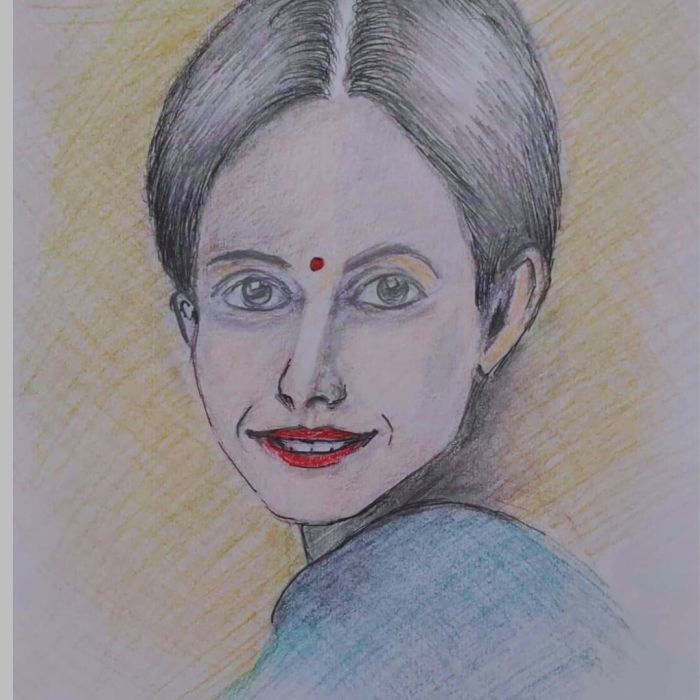
But if I were to choose only one figure who truly ignites my admiration and respect, it would be Maharani Laxmi Bai—the Rani of Jhansi.
A Flame that Defied the Storm
Maharani Laxmi Bai was not just a queen; she was a symbol of resistance, a warrior who stood tall in the face of an empire.
Born as Manikarnika Tambe on 19th November 1828 in Varanasi, she was destined to make history. Trained in horse riding, sword fighting, and archery from a young age, she was unlike most girls of her time.
Her father, Moropant Tambe, served in the court of the Peshwa of Bithoor, who supported her unconventional education.
Married to Maharaja Gangadhar Rao of Jhansi at the age of 14, she became the queen of a princely state.
After the Maharaja’s death and the loss of their adopted son’s claim due to the British Doctrine of Lapse, the British East India Company annexed Jhansi.
But Rani Laxmi Bai did not surrender. Her famous declaration, “Main apni Jhansi nahi doongi!” (“I shall not surrender my Jhansi!”), became a clarion call for resistance.

The Warrior Queen
In 1857, the First War of Indian Independence erupted—a rebellion that was both spontaneous and fierce.
Maharani Laxmi Bai emerged as a natural leader. Clad in warrior attire, sword in hand, and her young son Damodar Rao tied to her back, she led her troops into battle.
It wasn’t just her military acumen that stood out; it was her indomitable spirit and unyielding resolve that left even the British in awe.
Her courage was not fueled by hatred, but by love for her land, her people, and the dream of a free India. She fought valiantly against the British forces, recapturing Gwalior temporarily before falling in battle on 18th June 1858.
The British themselves acknowledged her bravery, with General Hugh Rose remarking that she was “the most dangerous of all Indian leaders.”
Why She Inspires Me
There are countless reasons why Maharani Laxmi Bai holds a special place in my heart.
First, she broke the stereotype of a passive woman in a patriarchal society. At a time when women were expected to remain behind veils, she donned the armor of a warrior and took the battlefield head-on.
Secondly, her story reflects the power of resilience. Life threw several tragedies her way—losing her child, her husband, her kingdom—but none of it could break her will. Instead, she transformed her personal grief into public resistance.
Most importantly, she was not born into power; she earned it. She did not inherit a revolutionary legacy—she created one. She turned the personal into the political, and her tale is not just of war, but of courage against all odds.
Her Legacy Today
More than 160 years have passed, yet her name evokes a sense of fierce pride in every Indian. Her statue, sword raised high, stands in numerous cities—a silent sentinel of honor and bravery.
Generations of women have drawn strength from her legacy. She is not just a chapter in history books; she is a living inspiration.
For me, as a writer, artist, and a retired soul in the second innings of life, her life serves as a reminder that age, gender, or circumstances can never be a barrier to greatness.
Every time I feel life is tough or that I must compromise on my dreams, I remember the Rani of Jhansi—undaunted, unbroken, and unforgettable.
A Final Thought
India has no dearth of heroic figures. But Maharani Laxmi Bai’s story strikes a unique chord. Her tale isn’t just about fighting the British—it’s about fighting fate, fear, and injustice.
It is about transforming tragedy into triumph and defying destiny with determination.
So when asked who my favorite historical figure is, my heart instantly whispers, “The Queen of Jhansi.” Not just because she fought—but because she never stopped believing in the freedom of her people.
She made history not by being born a queen, but by dying a legend.
Thank you for reading.
http://www.retiredkalam.com
Vijay Verma
Categories: infotainment
 Retiredकलम
very nice .
LikeLiked by 2 people
Thank you so much.
LikeLiked by 1 person
I enjoyed reading your comments & application of the lessons we can learn from this courageous woman. I seem to recall seeing a film about her, but can’t recall the name.
LikeLiked by 2 people
Thank you so much for your thoughtful words! I’m glad you enjoyed the reflections on Maharani Laxmi Bai’s remarkable courage and legacy.
Yes, her life has indeed inspired many films over the years. The most recent and popular one you might be recalling is “Manikarnika: The Queen of Jhansi” (2019), starring Kangana Ranaut in the lead role. It beautifully portrays her bravery and unyielding spirit.
Her story continues to inspire generations—and it’s wonderful that cinema helps keep her memory alive.
LikeLiked by 1 person
Yes, this was the film,“Manikarnika: The Queen of Jhansi” I saw, Have you seen Kesari with Akshay Kumar? This was, I think his best film. The film is inspiring. In 2001 “Lagaan: Once Upon a Time in India” was released. Also inspiring, but in a different way (typically I don’t like films about sports). There are many good and inspiring films from India. I wish more people would make the effort to find and see them (hopefully not the dubbed in English, but with subtitles so they can hear the richness and beauty of the dialect). I have gone off topic, but I want to make the point we in the States have much to learn, including moral lessons, from the India cinema. There is more to entertainment than comic book heroes.
LikeLiked by 2 people
Thank you for such a thoughtful and heartfelt message! 🌟
Yes, “Kesari” is truly a gem—I absolutely agree with you. Akshay Kumar delivered a powerful performance, and the story of the 21 Sikhs at the Battle of Saragarhi is nothing short of legendary. It’s one of those films that leaves a lasting impact, much like “Lagaan,” which captured the essence of resilience and unity in such a unique way, even through a sports narrative.
I really appreciate your insight about Indian cinema—it’s refreshing and encouraging to hear this perspective from someone outside of India. You’re absolutely right: Indian films often go beyond entertainment, weaving in deep cultural, historical, and moral lessons. The emotional depth, the values, and the richness of our dialects and music carry something truly special. Subtitles, rather than dubbing, allow that authenticity to shine through.
Your words are a reminder of the universal power of storytelling—how it can connect hearts across cultures. Thank you for recognizing the treasure that Indian cinema is. I hope more people around the world open themselves to its depth and diversity. 🙏🎬💛
LikeLiked by 2 people
This is a powerful tribute to Maharani Laxmi Bai—her courage, resilience, and defiance of societal norms continue to inspire generations. You’ve beautifully captured how her legacy transcends history, reminding us that true greatness lies in fighting for what we love, no matter the odds. A stirring reflection on an eternal icon of bravery! Thanks for sharing Verma ji 🌷🤝 the picture is also beautiful!🤩
LikeLiked by 3 people
Thank you so much for your kind and heartfelt words.❤️
I’m truly touched that you felt the spirit of Maharani Laxmi Bai through my writing.
Her story resonates deeply within us all—a timeless symbol of courage and unwavering devotion.
I’m so glad you appreciated the picture too. Your encouragement means a lot to me,
and I’m grateful we could share this moment of reflection together. 🙏😊
LikeLiked by 1 person
I loved this images in this post. I will reflect on them and think about them for sometime.
LikeLiked by 4 people
Thank you so much for your kind words! 🌸
I’m truly glad the images resonated with you. Visuals have a way of speaking directly to the heart, often saying what words cannot.
Knowing they left an impression means a lot to me.
Take your time to reflect—sometimes, the beauty of a moment lies in how it lingers with us. 🙏🖼️
LikeLiked by 1 person
This is so cool! I love learning about history from around the world. I would’ve loved studying this in my AP World History class. Thank you so much for sharing this!
LikeLiked by 2 people
Thank you so much! 😊
I’m truly glad you enjoyed it. History becomes even more fascinating when we explore powerful stories from different parts of the world.
Maharani Laxmi Bai’s life is such a rich example of courage and resistance—I’m happy it resonated with you.
Wishing you many more inspiring discoveries in your learning journey! 🌏📚
LikeLiked by 1 person
LikeLiked by 2 people
Nestled in the western part of India, the Princely State of Patdi was once a small but significant dominion in the Saurashtra region of Gujarat. Before India’s independence in 1947, Patdi held an important place among the princely states of Kathiawar, contributing to the region’s rich cultural and political tapestry. Although modest in size compared to the larger princely states like Baroda or Bhavnagar, Patdi stood out for its heritage, local governance, and the pivotal role it played in the socio-economic development of its territory.
https://www.indianetzone.com/princely_state_patdi
LikeLiked by 1 person