
The Smartest People in History
Hello dear friends,
In our previous post, we explored ten legendary intellects whose contributions shaped science, philosophy, and art.
Today, we journey through the lives of ten more—each an embodiment of brilliance, each a testament to how a single mind can alter the course of human history.
11. Plato – The Philosopher Who Built the Foundation of Western Thought
More than just a thinker, Plato created a vision for society, ethics, and the human soul. A disciple of Socrates and teacher to Aristotle, he laid the groundwork for philosophy as a discipline.
He founded the Academy of Athens, the first institution of higher learning in the Western world.
What’s less known is that Plato was also a skilled wrestler and was said to have participated in athletic contests during his youth.
His nickname ‘Plato’ came from the Greek platos, meaning “broad,” possibly describing his physique—or perhaps the breadth of his mind.
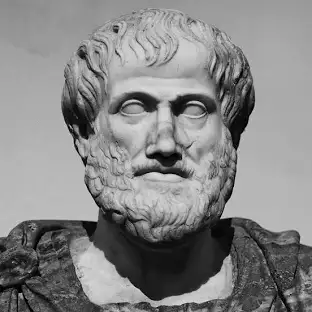
12. Aristotle – The Encyclopedic Genius
If knowledge had a custodian, it was Aristotle. His reach spanned from metaphysics and ethics to biology and rhetoric. He even laid the foundation for formal logic, a system still taught today.
Aristotle was appointed as tutor to young Alexander the Great, shaping the mind of one of history’s greatest leaders.
He also established his own school, the Lyceum, and compiled one of the first true libraries in history. His intellectual legacy was so vast that he was known in the Middle Ages simply as The Philosopher.
13. Charles Darwin – The Man Who Redefined Life
Though he studied theology at Cambridge, Charles Darwin became the father of evolutionary biology. His revolutionary idea—that species evolve over time through natural selection—challenged religious and scientific beliefs alike.
What many don’t know is that Darwin was an avid beetle collector. At one point, he was so obsessed that he once placed a rare beetle in his mouth just to free up his hands to grab another!
His passion for nature started early and eventually led to his famed voyage aboard the HMS Beagle, which changed the world forever.
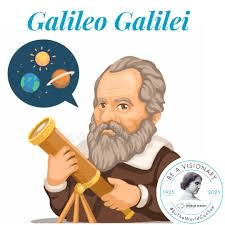
14. Galileo Galilei – The Rebel Stargazer
Known as the father of modern astronomy, Galileo championed heliocentrism—the idea that the Earth orbits the Sun. This heretical view at the time led to his trial by the Inquisition and house arrest for life.
Beyond astronomy, Galileo’s work on the laws of motion laid the groundwork for Newton.
He even developed a rudimentary thermometer and was among the first to use the scientific method. Galileo didn’t just look at the stars—he questioned everything he saw.
15. Isaac Newton – The Alchemist of Physics
When an apple fell, Newton didn’t just notice it—he unraveled the mystery of gravity. His laws of motion and universal gravitation shaped classical physics for centuries. But he was much more than a scientist.
Newton had a secret obsession with alchemy and Biblical prophecy. He wrote over a million words on mystical subjects, searching for hidden codes in the Bible.
He also led the Royal Mint, revolutionizing coinage and catching counterfeiters with brilliant precision. He was a mystery wrapped in brilliance.

16. Albert Einstein – The Mind That Bent Space and Time
Famous for his theory of relativity, Einstein changed how we understand space, time, and light. Yet this Nobel laureate in Physics also had a deep passion for human rights, pacifism, and music—he loved to play the violin to relax.
In a surprising twist of history, Einstein was offered the presidency of Israel in 1952—a position he humbly declined. He once said, “I have no head for politics.” But he certainly had a head for the cosmos.
17. Nikola Tesla – The Wizard of Electricity
The eccentric Nikola Tesla was a visionary whose work led to the widespread use of alternating current (AC) electricity. He dreamed of wireless energy transmission, and even conceptualized devices that resemble modern smartphones and drones.
Tesla also claimed to receive signals from space, which he believed might be from extraterrestrial beings. He lived in New York hotels, worked tirelessly, and died nearly penniless.
Yet today, his name powers a global electric car company—and the imagination of millions.
18. Leonardo da Vinci – The Architect of Everything
Previously featured, Leonardo da Vinci remains a timeless symbol of Renaissance genius. Recent research has uncovered hidden tunnels beneath Milan’s Sforza Castle, aligning with his military sketches.
It’s now believed these tunnels were part of a vast underground defense network designed by Leonardo himself.
He wasn’t just an artist or inventor—he was a man centuries ahead of his time, seeing possibilities invisible to others.
From aerial screw designs (early helicopters) to robotic knights, Leonardo was a human blueprint of possibility.
19. Marie Curie – The Radiant Pioneer
The first person ever to win two Nobel Prizes in different sciences, Marie Curie discovered polonium and radium, pioneering research in radioactivity. She was a trailblazer not only in science but also in breaking gender barriers.
During World War I, she developed mobile X-ray units to help doctors on the battlefield. She trained nurses to use them, saving countless lives.
Sadly, her exposure to radiation took a toll, but her luminous legacy still shines in labs and classrooms across the globe.

20. Stephen Hawking – The Voice of the Universe
Diagnosed with ALS at just 21, Stephen Hawking was given only a few years to live. He went on to revolutionize cosmology, especially in black hole physics and the origin of the universe.
His book A Brief History of Time sold over 25 million copies, and his witty appearances on shows like The Simpsons and Star Trek made him a cultural icon.
His robotic voice, confined body, and limitless mind were a symbol of intellectual perseverance.
Our Salute to Eternal Minds
These remarkable individuals remind us that intelligence isn’t limited to IQ scores or academic degrees. It manifests in curiosity, perseverance, vision, and courage to challenge convention.
As we reflect on these 20 luminous minds, let us remember: the power to change the world often begins with a simple question, an imaginative leap, or an unshakable belief in one’s dream.
Stay curious. Stay inspired. The world needs more dreamers.
Warm regards,
Mr. Verma
🌐 retiredkalam.com
Please click below the link for its previous Blog..
Categories: infotainment
 Retiredकलम
very nice
LikeLiked by 1 person
Good👍
LikeLiked by 2 people