
The Power of Physical, Spiritual, and Moral Upliftment in Our Lives
In today’s digital age, as we become increasingly reliant on technology and sedentary lifestyles, the importance of physical, spiritual, and moral upliftment has never been greater.
Doctors now routinely prescribe physical activity as a natural immunity booster, aiding in the prevention and management of numerous diseases — including the recent global threat, COVID-19.
But while medical science urges us to move more, our lifestyles are becoming more passive. We are, quite simply, moving less and losing touch with the power of physical labour.
This is where the timeless wisdom of Mahatma Gandhi becomes incredibly relevant. Among his many teachings, Gandhi advocated the concept of “Bread Labour” — a principle that holds profound importance for both physical well-being and moral integrity in our lives.
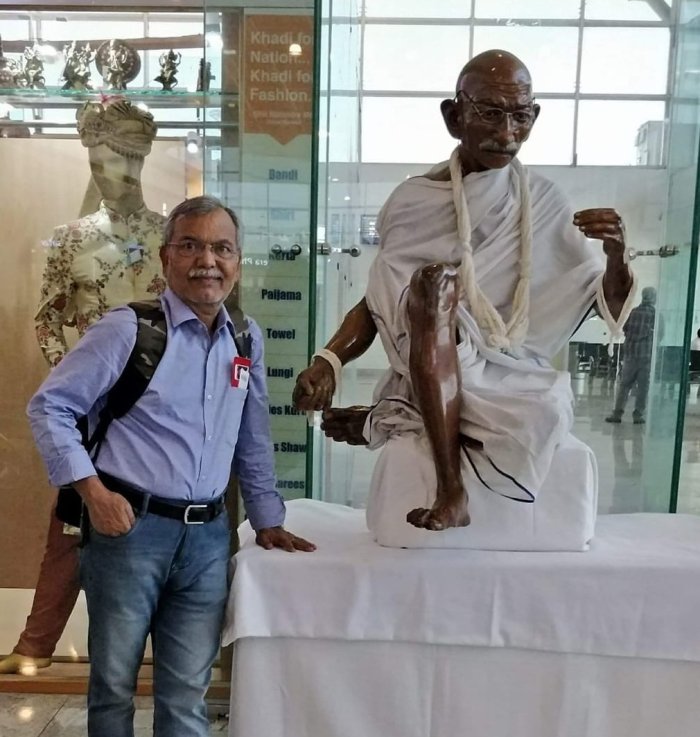
The Philosophy of Bread Labour
The idea of Bread Labour was originally propounded by the Russian thinker T.M. Bondaref and later popularized by Leo Tolstoy and John Ruskin.
Gandhi adopted and expanded upon it with great conviction. According to him, every person must earn their daily bread through personal physical effort — not merely through wealth, status, or intellect. Bread labour wasn’t limited to agriculture alone;
Gandhi believed that any form of honest physical work — be it carpentry, weaving, or even household chores — contributed to this ideal.
Gandhiji was firm in his belief: “He who eats without working is a thief.” That might sound harsh to modern ears, but what he meant was simple — no one should consume more than they contribute through physical work.
He also felt that if all individuals performed their share of bread labour, there would be no shortage of food or basic necessities in the world. More importantly, people would be healthier, happier, and more morally aligned.
What Counts as Bread Labour?
Gandhiji extended the definition of bread labour to include everyday activities such as:
- Spinning and weaving
- Cooking and cleaning
- Washing clothes and utensils
- Gardening, sweeping, and mopping
Even in our modern context, these daily chores remain valid forms of bread labour. When we perform them with mindfulness and sincerity, they not only serve a practical purpose but also become a spiritual exercise.
Gandhi emphasized putting our heart and soul into any task we undertake, transforming mundane work into something meaningful and meditative.
Intellectual vs. Physical Labour
In our world, intellectual labour often takes precedence — working on a computer, strategizing in meetings, or drafting creative content.
These are indeed valuable contributions, and Gandhi himself recognized the worth of intellectual work. However, he cautioned that it could never be a substitute for physical labour — only a complement to it.
He explained that while it is relatively easy for an intellectual worker to engage in physical labour, it is far more challenging for someone engaged solely in manual work to switch to intellectual tasks.
Hence, those who work with their minds must also balance their lives with activities that engage their bodies.
This integration of the two forms of labour brings about a balance between body and mind. Physical labour, Gandhi said, sharpens the intellect, improves focus, and fosters humility.

A Call to Reconnect with Physical Work
Whether we are wealthy or struggling, young or old, urban or rural — physical labour is essential for every human being.
Today, many of us pay for gym memberships or wellness programs when the same health benefits can be achieved by sweeping our own homes, tending to gardens, or even kneading dough for fresh chapatis.
These humble acts, often seen as chores, can become acts of spiritual connection and self-discipline.
Doctors also now agree with what Gandhi said a century ago — movement is medicine.
Physical activity enhances immunity, reduces stress, and contributes to longevity. When approached mindfully, it also connects us to a deeper sense of purpose and gratitude.
The rhythm of labour
We need to remember that life is not just about convenience and comfort. The rhythm of labour — both physical and intellectual — nurtures us.
Gandhiji’s principle of Bread Labour serves as a timeless reminder to reconnect with the dignity of work, the strength of our bodies, and the simplicity of effort.
Let’s not shy away from the broom, the plough, the spinning wheel, or the mop. Instead, let us embrace them — not out of compulsion, but with a smile and a sense of purpose.
In doing so, we not only uplift ourselves physically but also elevate our spirits and moral values.
कैसे हो तुम ब्लॉग हेतु नीचे link पर click करे..
BE HAPPY….BE ACTIVE….BE FOCUSED….BE ALIVE…
If you enjoyed this post, please like, follow, share and comments
Please follow the blog on social media …link are on contact us page..
Categories: motivational
 Retiredकलम
very nice
LikeLiked by 2 people
Thank you so much,
LikeLiked by 1 person