Celebrating India’s National Language
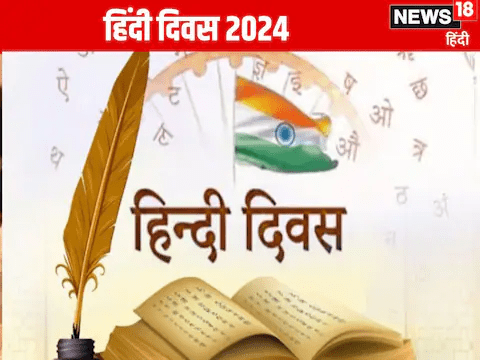
Hindi Diwas is celebrated annually on September 14th to commemorate the day when Hindi was officially recognized as the national language of India in 1949.
But why this date? On September 14, 1949, the Constituent Assembly of India adopted Hindi as the official language of the Republic of India.
Since then, Hindi Diwas has been celebrated every year to honor the language’s rich legacy, expansion, and its role in unifying the country.
Hindi is not just a language; it symbolizes India’s cultural heritage, unity, and identity.
From our school days, we’ve been taught the importance of Hindi Diwas as a way to remind us of the language’s significance and its deep connection to our roots.
Originating from Sanskrit, Hindi uses the Devanagari script and is spoken by millions across the country, particularly in northern India. With a vast and diverse literary history, Hindi has become a language of expression, culture, and tradition.

A Personal Reflection on Hindi Diwas
Today, as I sat down to write a blog about Hindi Diwas, something unexpected happened. Between my writing, I found myself scrolling through Facebook, checking updates from friends.
One particular post caught my eye — a story posted by an acquaintance. As I read through it, I felt an odd sense of familiarity. It seemed so similar to something I had written.
When I finished reading, I realized, to my shock, that it was indeed my story! The person had copied my work, changed a few character names and locations, but everything else was the same.
Curious, I scrolled through more posts on their page, and to my surprise, I found that several of my pieces had been copied and shared as their own. The most ironic part? The post had received far more comments and appreciation than my original blog! 😂😂
The Irony of Literary Plagiarism
Instead of feeling angry at the person, a wave of nostalgia washed over me, reminding me of my own experiences with literary plagiarism. It took me back to the days when I had done something similar, and the memory made me smile.
The incident occurred in 2004 when I was working at the Regional Office in Patna. At that time, all the bank’s work was done manually, as computers hadn’t yet been widely implemented.
I had been made the Hindi Officer, not by choice, but by necessity. Alongside my regular duties, I was responsible for overseeing the Hindi department.
My Regional Manager was so nice and respected, that I couldn’t refuse his request to take on this additional responsibility.
Slowly, I began to learn Hindi, although I wasn’t particularly comfortable with the language at the time. Being a Hindi Officer required me to respond to all official correspondence in Hindi, which I struggled with initially.
In my attempt to manage these duties, I resorted to copying some literary pieces to fulfill my role efficiently.
Around the same time, the bank organized a Hindi writing competition under the guidance of Shri Ramakant Sharma Ji, a senior official. In honor of Hindi Diwas, he asked me to ensure that all branches under our jurisdiction participated in the contest.
The competition’s topic was “Air Pollution and its Effects.” Several employees submitted their essays, which I collected and forwarded to the headquarters.
A few days later, Sharma Ji called me and instructed me to participate in the contest as well, given my role as the head of the Hindi department.
I was already swamped with work, and my Hindi writing skills were far from proficient. How could I possibly write an essay on such a complex topic?
A friend came to my rescue with a clever suggestion. I selected three well-written essays from the submissions, combined them, and created a new one by blending their ideas. I signed my name as the author and forwarded it to the Head office.

To my surprise, when the results were announced, I had secured second place in the competition! The original authors of the essays I had copied came in first, third, and fourth.
While I felt a sense of joy at winning, I was also overcome by guilt for having copied their work..😂😂
Celebrating Hindi with Integrity
Reflecting on both these incidents, I realize that while plagiarism is unethical, it also highlights an important truth: creativity and originality are irreplaceable.
Hindi Diwas is a celebration of our language, but it also reminds us to value and respect the contributions of every writer, no matter how big or small.
Hindi, with its rich history, vibrant literature, and deep cultural significance, deserves to be celebrated with authenticity. Hindi Diwas isn’t just about paying tribute to a language but also about recognizing the stories and voices that emerge from it.
As we celebrate this day, let us ensure that we respect the creative process and honor the original contributions of others.
For me, Hindi Diwas serves as a reminder of my own growth in the language, from someone who once hesitated to write in Hindi to someone who now treasures it as a medium of self-expression.
It’s a day to reflect, learn, and embrace the beauty of the language that unites millions of people across India.
Happy Hindi Diwas! May we continue to preserve and enrich this beautiful language, with honesty and pride.

BE HAPPY….BE ACTIVE….BE FOCUSED….BE ALIVE…
Ek Adhoori Prem Kahani / एक अधूरी प्रेम कहानी (Hindi Edition)
https://forms.gle/KE1bocnJnoWDHMhw5
Categories: infotainment
 Retiredकलम
Happy Hindi Diwas!
💯, Language = Culture 😇
LikeLiked by 3 people
Happy Hindi Diwas!
Indeed, language is the heart of culture. It not only connects us to our roots
but also bridges our shared histories, emotions, and traditions. 🌸
Let’s continue to cherish and celebrate Hindi as a beautiful expression of our heritage and unity! 😇💯
LikeLiked by 2 people
Enjoy your celebration. Happy Hindi Diwas!
LikeLiked by 2 people
Thank you so much.
Stay connected and stay happy.
LikeLiked by 2 people
Nice blog on Hindi Divas.Hindi is most spoken language in our country and medium communication among non hindi speaking people.
LikeLiked by 1 person
Thank you so much, dear.
LikeLike