

Dear friends,
In a world immersed in the wonders of technology, the question of “what to un-invent” presents a myriad of possibilities. While the allure of targeting the internet or smartphones may be strong, my focus shifts to the phenomenon of social networking, or what I fondly refer to as “social NOTworking.”
Despite its promise of connecting us across large distances, social networking paradoxically hinders real human interaction. The anonymity of the internet often turns people into trolls, hurling insults online without the same restraint they might have in face-to-face conversations. Imagine that troll sitting next to you— their behavior might change a lot.
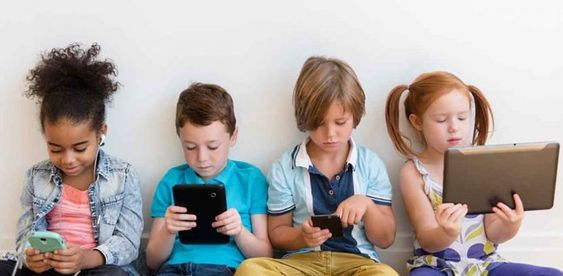
Recently, I’ve observed a concerning trend where children engage less in physical activities and spend more time glued to their mobile phones.
Just the other evening, my granddaughter was engrossed in her mobile while her friends came and invited her to play in the playground. “I don’t feel like playing right now,” she said, before returning to her mobile access.
Un-Inventing the Digital Abyss
The increasing reliance on social networks among children has significantly altered the way they interact with each other. In today’s digital age, it is evident that many children are gradually losing the natural inclination to engage in face-to-face meetings, share laughter, and hold meaningful conversations.
This shift can be attributed to the addictive nature of social networking platforms, which have become the primary means of communication and socialization for young individuals.
As a result, the traditional forms of interpersonal connection and bonding are being replaced by virtual interactions, leading to potential challenges in the development of essential social skills and emotional intelligence among children.
It is crucial for parents, educators, and society as a whole to address this issue and find a balanced approach that integrates the benefits of technology with the importance of direct human connection and communication.
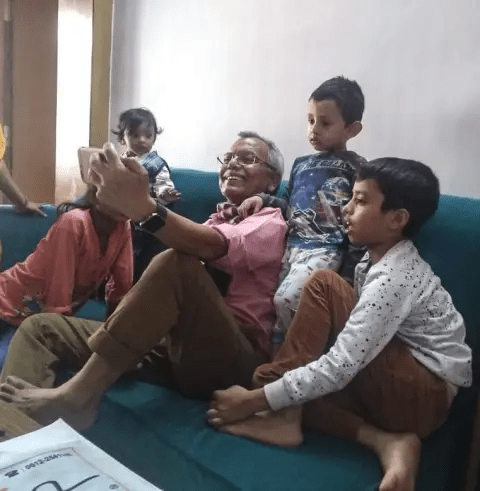
the absence of facial expressions
In a world dominated by print and text, the absence of facial expressions makes it challenging to decipher sincerity. The warmth of personal interaction is lost in the digital abyss.
Moreover, the reliance on social media for event notifications is irksome. How many important gatherings have we missed because the information was buried on someone’s social media page?
My objection isn’t a rejection of technology but rather a plea for a return to more meaningful connections. The value of a personal call or an invitation extended through traditional means is immeasurable.
My life doesn’t revolve around what others post online, and the simplicity of direct communication should not be sacrificed at the altar of virtual networks.
Yet, my choice to un-invent social networking is not a dismissal of the entire digital landscape. The internet and smartphones have brought both blessings and challenges. Instead, I advocate for a reevaluation of our digital habits, fostering an environment where technology enhances, not replaces, genuine human connections.
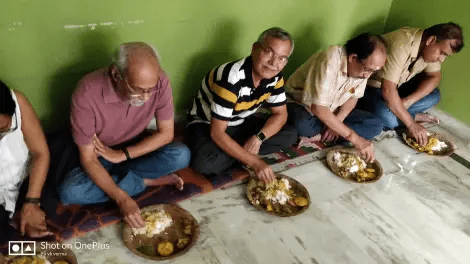
nostalgic about floor-seated meals
Delving into the personal history, the mention of dining tables and chairs evokes a nostalgic journey to a time when meals were shared on the floor, fostering an atmosphere of informality and familial camaraderie.
My personal desire to un-invent the dining table and chairs reflects the changing dynamics of family meals.
The nostalgia for floor-seated meals resonates with the simplicity and authenticity of human interaction. The family gossip shared laughter, and even playful complaints about leftover discoveries—all these moments fostered a sense of togetherness that transcended the formality of a dining table.
Beyond the sentimental value, there are health benefits too, as science has proven that floor-seated meals aid digestion and offer other health benefits.
It’s a longing for the warmth of connection that came from sharing a meal on the floor—an experience not confined by social conventions. The juxtaposition of desires to un-invent—social networking and dining tables—reveals a yearning for genuine, unfiltered connections.
Whether it’s the virtual world stripping away the nuances of personal interaction or the physical world losing the charm of informal gatherings, the underlying theme is a quest for authenticity.

Rediscovering Human Connection
There is an internal conflict
As the narrative transitions to the present, navigating the complexities of modern life, the Amish Dining Table stands as a symbol of compromise between tradition and convenience. While acknowledging the convenience of a table and chairs, my preference for the sofa and TV during breakfast suggests a subtle resistance to the encroachment of formality.
The graceful transition reflects the cultural significance of eating on the floor, citing its health benefits and the cherished memories associated with it.
The internal conflict of hesitating to serve lunch on banana leaves due to societal norms adds another layer to the narrative, underscoring the tension between tradition and modernity.

Yes, friends, when we explore un-inventing and inventing, we find a common theme – the pursuit of real human connection. Whether online or in person, we all desire genuine interactions that go beyond the limits set by technology or societal norms.
As we navigate the complex world of progress, let’s not forget what makes us human – the ability to connect, communicate, and form meaningful relationships.
What do you think about this? Feel free to share your thoughts and feelings. Let’s keep talking about rediscovering human connection.
BE HAPPY….BE ACTIVE….BE FOCUSED….BE ALIVE…
If you liked the post, please show your support by liking it,
following, sharing, and commenting.
Sure! Visit my website for more content. Click here
Categories: infotainment
 Retiredकलम
Thanks for sharing this beautiful post ✍️
LikeLiked by 1 person
You’re very welcome, Dear.
I’m glad you found the post beautiful and meaningful.
I appreciate your feedback! ✨
LikeLiked by 1 person
Welcome 🙏 sir
LikeLiked by 1 person
Stay happy and blessed.
LikeLiked by 1 person
Thanks 🙏 sir
LikeLiked by 1 person
You are welcome.
LikeLike
🧡
LikeLiked by 1 person
Thank you so much.
LikeLike
The war… If I would it be..😉
LikeLiked by 1 person
Yes, you are very correct.
That is the genuine un-invent.
LikeLiked by 1 person
Exact!😉
LikeLiked by 1 person
Thank you very much for sharing your feelings.
LikeLiked by 1 person
It,s a pleasure!🙂🙃
LikeLiked by 1 person
Thank you so much for your kind words.
😊📝
LikeLiked by 1 person
The blog is nice.The central theme is that always there is conflict between tradition and convenience.Man will invent new things and discover new idea for the comfort.
LikeLiked by 1 person
Thank you for exploring the central theme of the blog.
It’s fascinating how the perpetual conflict between tradition and convenience has been a driving force
behind human invention and discovery. The quest for comfort and efficiency often leads to innovative solutions and
the evolution of societal norms.
LikeLike
The human heart instinctively remembers kindness and warmth. I think it’s the feeling you get when you’re in the womb. It will be difficult for machines to heal the human heart.
LikeLiked by 1 person
Your insight is truly profound and resonates deeply.
The human heart indeed has a remarkable capacity to remember kindness and warmth,
often rooted in primal experiences like those in the womb. The intangible aspects of human connection
and empathy can indeed be intricate and challenging for machines to replicate.
Thank you for sharing such thoughtful reflections. 🌟💖
LikeLike
Thank you My friend
LikeLiked by 1 person
You are welcome, dear.
Stay happy and blessed.
LikeLiked by 1 person
What a thoughtful and beautifully articulated reflection, Verma ji. Your words resonate deeply in a world that often mistakes connection for connectivity.
You’ve touched upon the very heart of a modern paradox: we have never been more “linked,” yet so many feel a profound sense of disconnect. Your term “social NOTworking” is both poignant and precise. It captures the essence of how these platforms, designed to bring us together, can sometimes engineer isolation, replacing the warmth of a shared laugh with the cold glow of a screen.
Your personal anecdotes—your granddaughter choosing her mobile over the playground, the nostalgia for floor-seated meals—are not just memories; they are powerful testimonies of what we stand to lose. They highlight that the fabric of human relationships is woven from threads of presence, shared space, and unfiltered interaction—threads that virtual networks often cannot spin.
Your perspective is balanced and wise. It’s not a Luddite’s rejection of technology, but a humanist’s plea for mindfulness. Advocating for a reevaluation of our digital habits, where technology enhances rather than replaces genuine connection, is a message that needs to be heard, especially by parents and educators shaping the next generation.
The conflict you describe—between the cherished informality of tradition and the convenient formality of modernity—is one many of us grapple with daily. That hesitation to serve lunch on banana leaves for fear of being perceived as “backward” is a telling detail about the social pressures that can distance us from simple, authentic joys.
You are absolutely right. At its core, this isn’t just about un-inventing social media or dining tables. It’s about inventing—or rather, rediscovering—a way of living where our tools serve our humanity, not the other way around. It’s about choosing the phone call over the comment, the playground invitation over the notification, and the shared floor meal over the solitary snack in front of the TV.
Thank you, Verma ji, for this heartfelt reminder. You have eloquently championed the cause of the human heart in a digital age. Let’s all take a moment to look up from our screens, reach out with more than our fingertips, and cherish the irreplaceable magic of real, present, and sincere connection.
Warm regards.
Srikanth
LikeLiked by 1 person